








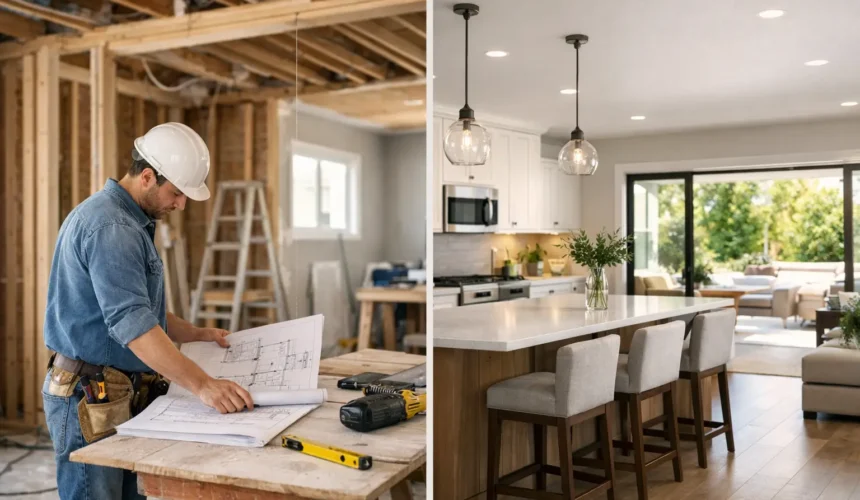
A finished renovation should feel settled the day you move back in. Walls where they belong. Lighting that works with the room. Inspections signed off. No second-guessing. That is the real difference in renovation permit vs no permit – one path ends with confidence, the other can leave loose ends hiding behind fresh paint.
Too many renovation decisions get framed as speed versus paperwork. That is the wrong lens. The real question is control. A permit is not just a municipal requirement. It is part of a documented build path that protects safety, insurability, future resale, and the integrity of the work itself.
Renovation permit vs no permit: what it really means
A permit is formal approval from your local municipality to carry out specific construction work. It confirms that the proposed work is being reviewed against building code, zoning requirements, and other local rules before the work proceeds. In many cases, it also triggers inspections during key stages of construction.
No permit means one of two things. Either the project truly does not require one, or work that should have been reviewed is moving forward without approval. Those are very different situations, and they should never be confused.
Cosmetic work often falls outside permit requirements. Replacing finishes, painting, installing cabinetry in the same layout, or updating fixtures without changing regulated systems may not require municipal approval. But once a renovation starts altering structure, changing use, creating new rooms, modifying layouts in material ways, or affecting life safety conditions, permit requirements often enter the picture quickly.
This is why experienced project planning matters at the front end. You do not want to discover permit exposure halfway through demolition.
When a renovation permit is usually required
Permit rules vary by municipality, so there is no honest one-size-fits-all answer. Still, there are common triggers that generally require review and approval.
If you are removing or altering load-bearing walls, adding square footage, underpinning a basement, building an addition, changing window openings, creating a legal secondary suite, or making major structural changes, a permit is usually part of the job. The same is often true when a project changes occupancy, fire separation, egress, or the intended function of a space.
A full home renovation can also move into permit territory even when the goal feels straightforward. Reworking circulation, relocating kitchens or bathrooms, altering stair geometry, or rebuilding substantial portions of an interior can trigger code review. Commercial fit-outs are even less forgiving. Occupant load, accessibility, exiting, and fire code implications can make permit planning central from day one.
On the other hand, not every renovation needs formal approval. New flooring, millwork replacements, painting, non-structural finish updates, and some like-for-like replacements may proceed without permits, depending on scope. The key phrase is depending on scope. Small decisions stack up. A project that starts as cosmetic can cross the line once walls open and plans change.
Why homeowners and business owners get this wrong
Most permit mistakes do not start with bad intent. They start with bad assumptions.
A client hears that a neighbor finished a basement without issues. A contractor says permits only slow things down. Someone believes that if work is inside the building, nobody will know. That logic collapses the moment an inspector is called for another matter, an insurance claim is filed, or a future buyer asks for documentation.
The deeper issue is fragmented planning. When design, engineering, scope definition, and construction are not aligned, permit requirements get treated as an afterthought. That is where costly reversals happen. Drawings need to be redone. Opened work gets stopped. Finished areas may need to be exposed for inspection. Timelines stretch not because permits exist, but because the project was not structured correctly at the start.
A disciplined builder prevents that by defining scope before work begins, identifying approval requirements early, and sequencing the project around them instead of around guesswork.
The real risks of no-permit work
The obvious risk is municipal enforcement. A stop-work order can freeze progress immediately. You may be required to submit drawings after the fact, pay additional fees, or remove completed work that cannot be approved as built.
The less obvious risks are often more serious.
Insurance can become complicated when a loss involves unpermitted work. Claims are evaluated on facts, not assumptions, and undocumented alterations can create friction at the worst possible moment. Resale can also suffer. Buyers, lawyers, and lenders do ask questions. If a major renovation lacks permits or final inspections where they should exist, the issue rarely disappears by staying quiet. It usually gets pushed into negotiation, delay, or distrust.
Then there is safety. Code review is not theater. It exists because hidden parts of a build matter. Structure matters. Fire separation matters. Means of egress matter. Ceiling heights, guard conditions, and load paths matter. Good construction is not only about what you see when the room is finished. It is about what performs correctly for years after the project is over.
Does a permit guarantee a better renovation?
No. A permit is necessary in many cases, but it is not a substitute for a well-run project.
This is where many owners get disappointed. They assume that once a permit is issued, quality and coordination are handled. They are not. A permit confirms compliance review and inspection checkpoints. It does not create a complete scope. It does not solve trade sequencing. It does not protect design intent. It does not manage communication.
That is why the strongest projects combine two things: proper approvals and disciplined execution. One without the other leaves gaps. A fully permitted renovation can still suffer from missed details, unclear responsibilities, and poor site coordination. A tightly managed project without required permits is still exposed. Control comes from both.
Renovation permit vs no permit in resale and long-term value
A renovation should strengthen a property, not create questions around it.
When work is properly documented, approved where required, and closed out cleanly, the space carries a different kind of confidence. Appraisers, buyers, insurers, and future design professionals can trace what was done. That matters more than many owners realize, especially in major renovations and additions.
No-permit work can create a shadow over otherwise beautiful spaces. The kitchen may photograph well. The basement may look finished. But if the underlying changes were substantial and undocumented, the value conversation changes. Buyers do not just assess aesthetics. They assess risk.
For commercial spaces, the stakes can be even higher. Tenant improvements that affect occupancy, accessibility, life safety, or use classification need to stand up to scrutiny. If they do not, the operational consequences can extend beyond resale into leasing, compliance, and day-to-day business continuity.
How to approach permit decisions the right way
Start with the end state, not the demolition plan. What are you changing? How will the space function differently? Are you altering layout, structure, occupancy, fire safety conditions, or the legal use of the space? Those questions shape permit requirements early.
Next, get the scope documented properly. This is where serious renovation planning separates itself from generic contractor talk. A defined scope allows the team to identify approval triggers before they become schedule problems. It aligns design, engineering, and construction around a single build path.
Then confirm municipal requirements for the specific property and scope. In the Greater Toronto Area, requirements can vary by municipality and by the nature of the existing building. Age of home, zoning conditions, heritage implications, and prior alterations can all affect the answer.
Finally, build the project around approval logic, not around wishful timing. If permits are required, plan for them. If parts of the work do not require them, separate those scopes intelligently. The goal is not to over-permit. The goal is to know exactly where the line is and manage the project with discipline.
That is the philosophy behind Spartan Builders’ process. Scope is defined before trades are mobilized. Approval requirements are addressed early. Execution follows a controlled sequence rather than a chain of improvisation. Clients feel the difference not because the paperwork is glamorous, but because the project moves with fewer surprises.
The smartest question is not “Can we skip it?”
The smartest question is, “What does this project need to be complete, compliant, and cleanly finished?”
That mindset changes everything. It moves the conversation away from shortcuts and toward outcome. It respects the property, the people using it, and the money being invested. It also protects your future self – the version of you who may refinance, sell, insure, expand, or simply want certainty that the work behind the walls was done the right way.
A strong renovation is not just beautiful on reveal day. It is documented, defensible, and built to hold its value long after the dust is gone.