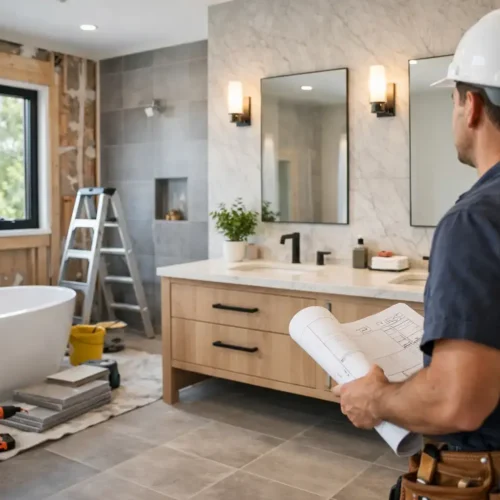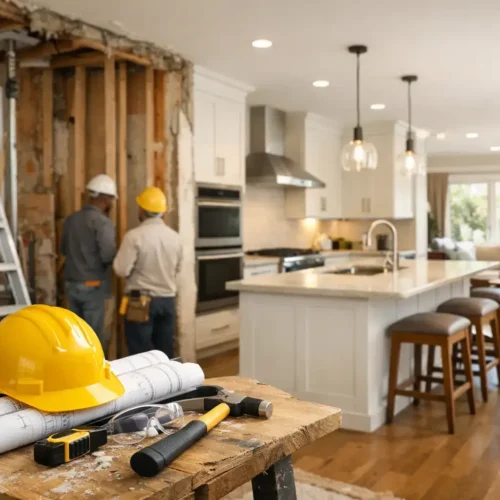










Picture a finished kitchen where every line lands clean. Cabinetry fits exactly. Tile meets trim with intention. Lighting is centered, switches are where your hand expects them, and nothing feels improvised. That result does not come from one talented trade working in isolation. It comes from trade coordination in construction – the discipline of making every moving part arrive, perform, and finish in the right sequence.
Most project failures are not dramatic. They are cumulative. A framing detail is missed. A rough-in happens before a final cabinet dimension is confirmed. Tile layout is decided too late. Millwork arrives before the site is actually ready. Each decision seems small until the project starts slipping, rework appears, and the client is left managing problems they never should have seen.
Good construction is not just about skilled labor. It is about control. That is where coordination separates a managed build from a stressful one.
What trade coordination in construction actually means
Trade coordination in construction is the structured management of all specialties working on a project so design intent, site conditions, schedule, materials, and installation standards stay aligned. It is not simply calling trades and asking when they can show up. It is the ongoing work of making sure each crew has the right information, enters at the right time, and leaves behind conditions the next trade can build on.
In a residential renovation, that can mean aligning demolition, framing, mechanical rough-ins, inspections, insulation, drywall, waterproofing, tile, millwork, paint, and finish hardware so nothing conflicts. In a commercial fit-out, it may also involve tighter code sequencing, occupancy constraints, procurement windows, and coordination with consultants, landlords, and inspectors.
The point is straightforward. Trades do not fail in a vacuum. They fail at the handoff.
Why poor coordination costs more than people expect
When clients think about construction risk, they often imagine defective work. That matters, but on many projects the more common threat is misalignment. A strong trade can still produce a bad outcome if the scope is unclear, if dimensions changed and were not communicated, or if preceding work left the space unready.
Poor coordination usually shows up in four places.
First, the schedule starts lying. Dates remain on paper, but the sequence underneath them has already broken down. One delay forces another, and soon the project looks active while meaningful progress slows.
Second, finishes begin absorbing mistakes from earlier phases. Instead of building cleanly, later trades are asked to hide inconsistencies. That is when a project starts losing sharpness.
Third, site accountability gets blurry. If no one has defined interfaces between trades, every issue becomes a debate about responsibility.
Fourth, the client gets pulled into decisions too late. They are asked to approve changes reactively, under pressure, instead of through a documented plan made before execution.
That is why experienced builders treat coordination as a core construction function, not an administrative extra.
The real work happens before the first trade arrives
The strongest coordination starts before site work begins. Once demolition is underway, every undocumented assumption becomes expensive.
This is where complete scope definition changes everything. Drawings matter, but drawings alone are rarely enough. Trades need dimensions, material selections, installation intent, sequencing logic, and known site constraints translated into a buildable plan. If a bathroom renovation includes recessed niches, curbless transitions, custom glass, and floating vanities, each one affects multiple trades. Miss one dependency and the project pays for it later.
At Spartan Builders, this is exactly why the work starts with ClearScope™. The goal is simple – define the project fully before execution begins. That means fewer open questions in the field, fewer trade assumptions, and fewer expensive corrections after finishes are underway.
There is a trade-off here worth acknowledging. More planning upfront can feel slower to clients eager to start. But rushed starts are often fake progress. Real momentum comes from clarity.
Trade coordination in construction is really about sequence
Every successful project has a rhythm. Demolition opens the space. Structure corrects what was hidden. Rough-ins establish the technical backbone. Closures lock the assembly. Finishes deliver the experience. If that rhythm is broken, the site may stay busy, but the build loses control.
Sequence is not just about order. It is about readiness. A cabinet installer does not just need a delivery date. They need final wall conditions, confirmed measurements, protected access, and a site that will not damage finished product the next day. A tile installer needs substrate prep, waterproofing integrity, and fixture coordination settled before the first piece is set.
This is where many projects get into trouble. People confuse scheduling with coordination. A schedule says what should happen. Coordination confirms that it actually can happen.
That distinction matters in both homes and commercial spaces. A restaurant renovation, for example, may have equipment lead times, health-related compliance requirements, and inspection dependencies that make timing less forgiving. A custom home project may have complex architectural detailing where small framing deviations affect millwork, stone, glazing, and lighting alignment later. In both cases, sequence is design protection.
The handoff between trades is where quality is won or lost
A well-run project does not ask each trade to be a hero. It gives each trade the conditions to perform at a high level.
That means one crew finishes with the next crew in mind. Framing is checked against cabinetry and finish intent, not just structural necessity. Drywall is completed with trim reveals, tile transitions, and fixture locations already coordinated. Painting is not rushed into spaces that still need invasive adjustments. The cleaner the handoff, the cleaner the result.
This is also why vetted trade relationships matter. Coordination improves when teams are used to accountability, documentation, and standards that do not move depending on who is on site that week. The Builders Plug™ was built around that principle – a trusted network that works inside a controlled system, not a random collection of subcontractors trying to interpret the project on the fly.
Communication is part of coordination, not a separate service
Clients should not need to decode the build for themselves. When communication is weak, uncertainty grows even when work is happening. When communication is structured, the project feels predictable.
That does not mean flooding clients with every site detail. It means communicating the right information at the right milestone. What was completed. What is next. What is awaiting approval. What changed, if anything, and why. Strong communication protects decision-making because it keeps everyone operating from the same version of the project.
For architects, designers, and engineers, this matters just as much. A design can be excellent on paper and still lose its precision if site coordination is loose. Professionals need a builder who can hold alignment between design intent and field execution without forcing constant intervention. That is not about ego. It is about preserving the work.
What clients should look for in a coordinated project
You can usually spot strong coordination before construction reaches the finish stage. Trades are not crowding each other without purpose. Material decisions are not being made in a panic. Site questions are answered with documentation, not guesses. The builder speaks clearly about sequence, dependencies, and milestones.
You should also see that scope and selections are being connected to execution. It is one thing to choose a finish. It is another to confirm the backing, spacing, reveal, edge condition, substrate, and install order required to make it look right. That gap is where many otherwise attractive projects lose refinement.
The best coordination is almost invisible to the client. The project feels calm. Decisions happen at the proper time. The finished space looks intentional because it was built through discipline, not recovery.
A controlled build feels different from the start
Trade coordination in construction is not a back-office task. It is the operating system of the project. It protects schedule integrity, finish quality, site accountability, and client confidence all at once.
That is why process-led builders outperform reactive ones. Not because they talk more. Because they remove uncertainty before it spreads. Through documented scope, vetted trades, disciplined sequencing, and milestone-based communication, the project stays coherent from first demo to final walkthrough. The Spartan System™ exists for that reason.
A great space should feel inevitable by the time it is finished. Not lucky. Not patched together. Not impressive despite the process. Just right, because every trade moved under one clear plan.
If you are planning a renovation, build, or commercial interior, look past who can start fastest. Look for the team that can hold the entire project together when complexity shows up. That is where confidence comes from. And that is what clients remember long after the dust is gone.