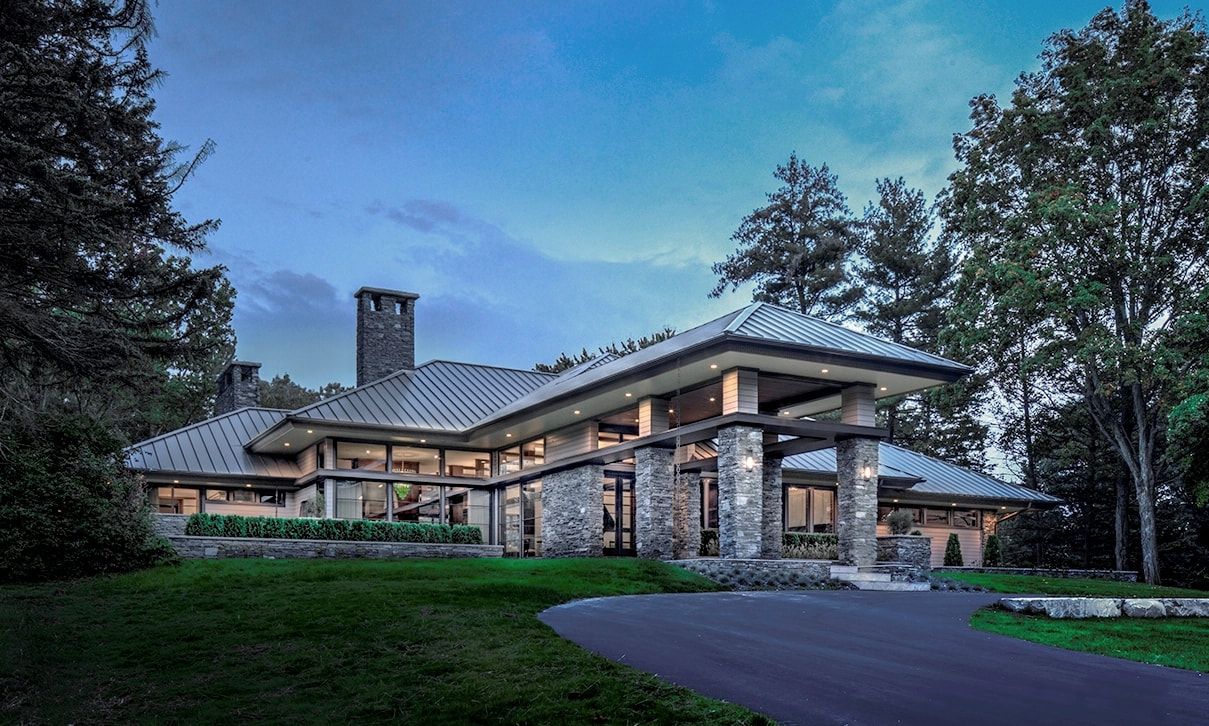









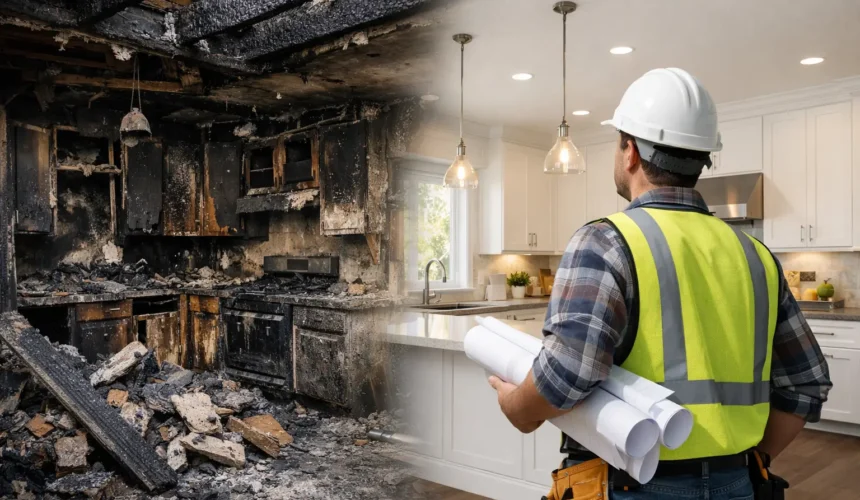
What you want after a fire is not a patched version of what was there before. You want a space that feels settled again. Clean lines. Safe systems. Materials chosen with intention. Rooms that work better than they did before. That is where a fire damage rebuild guide should begin – not with panic, but with the standard you are rebuilding toward.
A fire loss puts most properties into the same dangerous zone. The damage is obvious, but the real risk is hidden in the next decision. Move too fast, and critical scope items get missed. Move too slowly, and moisture, smoke residue, and structural exposure create new problems. The rebuild needs control from day one.
What a fire damage rebuild guide should actually cover
Most people assume the rebuild starts when demolition ends. It does not. The rebuild starts when the full condition of the property is documented, tested, and translated into a complete scope. Without that, every later phase becomes reactive.
A proper fire damage rebuild guide should account for far more than charred framing or damaged finishes. Fire affects structural assemblies, air quality, insulation cavities, concealed connections, windows, doors, floor systems, and code requirements that may be triggered during reconstruction. In many cases, the smoke and suppression damage spread farther than the flame itself.
That is why the first priority is clarity. What is salvageable? What must be removed? What must now be rebuilt to current code? Those are not small distinctions. They define schedule, permit requirements, material selections, and the quality of the finished result.
The first phase is assessment, not construction
Before a single finish is discussed, the property needs a disciplined evaluation. This is where many rebuilds go off track. A basic walk-through is not enough for a large-loss fire project. The team needs to understand structural impact, hidden moisture from firefighting efforts, smoke migration, and whether adjacent areas that appear untouched have still been compromised.
This phase usually includes site protection, damage mapping, selective demolition, and forensic review of affected assemblies. Depending on the severity, engineering input may be needed early, especially if framing, floor spans, load paths, or structural connections were exposed to extreme heat.
For homeowners, this is the moment where stress tends to spike. You want decisions. You want timelines. That is understandable. But the right builder will slow the project down just enough to define it properly. Precision at this stage creates speed later.
Why incomplete scoping costs time later
Fire rebuilds fail when the scope is treated as a rough estimate instead of a controlled document. If insulation replacement is missed, if smoke-sealed cavities are left unaddressed, if trim and millwork details are decided after framing, the project starts absorbing delay from every direction.
The better approach is full scope documentation before trade sequencing begins. That means every assembly, material transition, code item, and finish decision is accounted for early. In practice, this is what separates a managed rebuild from a chain of expensive revisions.
Permits, code, and compliance change the rebuild
A fire-damaged property is not always rebuilt exactly as it was. Once walls, ceilings, and structural systems are opened, current code can enter the picture. That may affect fire separations, insulation values, stair details, egress requirements, structural reinforcement, and other life-safety components.
This is where experience matters. Some clients come in expecting a cosmetic restoration. Then the scope reveals permit-triggered upgrades that must be integrated into the plan. That is not bad news. It is a chance to rebuild correctly and avoid carrying old liabilities into a new finish package.
For commercial properties, the coordination is even tighter. Occupancy requirements, inspections, life-safety systems, accessibility, and operational deadlines all shape the sequence. The rebuild cannot be treated like a standard renovation. It has to be planned around compliance and continuity.
The rebuild is about systems, not just surfaces
Once the damaged structure is properly cleared and documented, the temptation is to focus on finishes. Cabinets. Flooring. Tile. Paint. Those choices matter, but they come later. First, the property has to be rebuilt as a complete system.
That includes structural framing, envelope repairs, insulation, fire-rated assemblies where required, subfloor correction, window and door replacements, and coordinated rough-ins where impacted. If these layers are not sequenced correctly, visible finishes start carrying the burden of hidden mistakes.
A disciplined builder works from the inside out and from the critical path forward. Structural certainty first. Code compliance next. Then enclosure, rough-ins, inspection coordination, and only then finish restoration. It sounds simple. In reality, this is where weak project control gets exposed.
Design decisions still matter in a fire rebuild
A rebuild does not have to feel like an insurance exercise. In fact, some of the best post-fire outcomes come from using the disruption as a moment to improve the space.
Maybe the kitchen layout never worked. Maybe the office lacked flow. Maybe the retail environment felt dated long before the loss. If the rebuild opens the structure anyway, there may be room to make selective design upgrades without losing control of the primary objective, which is safe, compliant restoration.
The key is discipline. Improvements should be integrated into the documented scope, not introduced casually in the middle of construction. Good design belongs inside the plan, not outside it.
Communication is not a soft skill here
After a fire, clients are not just hiring labor. They are trusting someone to bring order back to a disrupted property and a disrupted routine. That requires communication with real structure.
You should know what has been completed, what is next, what approvals are pending, and where decisions are needed from you. You should not have to chase updates or guess whether trades are coordinated. Fire rebuilds involve too many moving parts for vague communication.
This is where process-led builders create a different experience. Clear scope documentation, vetted trade coordination, milestone tracking, and scheduled communication do more than keep the project organized. They reduce emotional fatigue. They give the client back a sense of control.
Choosing a builder for a fire damage rebuild guide
If you are evaluating builders, look past the sales language quickly. Fire reconstruction is not the place for broad promises. Ask how they document scope before construction. Ask how they handle concealed damage discoveries. Ask who is responsible for sequencing, permit coordination, inspections, and material specification. Ask how changes are tracked and communicated.
You are looking for operational discipline. Not noise.
The right team will be able to explain the rebuild in phases, show how decisions are captured, and set expectations around what may change as hidden conditions are uncovered. They will not pretend every answer exists on day one. They will show you how uncertainty is managed.
That distinction matters. In a fire rebuild, confidence without structure is just theater.
A better result than what was lost
The goal is not merely to reopen the door to the same property with fresh paint. The goal is to return to a space that feels fully resolved. Safer. More coherent. Better built. That applies whether the project is a family home, a professional office, a restaurant interior, or a retail environment.
In the Greater Toronto Area, where permitting, trade coordination, and scheduling pressure can complicate even straightforward projects, fire restoration demands an especially controlled approach. This is one reason firms like Spartan Builders build these projects around documentation, vetted trades, and structured delivery rather than improvisation on site. The complexity is real. The answer is systems.
A strong fire damage rebuild guide does not promise a painless process. Fire loss is disruptive by nature. What it should promise is a clear path. One where the scope is defined, the work is sequenced, the standards are visible, and the finished space is worthy of the effort it took to recover it.
Rebuilding after fire is never just about replacing what burned. It is about making sure the next version of the space is solid enough, refined enough, and well-managed enough that you can walk back in and feel finished, not just restored.