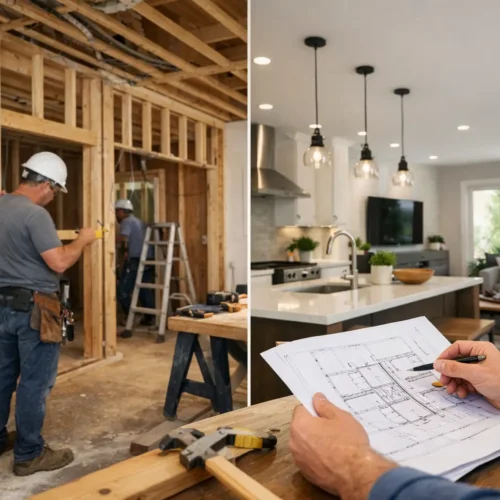










A finished commercial space should feel inevitable. The doors open on time. Inspections do not stall the schedule. The layout supports how your team works, how customers move, and how the brand is experienced in real life. That result does not come from luck. It comes from compliance planned early, documented properly, and managed with discipline. That is the real value of a commercial fit out compliance guide.
Most fit-out problems are not design problems. They are coordination problems. A ceiling plan conflicts with sprinkler coverage. A millwork package narrows a required path of travel. A change in use triggers washroom upgrades no one priced or scheduled. Projects start with a strong visual concept and lose time in the gap between intent and code. That gap is where schedules slip.
What compliance really means in a commercial fit-out
Compliance is not a final inspection box to check at the end. It is the framework that shapes the project from the first drawing onward. In a commercial fit-out, that usually means permits, building code requirements, fire and life safety measures, accessibility, occupancy rules, health-related standards where applicable, and landlord or base-building requirements.
The details vary by space. An office fit-out has a different compliance profile than a restaurant or retail unit. A medical or personal service space adds another layer. Even two similar units in the same building may face different conditions based on occupant load, existing systems, means of egress, and whether the work changes the intended use of the premises.
That is why experienced teams do not ask only, What are we building? They ask, What is this space legally allowed to be, and what does that trigger?
The commercial fit out compliance guide starts before design is finalized
The most expensive compliance mistake is designing first and validating later. On paper, almost anything can look clean. In the field, code has the final word.
Early compliance review protects the design instead of restricting it. It lets the team test the layout against occupancy, exiting, accessibility clearances, washroom requirements, fire separation conditions, emergency lighting, and existing building constraints before the drawings become expensive to revise. That is where control begins.
This is especially important in leased commercial space. Tenants often assume the shell condition is already compliant because the building exists and is occupied. That assumption causes trouble. Base building compliance does not automatically mean tenant improvement compliance. Once the interior layout changes, once the public enters, or once the use shifts, new obligations can follow.
In practical terms, this means the fit-out team should be reviewing the existing conditions, the intended use, the landlord requirements, and the authority approval path at the same time the design is taking shape. If those conversations happen in sequence instead of together, the project carries unnecessary risk.
Key compliance areas that shape the project
Permitting is the obvious one, but it is not the only one that matters. The permit set has to reflect a space that can actually pass review and inspection. That sounds simple. It rarely is.
Occupancy and use classification sit near the top of the list because they influence much of what follows. A retail boutique, office suite, restaurant dining room, and back-of-house prep area do not trigger the same code expectations. The intended use affects exits, occupant load, washroom counts, fire protection coordination, and accessibility obligations.
Accessibility should never be treated as a late-stage adjustment. Door clearances, turning radii, counter heights, washroom layouts, thresholds, and route continuity affect the core plan. If they are not resolved early, the team ends up forcing compliance into a layout that was never built to receive it.
Fire and life safety is another area where coordination matters more than most owners expect. Ceiling design, partitions, penetrations, doors, hardware, alarms, emergency lighting, and sprinkler coverage all intersect. This is where disconnected trades create avoidable inspection failures. One trade follows the reflected ceiling plan, another follows existing conditions, and the combined result no longer meets the approved intent.
Mechanical and electrical coordination also affect compliance, even when the project is not framed around those systems. Occupancy changes can affect ventilation expectations. New room layouts can affect life safety devices, exit signage, and lighting levels. A fit-out is never just finishes.
Then there is landlord compliance. In many commercial buildings, tenant approvals, building standards, work hour restrictions, shutdown procedures, and base-building integration requirements are as real as municipal ones. If the builder treats landlord review as a side task, the schedule pays for it.
Why compliance fails on otherwise good projects
Most non-compliant outcomes do not come from a lack of effort. They come from fragmented responsibility.
An owner assumes the designer is covering code. The designer assumes the consultant will catch technical conflicts. Trades build from partial information in the field. Site conditions reveal something the drawings did not. Then someone makes a quick decision to keep momentum, and the project drifts out of alignment.
This is why documentation matters so much. A controlled project has a defined scope, coordinated drawings, material and specification clarity, and a decision trail. Without that structure, compliance becomes reactive. Reactive compliance is expensive because it shows up after materials are ordered, walls are framed, or inspections are already booked.
A disciplined builder closes that gap by treating compliance as an execution issue, not just a design issue. The permit set matters. So does field verification. So does sequencing. So does making sure trades are working from the same current information.
How to use this commercial fit out compliance guide in real decisions
Start with the use of the space, not just the look of it. Be precise. Is this an office with meeting rooms and staff amenities? A retail environment with back storage? A food service operation with customer seating? Small wording differences can have major code implications.
Next, confirm the existing conditions before the design hardens. The age of the building, previous approvals, current systems, structural limitations, and fire protection infrastructure all affect what can be done cleanly and what requires deeper intervention. Assumptions made from leasing brochures or old plans are rarely enough.
Then build the scope with compliance in mind. That means the layout, assemblies, finishes, fixtures, and systems need to be documented in a way that supports permitting, trade pricing, procurement, and inspections. This is where a system like ClearScope™ changes the trajectory of a project. Clarity before mobilization prevents improvisation later.
After that, align the right trade and consultant team around the approved path. Compliance is not helped by having more voices. It is helped by having the right qualified voices working from the same scope and sequence. The Builders Plug™ exists for exactly that reason. Vetted, licensed, insured trades are not a branding detail. They are a control mechanism.
Finally, manage the build with milestone discipline. Inspections do not reward optimism. They reward readiness. Sequencing should account for what must be complete, visible, tested, and documented before each approval step. The Spartan System™ is built around that reality because schedule control depends on more than pushing trades to move faster.
It depends – and that is the point
Owners often want a simple checklist. Checklists help, but they are not enough.
Whether a permit is required, whether accessibility upgrades extend beyond the immediate suite, whether a change is classified as minor or substantial, whether existing conditions can remain or must be upgraded – these questions depend on the building, the jurisdiction, the use, and the exact scope. Anyone promising one-size-fits-all answers is selling speed at the expense of accuracy.
A strong compliance approach respects that complexity without turning the project into red tape theater. The goal is not paperwork for its own sake. The goal is a space that can be built, approved, occupied, and operated without late surprises.
That matters even more in the Greater Toronto Area, where permit pathways, existing building conditions, and landlord standards can create layers of review that need active management. The right team does not merely respond to those layers. It plans through them.
Compliance is part of the finished experience
Clients never walk into a completed office, retail store, or restaurant and admire the permit file. They feel the result instead. Doors swing where they should. Paths are intuitive. The space works under real occupancy. Opening day arrives without the frantic scramble that defines so many commercial projects.
That is what compliance should deliver. Not delay. Not friction. Not a pile of corrections at the worst possible moment. Just a space that performs as designed because it was planned with precision from the start.
If you are evaluating a commercial fit-out, do not ask whether compliance will be handled. Ask how early it is being shaped, how clearly it is being documented, and who is accountable for keeping the drawings, the field, and the approvals aligned. That is where better projects begin.