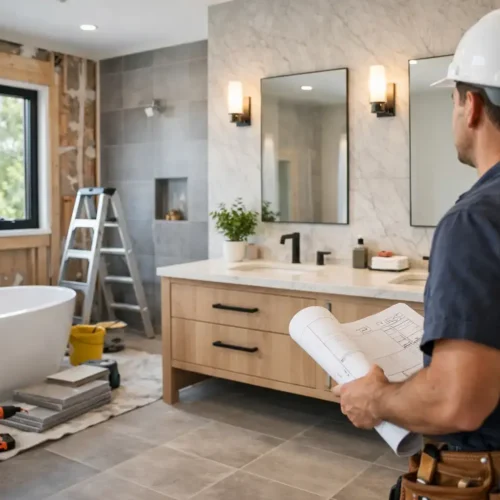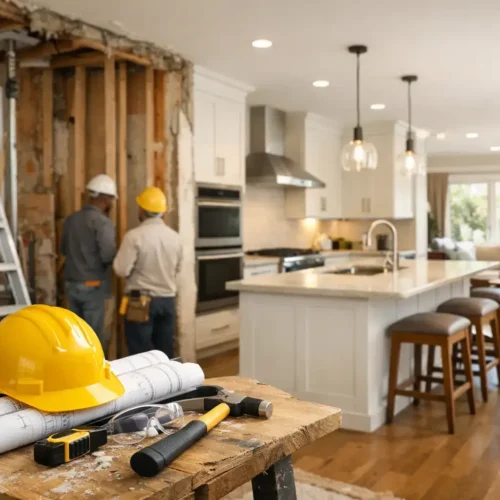








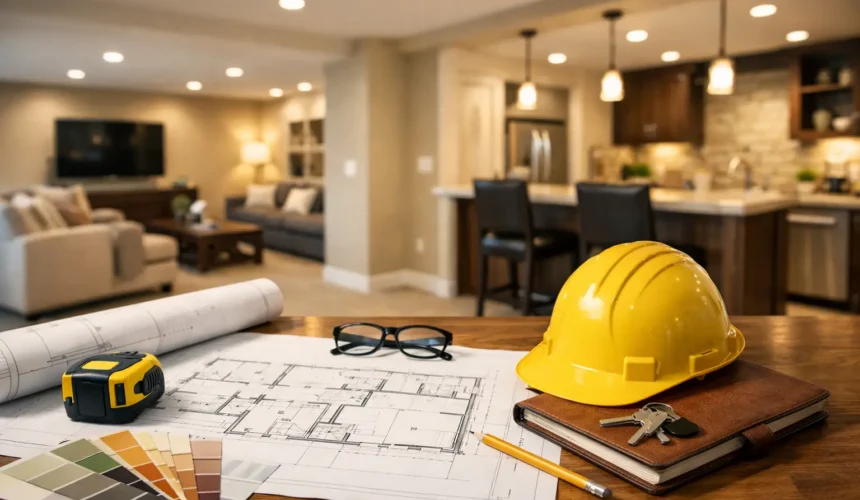
Picture the finished basement before a single wall goes up. The lighting is warm, the ceiling feels intentional, storage is built in, and every square foot has a purpose. It does not feel like “extra space.” It feels like part of the home. That is where a strong basement finishing planning guide starts – not with demolition, and not with random ideas saved on your phone.
A basement can become the most flexible space in the house. A family lounge. A guest suite. A quiet office. A gym that actually gets used. But the difference between a basement that adds value and one that feels compromised is almost always decided before construction begins. Planning is not the preamble. It is the project.
Why a basement finishing planning guide matters
Basements are less forgiving than above-grade rooms. Ceiling heights are tighter. Mechanical lines compete for space. Moisture risk changes material choices. Egress, insulation, sound control, and fire separation can all shape the layout. If those realities are not addressed early, the design starts making decisions for you.
That is why a basement finishing planning guide should do more than help you choose finishes. It should force clarity around use, layout, code, sequencing, and documentation. Homeowners rarely regret planning too carefully. They do regret assumptions that turn into change orders, delays, or rooms that never function the way they imagined.
The best basement projects feel effortless when they are done. They are anything but effortless behind the scenes.
Start with the life you want downstairs
A basement should not be planned as a leftover floor. It should be designed around how you want to live. That sounds obvious, but many projects still begin with framing plans before anyone has defined the daily use of the space.
Start with the primary function. Not six possible functions. The main one. If the basement is meant to be a family retreat, the layout should prioritize comfort, sightlines, media placement, and storage. If it is meant to include a bedroom suite, privacy, closet design, bathroom access, and egress move to the front of the line. If it is a work-from-home level, acoustics and lighting matter more than oversized open space.
Secondary uses matter too, but they should support the main goal rather than compete with it. This is where many layouts go off track. A basement that tries to be a theater, gym, guest room, playroom, office, and bar often ends up doing none of them well. Focus creates better design.
Layout comes before finishes
Homeowners often spend too much time choosing floor color and not enough time evaluating circulation. A great basement is easy to move through. It has natural zoning. It respects where people gather, where people need privacy, and where the house needs hidden utility access.
This is where planning becomes strategic. Existing columns, beams, bulkheads, drains, and furnace locations are not minor details. They are design variables. You can work around them, conceal them, or reorganize the plan to make them feel intentional. What you should not do is pretend they are not there until framing begins.
A strong layout also considers furniture at the planning stage. If a sectional, desk wall, treadmill, or bed cannot fit comfortably on paper, it will not work better in real life. Good plans account for actual use, not just empty rooms.
Ceiling height changes the entire experience
Few basement decisions have more impact than how you handle height. Low ceilings can make a finished basement feel compressed even when the square footage is generous. That does not always mean major structural changes are required, but it does mean every inch matters.
Lighting layout, bulkhead design, floor assembly, and room zoning all affect how spacious the basement feels. Sometimes the smartest move is to keep one large area as open and clean as possible, while placing lower soffits over transitional zones, storage, or bathrooms where the drop feels less intrusive. It depends on the structure. The key is to design with the conditions, not against them.
Moisture planning is not optional
A beautiful basement built on bad moisture assumptions is a short-lived success. This is one of the most common failures in lower-level renovations. Not because homeowners do not care, but because too many builders treat moisture as a product decision instead of a planning decision.
The right approach starts with understanding the existing condition of the space. Is the basement consistently dry? Has there been past water entry? Are there signs of vapor issues, efflorescence, musty air, or seasonal dampness? Those answers should influence insulation strategy, wall assembly, flooring choice, and even room placement.
This is not about fear. It is about discipline. Bathrooms, laundry areas, and enclosed storage all benefit from smarter material planning in a basement environment. So do feature walls and millwork. You do not want premium finishes installed on top of unresolved conditions.
Code shapes better outcomes
Good basement planning respects code early because code is not there to interrupt design. It is there to protect function, safety, and long-term value. Ceiling clearance, stair geometry, emergency egress, smoke detection, insulation, and fire separation can all affect the final plan.
Bedrooms are a common example. Many homeowners want one in the basement, but not every room can legally function as a bedroom. Window size, location, and egress requirements matter. The same goes for secondary suites, which bring another layer of planning and approvals depending on the municipality.
This is where documented scope becomes powerful. Clear drawings and specifications reduce interpretation. They align the design intent with permit requirements and construction execution. That removes guesswork, and guesswork is where quality starts to slip.
Build the basement from the systems outward
The most successful basements feel polished because the hidden systems were planned with the same care as the visible finishes. Mechanical runs, access panels, electrical locations, sound control, and ventilation all affect the final result.
A media lounge without proper wiring foresight ends up with visible compromises. A guest suite without sound separation feels temporary. A home office with poor air movement becomes uncomfortable fast. These are not finishing problems. They are planning problems.
This is why process-led builders approach basement design as coordination, not decoration. Every layer affects the next one. Framing influences mechanical routing. Mechanical routing influences ceiling design. Ceiling design influences lighting. Lighting influences how materials read. Once you understand that chain, better decisions happen earlier.
Storage should be designed, not leftover
Most homeowners want more storage from a basement, but many plans treat storage as whatever space remains after the fun rooms are assigned. That usually leads to clutter drifting into finished areas.
Well-planned storage is integrated. It belongs near where items are used. It uses awkward zones intelligently. It protects access to serviceable equipment. In many basements, the smartest storage is built into transitions, under stairs, around columns, or within custom millwork that makes the room feel more finished, not more crowded.
A clear scope protects the project
If there is one difference between a controlled basement renovation and a chaotic one, it is documentation. Homeowners should know exactly what is being built, what materials are being installed, what is excluded, and how the work will be sequenced.
Without that clarity, assumptions creep in. One person thinks insulation is included. Another assumes custom shelving is part of the millwork package. Someone expects dimmable lighting throughout. Someone else priced a basic setup. That gap is where trust gets damaged.
A disciplined scope prevents the basement from changing shape mid-project. It protects design integrity. It protects scheduling. It protects the client from vague language that sounds acceptable until decisions are due.
At Spartan Builders, this is exactly why projects begin with documented planning through systems like ClearScope™. It creates alignment before trades enter the space. That is how you keep a basement renovation moving with precision instead of reacting to problems one week at a time.
The right trade-offs depend on your priorities
Every basement plan involves trade-offs. Open space versus enclosed rooms. Maximum ceiling height versus deeper floor comfort. Feature elements versus storage. Future flexibility versus immediate specialization. There is no universal perfect answer.
What matters is making those choices intentionally. If you host often, give the common area more space. If overnight guests are frequent, prioritize privacy and a full bath. If the basement is the family media hub, invest in acoustics and lighting control. If resale versatility matters, avoid over-designing the floor around a niche use.
The right basement does not try to be everything. It performs exactly where your life needs it most.
Basement finishing planning guide for a smoother build
A smart basement finishing planning guide is not a mood board. It is a decision framework. It helps you define use, measure constraints honestly, coordinate systems, document scope, and move into construction with control.
That control is what changes the experience. Fewer surprises. Better sequencing. Cleaner execution. A finished basement that feels calm, integrated, and fully part of the home.
If you are planning one now, aim higher than a finished lower level. Build a space that feels inevitable, as if the house was always meant to include it.