








Picture the finished space for a moment. Cabinets aligned perfectly. Lighting placed with purpose. The floor plan finally working the way your life or business actually works. A renovation should feel like controlled progress toward that result, not a long chain of surprises.
So what delays renovation projects most? In our experience, the biggest delays rarely come from one dramatic failure. They come from preventable gaps at the beginning, then compound through the build. An unclear scope becomes a missing material. A late decision pushes a trade. One missed inspection shifts the entire schedule. What looks like bad luck is usually poor project control.
What Delays Renovation Projects Most in Real Projects
Owners often assume delays come down to labor shortages or a slow permit office. Those can matter. But the most common cause is simpler and more dangerous: the project starts before it is truly ready.
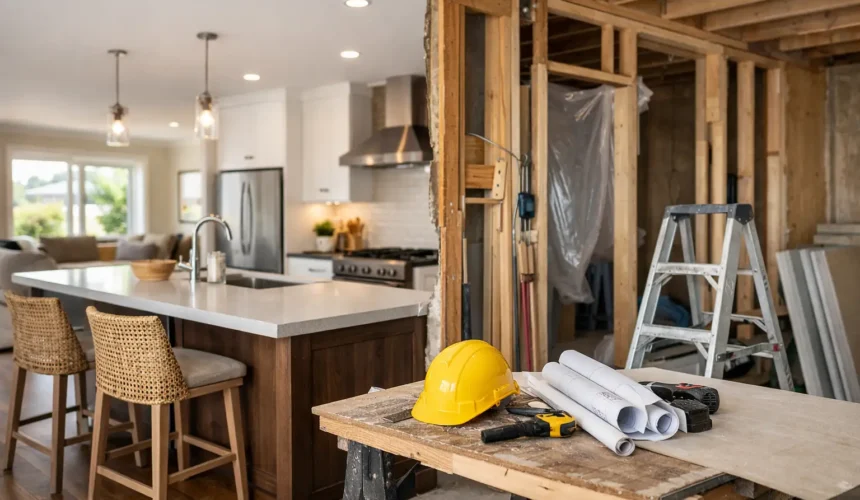
That means drawings are incomplete, finishes are still undecided, site conditions have not been fully investigated, or the sequence between trades has not been locked in. Once demolition begins, every unresolved detail becomes a live problem. The schedule stops being a plan and starts becoming a negotiation.
This is why some projects look active but make very little progress. People are on site. Materials are moving. Conversations are happening. Yet the project is not advancing at the speed it should because decisions that should have been made before construction are now being made during construction.
The Delays That Matter Most
Incomplete scope definition
This is the delay behind many other delays. If the scope is vague, the team cannot price accurately, order accurately, or schedule accurately. A kitchen renovation without final appliance specs, cabinet details, lighting locations, and finish selections is not ready for production. A commercial fit-out without clear reflected ceiling plans, millwork details, and code-driven requirements is not ready either.
When scope is incomplete, trades arrive with assumptions. Assumptions fail on site. Then work pauses while details are clarified, revised, approved, and re-sequenced. That pause is expensive in time even when nobody says the word delay out loud.
A disciplined builder solves this before the first day on site. Full documentation changes the pace of a project because fewer decisions are left hanging in the field.
Late material selections and procurement
Finishes shape schedules more than clients expect. Tile, custom glass, plumbing fixtures, specialty lighting, stone slabs, hardware, and millwork components can all extend lead times. The issue is not only shipping. It is also coordination.
If a vanity is selected late, countertop templating moves. If the countertop moves, plumbing trim installation moves. If plumbing trim moves, final inspection may move. A single delayed finish can touch five parts of the schedule.
There is also a trade-off here. Some custom elements are worth the wait because they define the finished result. The mistake is not choosing custom. The mistake is choosing it too late, without protecting the rest of the timeline.
Permit and inspection friction
Permits do delay projects, but usually not in the simplistic way people think. The issue is often not that the municipality is slow. The issue is that submissions are incomplete, revisions are required, or the project team has not aligned design intent with code requirements early enough.
Inspections create a second pressure point. If rough-ins are not ready when the inspection is booked, or if work has to be corrected before approval, the next trades cannot proceed. Drywall, flooring, cabinetry, and finishes all depend on the approvals before them.
For projects in the Greater Toronto Area, this matters even more because permitting conditions, existing housing stock, and building complexity vary widely by municipality and property type. Older homes and mixed-use spaces tend to expose more conditions that need to be addressed properly, not rushed past.
Unforeseen site conditions
Open a wall in an older home and you may find structural changes, outdated wiring layouts, past water damage, uneven framing, or previous work that was never done to a standard you would want to build on. In commercial interiors, you may discover conditions above the ceiling, slab issues below the floor, or mechanical conflicts hidden behind existing finishes.
These issues are real. They can affect schedule. But they should not be used as a blanket excuse for every late project. Experienced teams expect a degree of uncertainty, especially in renovations. The real question is whether the builder has allowed for investigation, decision paths, and contingency planning before those discoveries happen.
Surprises are part of renovation. Chaos is optional.
Weak trade coordination
Renovation is sequencing. The right people need to be on site at the right time, with the right information, after the right prerequisites are complete. If that chain breaks, the project slows down fast.
A painter cannot finish if trim carpentry is still changing. Flooring should not go in before high-risk overhead work is complete. Cabinet installation should not begin if walls are still out of tolerance. These are not minor coordination misses. They are schedule killers because they create rework, idle time, and damage risk.
This is where many builders lose control. They rely on informal updates instead of structured milestone tracking. The result is a project that keeps moving, but not in the correct order.
Slow client-side decisions
Clients do not cause every delay, but decision timing matters. If layout revisions, finish approvals, fixture changes, or added scope happen after procurement and scheduling are already underway, the project absorbs that impact.
This is not about pressuring clients to rush. Good decisions need enough information behind them. It is about building a process where decisions are made at the right phase, with the right context, before they become schedule disruptions.
The best renovation experience does not come from making hundreds of choices on the fly. It comes from making the critical ones early and documenting them clearly.
Why Small Delays Become Big Delays
Renovation schedules are interdependent. One delayed item does not stay in its lane. It pushes the next task, which pushes the next trade, which can then affect inspections, deliveries, and site access.
That is why a two-day delay can become two weeks. Trades are scheduled across multiple projects. Miss your window and the next available opening may not be immediate. Custom materials often have production queues. Inspectors work on their own calendars. Once a sequence breaks, recovering time takes real planning.
This is also why visible activity can be misleading. A project can appear busy while the critical path is slipping behind. Serious builders track the sequence, not just the motion.
How Well-Run Projects Protect the Timeline
The answer to what delays renovation projects most is usually not labor, weather, or bad luck. It is lack of definition and lack of control. Well-run projects deal with that before construction starts.
That means complete scope documentation. Finalized selections. Accurate site investigation. Trade-by-trade sequencing. Milestone tracking. A communication structure that surfaces decisions before they become stoppages.
At Spartan Builders, that is exactly why our systems exist. ClearScope™ defines the project before trades mobilize. The Builders Plug™ puts vetted, accountable trades into the schedule. The Spartan System™ manages sequencing, milestones, and communication so the project stays controlled as conditions evolve. The goal is not just to build well. It is to remove the conditions that create avoidable delay in the first place.
What Owners Should Watch Before a Project Starts
If you want to protect your timeline, pay attention to the signs before demolition begins. Ask whether drawings are complete enough for trades to build from. Ask whether finishes are selected and documented. Ask whether long-lead items have already been identified. Ask how site conditions will be verified. Ask how the schedule will be managed when one trade finishes late or an inspection shifts.
A vague answer at the beginning usually becomes a very specific problem later.
There is no such thing as a renovation with zero uncertainty. Existing conditions are real. Municipal processes are real. Custom work takes time. But most major delays are not mysterious. They are traceable. They start with missing information, weak planning, or poor coordination, then grow under pressure.
The right builder does not promise a fantasy schedule. They create a controlled one, protect it aggressively, and tell you early when something needs to change. That is what keeps a renovation moving with confidence instead of drift.
The finished space should feel inevitable long before the last coat of paint goes on. That only happens when the build is led by structure, not improvisation.