







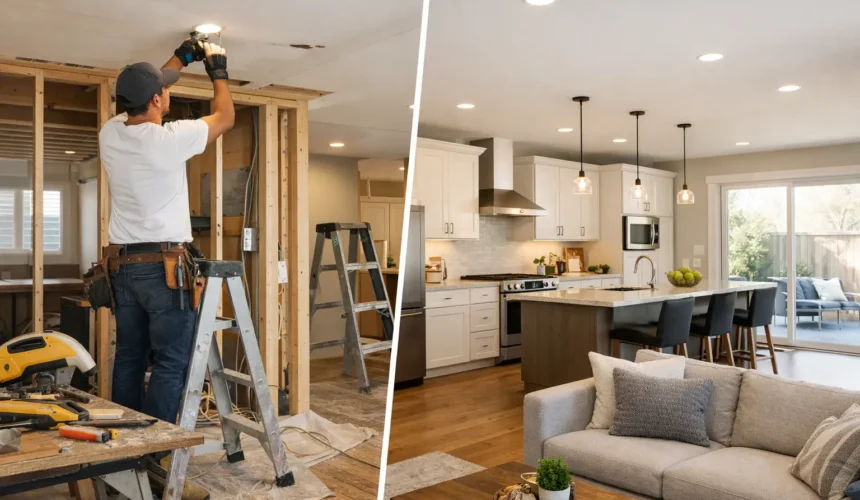
What you need to know about your rental property improvements and know the difference between a rental property improvements vs repairs. A rental unit feels different when the work is done right. The kitchen closes with precision. The bathroom reads clean, durable, and current. The layout works harder. That is the real value behind rental property capital improvements – not cosmetic change for its own sake, but upgrades that extend the life of the asset, strengthen tenant appeal, and protect long-term performance.
This is where many property owners get pulled into confusion. A repaint after normal wear is not the same as a full kitchen reconfiguration. Replacing a broken fixture is not the same as rebuilding a basement suite to modern standards. The distinction matters because capital improvements affect how you plan the work, how you document it, how you budget for it, and often how it is treated for tax purposes. If the scope is unclear at the start, the project usually becomes expensive in all the wrong places.
What rental property capital improvements actually mean
In practical terms, rental property capital improvements are upgrades or additions that materially improve the property, extend its useful life, adapt it to a new use, or increase its value. They are not routine maintenance. They are not minor repairs meant to keep the property in ordinary operating condition.
A few examples make the line clearer. Replacing damaged cabinet hardware is maintenance. Replacing an entire dated kitchen with new cabinetry, revised layout, upgraded finishes, and better storage is generally a capital improvement. Patching a small section of drywall after tenant turnover is a repair. Rebuilding a water-damaged lower level into a properly planned, code-conscious living space is a capital project.
The difference is not always dramatic from the street. Sometimes the biggest capital improvements are invisible to the casual observer. Better insulation behind finished walls. Structural changes that open a floor plan. Reworked circulation that makes a multi-unit property function better. New assemblies designed for durability in high-turnover spaces. These are the decisions that change how a property performs over the next decade, not just how it photographs this week.
Why the repair versus improvement line matters
Owners often think about this question only when tax season arrives. That is too late. The repair versus improvement distinction should shape the project before design begins.
A repair restores something to its previous condition. A capital improvement creates a better condition than what existed before, or meaningfully extends the life of the space. That affects scope documentation, approvals, sequencing, and material selection. It also affects how much disruption the property can absorb while work is underway.
There is also a control issue. Repair work is often reactive. Improvement work should be strategic. If a rental property has recurring problems like poor storage, dated baths, fragmented layouts, weak finishes, or underused lower levels, tackling them one small fix at a time can waste money. You keep spending without changing the actual standard of the asset.
That is why disciplined owners step back and ask a better question: are we preserving the property, or are we repositioning it?
The most common rental property capital improvements
The right improvement depends on the building, the tenant profile, and the hold strategy. Still, certain categories come up repeatedly because they produce measurable gains in livability and asset performance.
Kitchens and bathrooms
These are the most obvious value centers because tenants use them every day and judge the property by them immediately. A dated kitchen can make an otherwise solid unit feel tired. A well-planned one makes the whole rental feel considered.
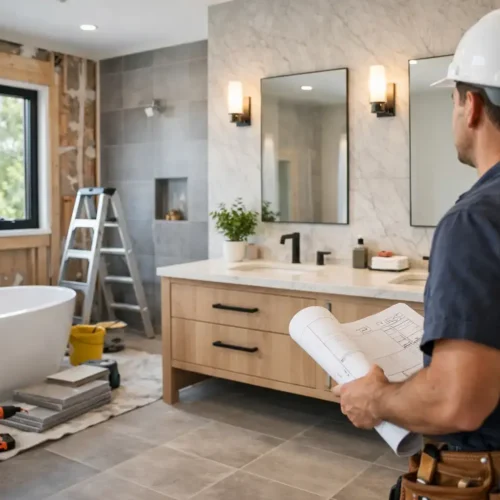
Capital-level kitchen and bath work usually means more than swapping finishes. It may involve reworking layouts, replacing cabinetry, improving storage, updating waterproof assemblies, adding better lighting plans, and selecting materials that hold up under repeated turnover. This is where design and durability need to work together. A beautiful surface that chips, swells, or stains after one lease cycle is not a smart improvement.
Basement finishing and reconfiguration
In many properties, the lower level represents trapped value. When designed properly, it can become functional living space, a legal secondary suite where applicable, or a far more usable amenity area. When handled casually, it becomes a source of moisture problems, poor layouts, and code issues.
This is one of the clearest examples of a true capital improvement. You are not just refreshing finishes. You are changing the utility and performance of the property.
Layout changes and full interior renovations
Sometimes the property does not need more square footage. It needs a better plan. Narrow kitchens, undersized baths, awkward room divisions, and weak storage can suppress rental value even when the address is strong.
Strategic layout changes can make a unit feel larger, brighter, and easier to live in without expanding the footprint. That is often where the best returns live – not in excess, but in precision.
Good capital improvements start before construction
Most project failure is not caused by bad intentions. It is caused by vague scope, fragmented decisions, and assumptions that no one documented.
Rental property capital improvements need front-end clarity because every trade, material, and sequence decision compounds downstream. If demolition starts before the full scope is locked, small gaps in planning become change orders, delays, and compromises. Owners then end up making high-impact decisions under pressure, which is exactly when the wrong choices get made.
This is why a documented pre-construction phase matters so much. Scope-of-work detail. Material specifications. Existing condition review. Sequencing. Compliance considerations. Tenant and occupancy planning where relevant. Without that structure, the project is being managed by improvisation.
At Spartan Builders, this is the gap our ClearScope system is designed to close. The goal is simple: define the work completely before the site is opened. That level of control is not administrative overhead. It is how serious capital work stays aligned with the outcome.
Where owners often get it wrong
The biggest mistake is treating a capital improvement like a series of isolated purchases. New tile here. New vanity there. Better lights later. That approach can refresh surfaces, but it rarely upgrades the asset in a coherent way.
The second mistake is over-improving without regard to use. A rental property should feel elevated, durable, and well resolved. It does not need fragile materials or custom choices that make future maintenance difficult. Restraint is part of good planning.
The third mistake is underestimating the cost of poor coordination. The cheapest decision on paper can become the most expensive one on site if the trades are unscheduled, details are unresolved, or material lead times were ignored. Capital improvements demand orchestration, not just labor.
How to evaluate whether an upgrade should be capitalized
Your accountant or tax advisor should determine how a specific expense is treated, but from a planning standpoint, there are practical questions that help frame the issue.
Ask whether the work substantially extends the life of the property element. Ask whether it increases value beyond basic restoration. Ask whether it adapts the space to a new or better use. Ask whether the scope is replacing a component in kind, or creating something meaningfully improved.
If the answer consistently points toward betterment, restoration at a major level, or adaptation, you are usually looking at a capital project rather than simple maintenance. That distinction should shape your documentation from day one. Vague invoices and loose scopes make later classification harder, not easier.
Better systems produce better assets
A rental property is not improved by construction activity alone. It is improved by decisions made in the right order. First the vision. Then the scope. Then the specifications. Then the schedule. Then execution.
That sequence sounds obvious. In this industry, it rarely is. Too many projects start with demolition because it feels like progress. Real progress starts when the work has been fully thought through.
For owners planning major upgrades across the Greater Toronto Area, that level of discipline matters even more in occupied or high-demand properties where delays ripple into leasing timelines and operational pressure. A process-led builder does more than complete the work. They protect the asset while it is being transformed.
The best rental property capital improvements do not call attention to the construction story behind them. They simply make the property feel right – stronger, smarter, easier to lease, and built to last. That is the standard worth building toward.