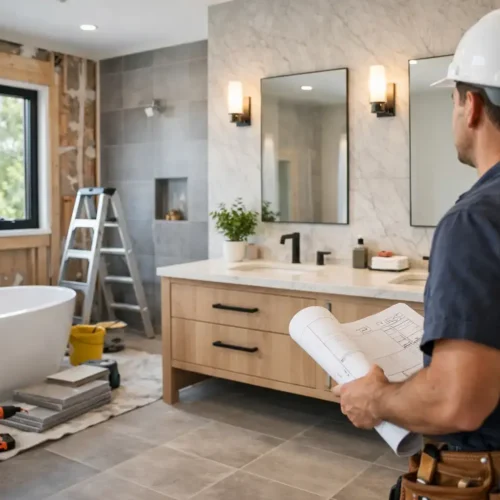









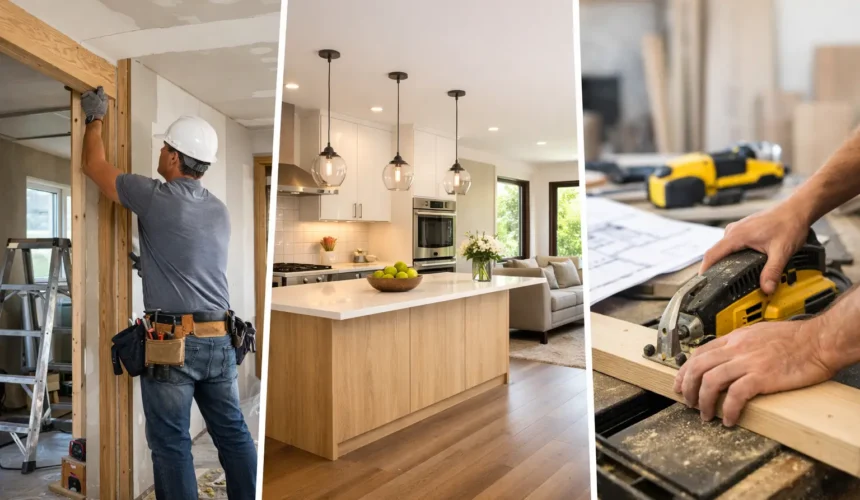
Picture walking into a home that finally feels resolved. The layout makes sense. Storage is where you need it. Light reaches the right places. Every finish belongs to the same conversation. A full home renovation guide should help you get there – not just with ideas, but with structure.
That is where most renovations succeed or fail. Not in paint colors. Not in tile samples. In decisions made early, documented properly, and executed in the right sequence. A full home renovation is not one project. It is a chain of interdependent systems, design choices, permits, trades, materials, and timing. If one part is vague, the entire build absorbs the cost.
What a full home renovation really includes
A true full home renovation goes far beyond updating surfaces. It can involve reworking layouts, opening or defining rooms, rebuilding kitchens and bathrooms, replacing flooring throughout, upgrading stairs, refining millwork, improving insulation, correcting structural issues, and aligning the entire home to one design direction.
Sometimes the goal is better function. A cramped main floor becomes open and usable. An awkward second story gains privacy and storage. A dark basement becomes integrated living space. Other times the goal is consistency. The house may have been updated in pieces over ten years, with each room speaking a different language. Full renovation brings coherence.
The scope depends on the home. A century property and a newer suburban build do not ask for the same decisions. One may require deeper correction behind the walls. The other may need smarter planning and stronger finish discipline. This is why assumptions are dangerous. Every home tells the truth once walls are opened and measurements are verified.
The full home renovation guide starts before demolition
The strongest projects are won on paper first. That means the renovation needs to be defined before anyone starts removing drywall or ordering materials. If the scope is loose, costs shift. If selections are incomplete, delays multiply. If trades are not sequenced correctly, good work gets undone by the next crew.
This is the stage where serious homeowners separate themselves from the chaos common in the industry. They want a documented scope, clear material specifications, realistic lead times, permit planning where required, and a build strategy that respects how the home actually comes together.
At Spartan Builders, this is why scope control sits at the center of delivery. ClearScope™ exists to document the project fully before the site turns active. That changes everything downstream. It protects the design. It sharpens pricing. It gives trades a real target.
Design is not decoration
A full renovation is often misunderstood as a finish exercise. It is not. Good design solves movement, proportion, storage, lighting, privacy, and flow before it chooses hardware or stone.
For example, widening a hallway by a few inches may matter more than choosing a more expensive floor. Reworking a kitchen sightline can improve the entire main floor. Lowering a bulkhead, adjusting a window opening, or changing the swing of a door can make a home feel custom without expanding its footprint.
This is why design, engineering, and build planning should not operate in separate silos. The best result comes when vision and execution are developed together.
Scope is where budgets become real
Many renovation disappointments begin with an attractive early number attached to an incomplete plan. The price looks manageable because key details have not been resolved yet. Then construction starts, unknowns appear, selections change, and allowances fail to match reality.
A disciplined builder does the opposite. The project is priced against actual scope. That may feel more rigorous upfront, but it creates control later. For homeowners renovating a primary residence, control matters more than optimism.
Planning the sequence of a full home renovation
The order of work is not a technical footnote. It shapes schedule, quality, and how much rework the project suffers.
In most cases, the sequence begins with investigation, measured plans, design development, and permitting where needed. Then comes site protection, selective demolition, structural changes, framing, rough-ins, inspections, insulation, drywall, millwork, tile, flooring, painting, finish carpentry, fixtures, and final detailing. That sounds straightforward until one delayed selection or missing decision pushes everything behind it.
The practical truth is that renovation is a scheduling discipline. Stone cannot be templated before cabinetry is installed correctly. Cabinetry cannot be finalized if appliance specifications are unresolved. Tile layouts should not be improvised after waterproofing begins. This is why a real scheduling system matters.
The Spartan System™ is built around that exact pressure point. Sequenced scheduling, milestone tracking, and client communication keep the project moving with fewer surprises. Homeowners should not have to chase updates or guess what happens next.
The hidden variables that change the project
Every experienced builder knows the polished drawings are only part of the story. Existing homes carry history. Some of it is visible. Much of it is not.
Framing may be inconsistent. Previous renovations may have ignored code. Floors may slope more than expected. Older materials may need special handling. Load paths may not align with the layout you want. Mechanical locations can interfere with ceiling heights or cabinetry plans. None of this means the project is in trouble. It means the builder has to think ahead and respond with control.
This is where trade quality alone is not enough. Trade coordination is what protects the result. The right carpenter, tile setter, or cabinetmaker matters. But so does the system that tells each trade exactly what they are building, when they are entering the site, and what standard they are expected to hit.
The Builders Plug™ reflects that reality. A vetted, licensed, insured trade network reduces risk because the project is not being assembled from whoever happens to be available that week.
Living through the renovation without losing the plot
For some clients, moving out during a full home renovation is the right call. For others, a phased strategy may be possible. It depends on scope, access, safety, noise, dust control, and how much of the home remains functional during construction.
There is no universal answer here. A kitchen-centered renovation with main floor reconfiguration can make daily life difficult fast. A second-story-focused scope may allow more flexibility. The key is honest planning, not wishful thinking.
Homeowners should also expect decision fatigue if the project is not structured well. The more unresolved choices that spill into active construction, the more stressful the experience becomes. This is another reason front-end planning matters. Renovation should feel demanding, not disorderly.
How to choose the right builder for a full home renovation guide in practice
A polished gallery is not enough. Neither is a friendly first meeting. Full home renovations need operational depth.
Look for a builder who can explain how scope is documented, how selections are tracked, how schedule dependencies are managed, how changes are handled, and how site communication works. Ask how they protect design intent when field conditions change. Ask who is accountable when one trade affects another. Ask what happens before demolition begins, not just what happens after.
The right partner will answer clearly. Not defensively. Not vaguely. They will show you a method.
If your renovation includes major layout changes, custom cabinetry, bathrooms, basement finishing, or a whole-home finish reset, integration matters. Design, technical planning, and construction cannot pull in different directions. That is where process-led builders create a different outcome.
For homeowners across the Greater Toronto Area, that difference is not abstract. It shows up in cleaner decisions, fewer surprises, tighter coordination, and a finished home that feels considered from front door to back wall.
What the best finished homes have in common
They feel calm. That is the mark of a well-executed renovation. Not that every finish is expensive, but that nothing feels accidental.
Transitions are clean. Storage feels intentional. Lighting supports the architecture. Materials belong together. Rooms connect logically. The home works better because someone controlled the whole picture, not just the visible parts.
That is the real point of a full home renovation guide. Not to make the process look simple. It is not simple. It is to show that complexity can be organized when the right system is in place.
If you are planning a full renovation, aim for more than a nicer house. Aim for a home that functions with clarity, carries a consistent design language, and is built through a process strong enough to protect the vision all the way to the last detail.