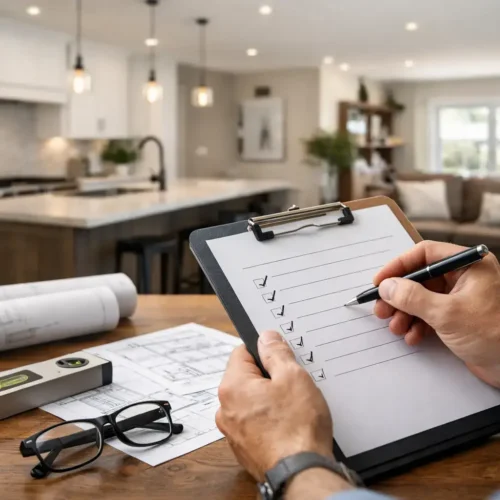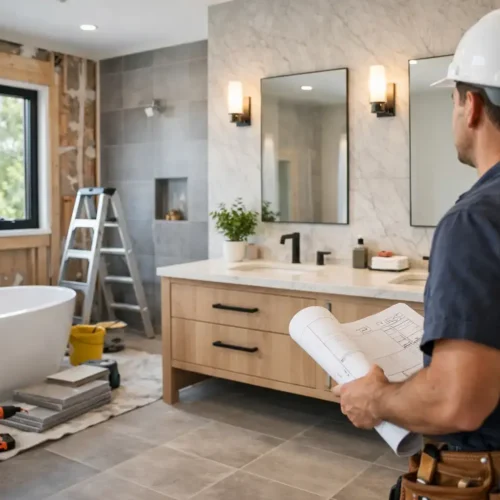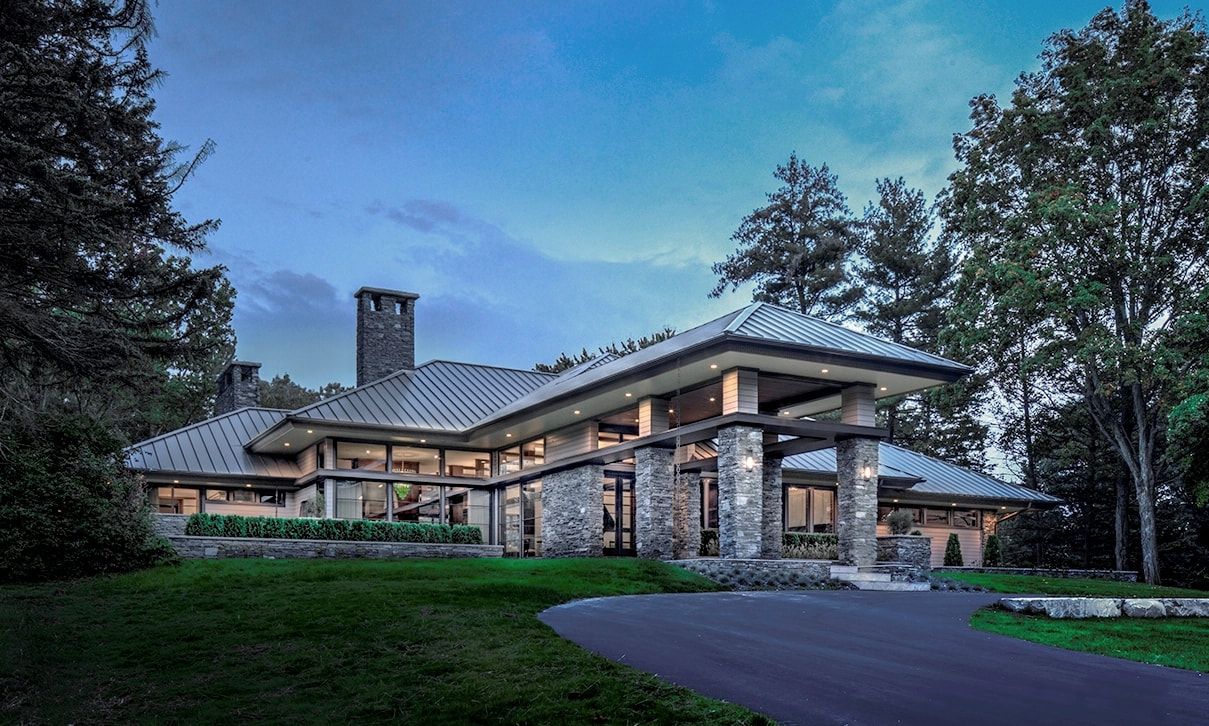








You can feel the difference before construction even starts. The layout makes sense. The finishes work together. The lighting, storage, flow, and structure are resolved on paper before anyone opens a wall. That is the real question behind design build vs general contractor – not who can swing a hammer, but who can carry the entire project with clarity from first concept to final handoff.
For homeowners and business owners, this decision shapes everything that follows. It affects how fast decisions get made, how accurately the scope is documented, how often surprises show up, and who is responsible when they do. On paper, both options can deliver a finished renovation or build. In practice, the experience can be very different.
What design build vs general contractor actually means
A general contractor is typically hired to execute a design that already exists. That design may come from an architect, interior designer, engineer, or consultant team. The contractor prices the drawings, coordinates trades, manages the site, and builds what has been specified.
A design-build firm handles design and construction under one structure. The design team and the build team are aligned from the beginning. That changes more than the contract. It changes how decisions are made, when problems are caught, and how much coordination the client has to carry.
This is where many projects go sideways. People assume the only difference is whether design is included. The real difference is accountability. In a traditional model, design and construction can become two separate lanes. In a design-build model, they are meant to move as one.
When a general contractor is the right fit
There are situations where a general contractor is exactly the right choice. If you already have a complete set of coordinated drawings, finish schedules, engineering, and permit-ready documents, a strong contractor can step in and execute with discipline.
This can work well when the scope is fully resolved before pricing. It can also work when the architect or designer is staying actively involved during construction to answer questions, review details, and protect the original intent. In that setup, the client has a clear consultant team and a clear builder, each with a defined role.
But that model depends on documentation being complete. If the drawings leave gaps, if material selections are incomplete, or if details are being figured out while construction is underway, the project can start to stretch. Every missing decision creates another handoff, another approval cycle, another opportunity for cost movement or schedule drift.
A general contractor is not the problem in that scenario. Fragmented planning is.
Where design-build creates an advantage
Design-build works best when the client wants one team to own the full path from vision to execution. That matters in complex renovations, additions, custom homes, commercial interiors, and any project where design decisions affect structure, mechanical planning, sequencing, and finish integration.
The biggest advantage is that buildability enters the conversation early. The team designing the space is not working in isolation from the team responsible for constructing it. That means details can be tested against real site conditions, actual sequencing, code requirements, and trade coordination before they become expensive revisions.
It also improves speed. Not rushed speed. Decision speed. When design and construction sit under one system, questions move faster. Pricing feedback happens earlier. Material choices can be evaluated against lead times and installation realities before they become delays.
That is especially important in occupied homes and active businesses. The fewer disconnected parties involved, the fewer chances there are for missed communication.
Design build vs general contractor on cost control
Most clients ask which route is cheaper. That is not the most useful question. The better question is which route gives you better cost control.
A low initial number means very little if the scope is vague. Projects do not become expensive only because labor or materials cost more than expected. They become expensive when the original plan leaves room for interpretation, omission, or redesign during construction.
In a traditional general contractor model, pricing is only as accurate as the documents provided. If finishes are not specified, if millwork details are loose, or if hidden conditions were never considered during design, the contractor may have no choice but to price allowances, exclusions, or assumptions. Those become pressure points later.
In a design-build model, cost feedback can be folded into design development. That does not make every project cheaper. It makes the project more informed. The client sees trade-offs earlier. Scope can be refined before the site is active. Materials can be selected with real installation and procurement factors in mind.
That is the difference between reacting to cost and managing it.
Why accountability matters more than delivery model
The phrase design build vs general contractor can make it sound like one model is always superior. It is not that simple. A poorly run design-build firm can still create confusion. A disciplined general contractor with excellent drawings can deliver an outstanding project.
What matters is how the work is controlled.
Ask simple questions. Who owns the scope documentation? Who is responsible for resolving conflicts between design intent and site conditions? Who tracks selections, revisions, trade sequencing, and milestone approvals? Who is making sure the client is not chasing updates from five different people?
If those answers are vague, the delivery model will not save the project.
This is where process-led builders separate themselves from traditional contractor culture. The job is not just to build. The job is to remove ambiguity before ambiguity becomes cost, delay, or compromise.
The hidden friction in the traditional model
Many clients choose a designer first, then tender the project to contractors. Sometimes that works beautifully. Sometimes it creates a silent gap between the vision on paper and the reality of execution.
A contractor may review the design after major decisions have already been made. At that point, structural implications, site logistics, lead times, code issues, and installation constraints can force redesign. Nobody is being careless. The project is simply dealing with constructability too late.
That late-stage friction shows up in familiar ways. Revised drawings. Repriced scopes. Material substitutions. Delays while one consultant waits for another to respond. The client ends up managing the spaces between specialists instead of benefiting from their expertise.
A strong design-build structure reduces that gap because the conversation starts earlier. Design ambition and construction reality are developed together, not introduced to each other halfway through the job.
How to choose the right path for your project
If your drawings are complete, your consultant team is strong, and you want a contractor focused purely on execution, a general contractor may be the right fit. That route can work well when roles are clear and documentation is airtight.
If your project is still evolving, if you want design and build decisions connected from day one, or if you want one team responsible for both vision and delivery, design-build usually gives you better control.
For higher-stakes renovations and builds, the question is often less about preference and more about complexity. The more moving parts a project has, the more valuable integrated planning becomes. Kitchens tied to structural work. Additions that affect circulation and exterior form. Commercial interiors with code, function, and brand expression all pushing at once. These are not just construction jobs. They are coordination jobs.
That is why firms like Spartan Builders build around documented scope, vetted trades, and structured delivery systems instead of relying on informal site management. The best projects do not feel lucky. They feel controlled.
What the best clients understand early
Sophisticated clients stop comparing models in abstract terms and start looking at the operating system behind them. They want to know how decisions are documented, how risks are identified, how selections are locked, and how accountability is maintained when conditions change.
That mindset leads to better outcomes because construction is not a single act. It is a chain of decisions. The clearer that chain is from the beginning, the more likely the finished space will match what you saw in your head.
A beautiful result is never just about design taste or construction skill. It comes from alignment. The right people. The right documentation. The right sequence. The right ownership.
If you are choosing between design-build and a general contractor, choose the structure that gives you the fewest blind spots. The finished space will only ever be as strong as the system that brought it there.