







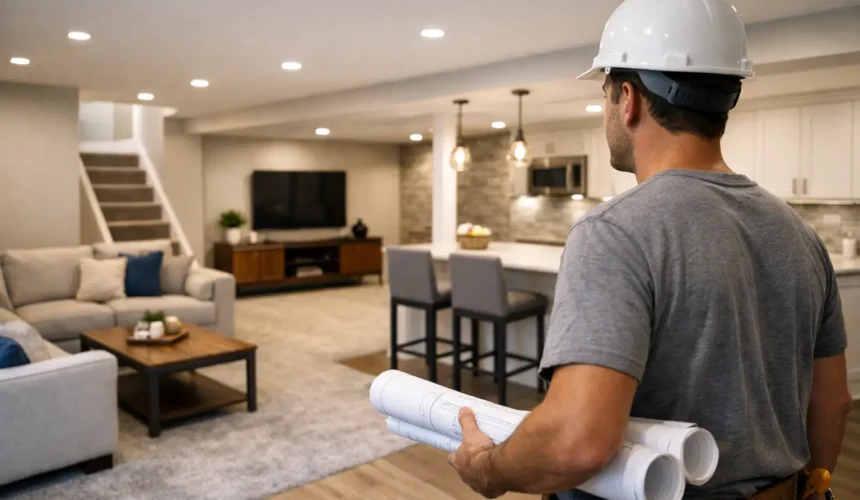
A finished basement should feel like the smartest square footage in your home. Not an afterthought. Not a dim extra room with a sofa pushed against the wall. The right basement finishing contractor Brampton homeowners choose should turn that lower level into space that works as hard as the rest of the house – whether that means a quiet office, a polished guest suite, a family lounge, or a multi-use floor that adapts as life changes.
That shift does not happen because drywall goes up and flooring goes down. It happens because the build is designed, documented, and executed with control.
What a basement should do for your home
A well-finished basement changes how the entire house lives. Upstairs gets calmer because pressure moves downstairs. The main floor is no longer doing everything at once. Kids have room to spread out. Guests have privacy. Work has a defined place. Storage stops spilling into daily life.
That is the real value. More function. Better flow. A home that feels complete.
In Brampton, that matters even more because homes often need to support multiple uses at once. One family may want a media room and gym. Another may need a refined in-law setup. Someone else may want a quiet workspace with built-in millwork and strong lighting. The best result is never copied from a generic plan. It is built around how the home actually operates.
Choosing a basement finishing contractor in Brampton
Most basement problems start before construction starts. The issue is not the paint color or the tile pattern. It is unclear scope, vague allowances, weak coordination, and trades arriving before the job is truly ready for them.
That is why choosing a basement finishing contractor in Brampton is less about who can start fastest and more about who can define the project clearly. If the builder cannot explain what is included, how the work will be sequenced, what standards will be followed, and how changes are managed, you are not buying certainty. You are buying guesswork.
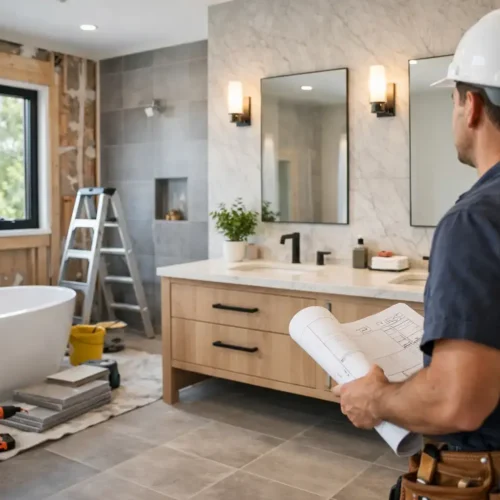
A finished basement involves framing, insulation, moisture management, layouts, ceiling strategy, lighting placement, trim, flooring transitions, millwork, and code compliance. Those elements affect one another. Ceiling height impacts lighting. Mechanical routing affects bulkheads. Storage planning affects room proportions. Bathroom placement affects the entire layout. A contractor who treats these as separate line items will usually deliver a disconnected result.
A process-led builder treats the basement as a full interior project. That is where the difference shows.
Why basement finishing goes wrong so often
Homeowners usually do not run into trouble because they expected too much. They run into trouble because the project was never made clear enough to begin with.
The industry is full of loose proposals and verbal assumptions. A drawing may exist, but materials are not fully specified. Finishes may be discussed, but not documented. The schedule may sound organized, but trade sequencing has not been tightened. Then the project starts. Questions appear daily. Costs move. Decisions get rushed. The basement becomes a chain of reactions instead of a controlled build.
This is exactly where systems matter.
At Spartan Builders, the point is not to make construction sound complicated. The point is to remove avoidable chaos. ClearScope™ defines the work before site activity begins. The Builders Plug™ puts licensed, insured, vetted trades into the right sequence. The Spartan System™ keeps delivery structured, visible, and accountable from milestone to milestone.
That approach is not marketing language. It changes the outcome. When documentation is complete, trades are coordinated, and communication is disciplined, the basement feels intentional because it was built intentionally.
The design decisions that shape the result
The strongest basement projects rarely come from adding more rooms. They come from making sharper decisions.
A lower level needs to feel connected to the home above it, but it should also solve different problems. That often means thinking carefully about ceiling lines, door placement, lighting temperature, flooring tone, and millwork integration. If the basement feels like a separate property with unrelated finishes, the house loses continuity. If it mirrors the upper floors too literally, it can miss the opportunity to become more tailored and more useful.
There are also trade-offs. Open concept layouts feel expansive, but they can sacrifice privacy and acoustic control. Adding a bedroom or enclosed office can increase flexibility, but it may tighten the central living area. Darker finishes can create a refined, cinematic mood, but only if the lighting plan is strong enough to support them. Bathroom additions improve convenience, though they increase coordination requirements and affect layout efficiency.
This is where experience matters. Not because a builder should dictate taste, but because every design choice has downstream consequences. Good planning protects the look and the function at the same time.
What to expect from a better basement finishing process
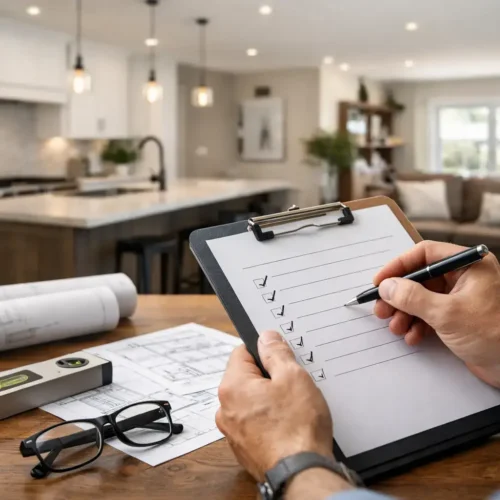
A professional basement build should feel clear long before demolition or framing. You should know what is being built, what materials are being used, how major decisions are handled, and how progress will be communicated.
That does not mean every project is identical. Some basements are straightforward. Others include custom cabinetry, integrated sound, specialty tile work, wet bars, or more complex room programming. But every successful project shares the same foundation – scope clarity, documented selections, proper sequencing, and active oversight.
When those pieces are in place, the job moves differently. There is less scrambling. Fewer mid-project reversals. Better alignment between vision and execution.
That matters for homeowners who are busy and decisive. You should not need to manage your contractor like a second career. You should be able to review the plan, understand the milestones, make informed decisions when needed, and trust that the project is being controlled properly in between.
Basement finishing contractor Brampton homeowners should look for
If you are evaluating a basement finishing contractor Brampton offers plenty of options. The difference is not who says yes to the job. The difference is who can carry the project from concept to completion without losing precision.
Look for a builder who can speak clearly about layout strategy, materials, compliance, and sequencing in the same conversation. That range matters. Basement finishing sits at the intersection of design, architecture, and construction. If one side is weak, the whole project feels weaker.
You also want documentation that protects decisions before they become expensive to revisit. Verbal promises are not a project plan. Neither is a thin estimate with broad categories and too many assumptions hiding underneath. A controlled build begins with a controlled scope.
And pay attention to how the builder communicates. If answers are vague during pre-construction, they will not become sharper once the job starts. The early experience usually predicts the entire relationship.
A basement is not just extra space
For many families, the basement becomes the most adaptable level in the home. It is where life expands without forcing a move. It creates room for focus, rest, hosting, entertainment, or extended family support. When planned well, it can feel less like added square footage and more like relief.
That is why the standard for basement finishing should be higher than basic completion. The goal is not to check a box and say the lower level is done. The goal is to create a space that feels composed, cohesive, and built for the way you actually live.
A basement can either expose every weakness in a builder’s process or showcase every strength. The difference comes down to clarity, coordination, and the discipline to get the details right before they become problems.
If you are planning a basement project in Brampton, start with the outcome you want to live in. Then choose the team that can define it, document it, and build it with control. The finished space should feel calm the day you walk into it for the first time. That feeling is not accidental. It is earned in the planning.