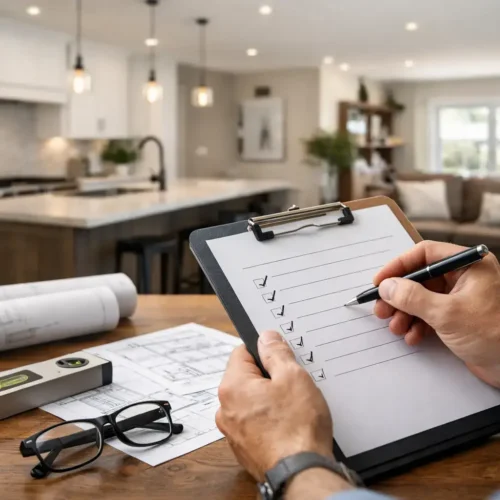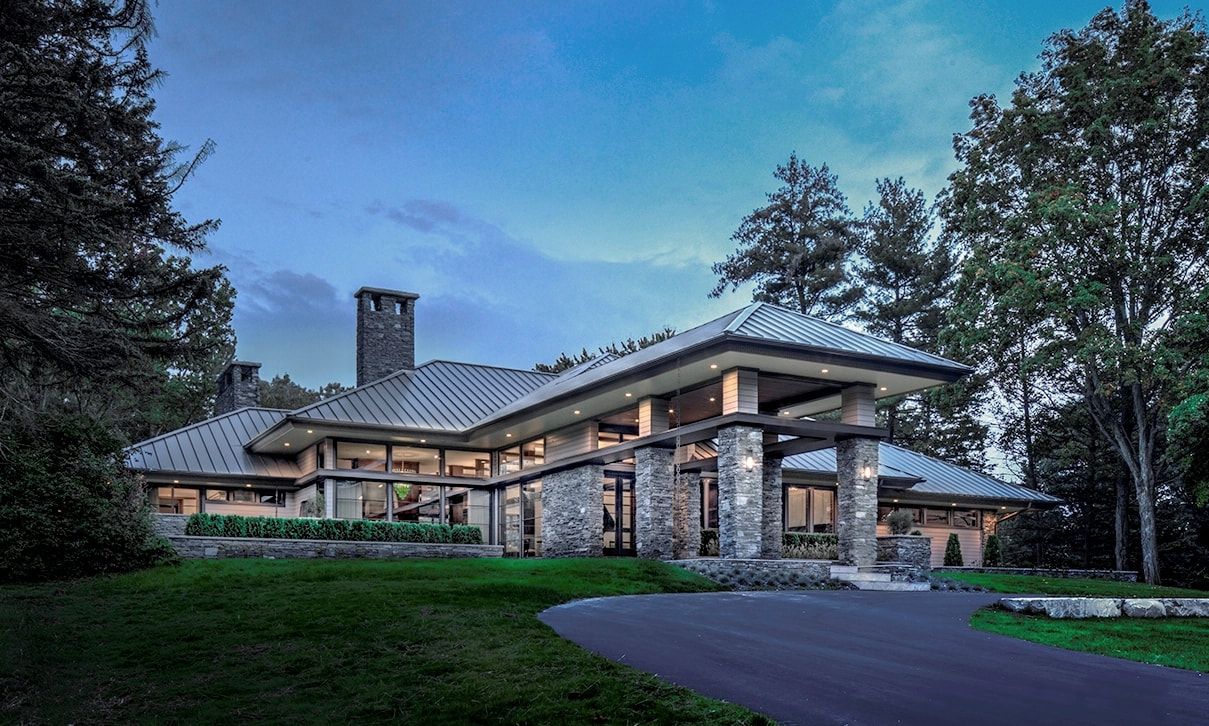










The right commercial space changes how a business feels the moment someone walks in. The front desk works. The circulation makes sense. The lighting supports the brand instead of fighting it. Staff move faster. Customers stay longer. Revenue has room to grow. That is why a commercial buildout planning guide matters before demolition, before permits, and long before trades arrive on site.
Too many buildouts fail before construction starts. Not because the concept was weak, but because the planning was loose. An owner has a vision, a landlord has conditions, a designer has drawings, and a contractor has assumptions. That mix creates scope gaps, permit delays, pricing revisions, and schedule drift. The space pays the price.
A strong buildout starts with control. Not control in the abstract. Real control – documented scope, coordinated design, code-aware planning, material decisions made at the right time, and a schedule built around how the space will actually be constructed.
What a commercial buildout planning guide should actually cover
A useful commercial buildout planning guide is not a mood board and it is not a rough budget sheet. It is a decision framework. It tells you what must be resolved before work begins, what can wait, and where the expensive mistakes usually hide.
For most office interiors, retail spaces, restaurants, clinics, and tenant improvements, the planning phase has to do five things well. It needs to define the business outcome, translate that into a buildable scope, align the drawings with code and landlord requirements, lock in finish and fixture decisions, and sequence the work in a realistic order.
If one of those elements is weak, the project starts leaning. A beautiful design without scope control becomes a change-order machine. A fast permit submission without technical coordination can still stall in review. A low initial price built on missing information rarely stays low once walls open and decisions catch up.
Start with the operating model, not the floor plan
Before design goes too far, the business itself needs to be clear. How many staff will use the space each day? Where does customer interaction happen? What needs privacy, what needs visibility, and what needs storage that nobody remembers until move-in week?
This is where many commercial projects lose precision. Teams jump to finishes and layouts before defining how the space needs to perform. A retail store may need stronger back-of-house flow than the sales floor suggests. A restaurant may need service routes protected from guest traffic. An office may need fewer private rooms and better acoustic planning in shared areas. It depends on the business model, not just the square footage.
The best planning conversations are operational. How does a shift begin? Where do deliveries arrive? What happens during peak traffic? What cannot stop working during construction or after turnover? Those answers shape the layout far better than generic planning ratios.
Scope clarity is where good projects separate themselves
Every serious buildout needs a documented scope that is detailed enough to price, permit, schedule, and execute. That means more than “new reception area” or “refresh the retail floor.” It means wall types, millwork requirements, door hardware, finish transitions, ceiling conditions, lighting intent, fixture selections, accessibility requirements, and exactly what is staying versus what is being removed.
Vague scope creates false confidence. Everyone thinks they are discussing the same project until procurement starts or site conditions expose the gaps. Then the questions begin. Was the washroom relocation included? Who is supplying the specialty fixtures? Are the storefront modifications approved by the landlord? Is the millwork custom or off-the-shelf? Every unresolved answer reaches the schedule.
This is why disciplined builders document first. At Spartan Builders, that thinking is built into ClearScope™ – a system for complete scope documentation and material specification before trades step in. The point is simple. Fewer assumptions. Better pricing. Cleaner execution.
Design coordination is not optional
A commercial buildout rarely fails because one drawing looked bad. It fails because the drawings did not agree with each other. Reflected ceiling plans conflict with mechanical drops. Millwork dimensions clash with door swings. Lighting layouts ignore sprinkler spacing. Accessibility clearances disappear once actual products are selected.
Coordination is where architecture, engineering, interior design, and construction have to act as one team. If they do not, the field becomes the coordination table, and that is the most expensive place to solve design issues.
This matters even more in existing buildings. Base building conditions are rarely as clean as the lease package suggests. Structural constraints, slab slopes, legacy services, and hidden deficiencies can all influence what is possible. A smart planning phase respects the building you have, not the one you hoped for.
Permits and landlord approvals shape the real timeline
Owners often ask how long the construction will take. The more useful question is when the project can truly start. In commercial interiors, permits and landlord approvals are often the gatekeepers.
Some projects move quickly because the scope is limited and the documentation is complete. Others slow down because drawings were issued before critical decisions were made. Resubmissions, revised details, and incomplete consultant coordination all extend pre-construction. None of that is visible in a simplistic timeline.
If your space is in a multi-tenant building, landlord review deserves early attention. Storefront changes, signage, after-hours work rules, waste removal procedures, elevator access, noise restrictions, insurance requirements, and base building shutdowns can all affect schedule and cost. These are not side notes. They are planning inputs.
The commercial buildout planning guide to materials and procurement
Materials do not just define appearance. They define lead times, installation sequencing, maintenance expectations, and sometimes permit approvals. A tile choice can alter substrate prep. A lighting package can affect ceiling coordination. A custom banquette can hold up final inspections if dimensions were approved too late.
The mistake is treating selections as a finishing exercise. In reality, procurement strategy should begin during planning. Which items need early release? Which products have substitutions that maintain design intent? Which finishes are durable enough for traffic, cleaning, and daily wear in that specific business environment?
There is always a trade-off. Custom elements can create a stronger brand experience, but they often need longer fabrication windows and tighter shop drawing review. Standard products can protect schedule, but they may limit design impact. The right decision depends on the operating priorities of the space.
Sequencing decides whether the schedule is real
A schedule is only credible if it reflects the actual order of work. Demolition, framing, rough-ins, inspections, drywall, millwork, flooring, paint, fixtures, commissioning, deficiencies, and turnover all need room to happen in the right sequence.
That sounds obvious, yet many commercial timelines are built as sales tools instead of construction plans. They ignore access restrictions, permit timing, procurement lead times, and inspection windows. They assume every trade can arrive exactly when needed and every prior task finishes cleanly. Real projects do not behave that way.
A disciplined sequence creates predictability. It also reveals pressure points early. If millwork drawings must be finalized before wall locations shift, that decision gets elevated sooner. If flooring cannot proceed until moisture conditions are confirmed, testing is planned early instead of becoming a site delay later. This is the difference between hoping a project lands on time and structuring it to do so.
Risk should be identified before site work begins
Every commercial buildout carries risk. Unknown existing conditions. Long-lead materials. Incomplete lease obligations. Utility constraints. Inspection timing. Occupied-building logistics. The problem is not that risk exists. The problem is pretending it does not.
Good planning names the risks and assigns responses. Some risks can be reduced through surveys, exploratory openings, and better documentation. Some need schedule float. Some need alternate material options. Some require owner decisions by a fixed date. Once risks are visible, they become manageable.
This is also where trade quality matters. A buildout is not a collection of isolated subcontractors. It is a coordinated system. If one trade is unreliable, every dependent activity gets dragged with it. Vetted trade networks protect schedule because they protect coordination.
Communication is part of project control
Commercial clients do not need constant noise. They need clarity. What is complete, what is next, what is delayed, and what decisions are required from them now. That is the communication standard serious projects demand.
When communication is weak, owners start managing their own builder. They chase updates, decode vague messages, and discover issues after they have already affected the schedule. That is not oversight. That is a system failure.
A controlled buildout uses milestone tracking, documented approvals, and decision deadlines tied to the sequence of work. Everyone knows what has been locked, what is in review, and what still has the power to move the finish date.
When to bring the builder into planning
Early is usually better, but only if the builder contributes real pre-construction discipline. The value is not just pricing. It is constructability review, scope definition, sequencing logic, procurement planning, and identifying where the design may be beautiful on paper but difficult in the field.
For architects, designers, and engineers, this early collaboration protects the vision. For owners, it protects the business case. The right builder turns planning into execution readiness.
The best commercial spaces never feel accidental. They feel inevitable, as if every line, finish, and transition belongs exactly where it is. That result is not luck. It is what happens when planning is treated like part of the build, not paperwork before it.