







Picture a kitchen where every line lands exactly where it should. Fillers are minimal. Storage works the way you cook. The island feels anchored, not dropped into place as an afterthought. That is the real conversation behind custom cabinetry versus stock cabinets. It is not just about cabinet boxes. It is about how the entire room performs once the renovation is complete.
Many homeowners begin with a simple assumption: cabinets are cabinets. Then planning starts. Ceiling heights are off by an inch. A bulkhead interrupts one wall. Appliances need exact clearances. A designer wants a cleaner reveal. Suddenly, the gap between stock and custom becomes obvious. One gives you a product. The other gives you a fitted solution.
Custom cabinetry versus stock cabinets: what actually changes?
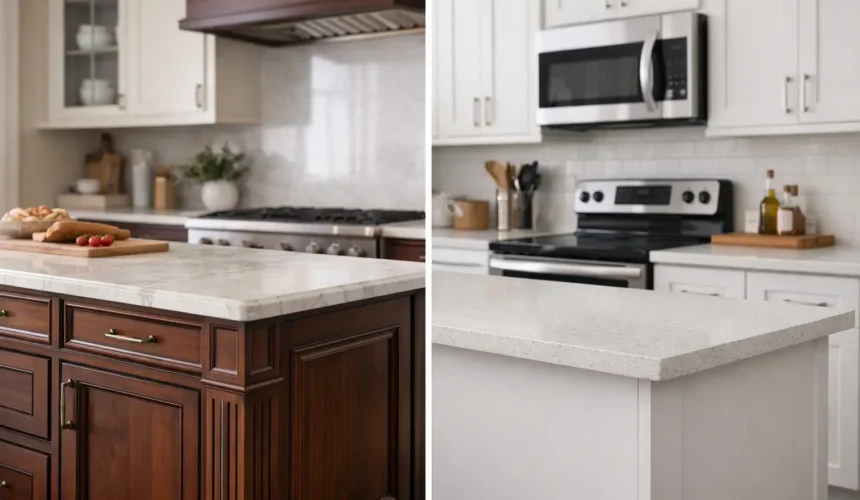
The biggest difference is control. Stock cabinets are manufactured in fixed sizes, fixed configurations, and a limited range of finishes. They are designed for speed and predictability. In the right room, they can work well. In the wrong room, they force the entire design to compromise around them.
Custom cabinetry starts with the space itself. Dimensions are built around the room, the appliances, the storage goals, and the design intent. That changes more than appearance. It affects circulation, visual balance, usable storage, and how finished the project feels when you walk in.
This is where many renovations go off track. People compare line-item pricing without comparing what the room will look like at the end. A lower cabinet cost can create a more expensive design problem if it leads to oversized fillers, dead space, awkward transitions, or a layout that never fully resolves.
Where stock cabinets make sense
Stock cabinets have a clear role. If the room is straightforward, the sizes align well, and the design goals are simple, stock can be a practical choice. A utility space, a rental-grade refresh, or a secondary area with standard dimensions may not need full customization.
They also offer faster product selection because the menu is smaller. That can help clients who want a clean, functional result without spending time evaluating every dimension, door profile, and internal storage option.
But stock works best when the room behaves. Many homes do not. Walls move. Floors slope. Existing conditions are rarely as clean as showroom layouts. Once real-site measurements enter the picture, fixed-size cabinetry can start dictating the design instead of supporting it.
Where custom cabinetry earns its value
Custom cabinetry becomes the stronger choice when the room needs precision. Kitchens are the most obvious example, but the same applies to bathrooms, mudrooms, laundry rooms, offices, built-ins, and integrated storage walls.
A custom plan can carry cabinetry to the ceiling without awkward top gaps. It can align drawer banks with windows, center a hood correctly, conceal structural conditions, and make room for panel-ready appliances. It can also solve lifestyle problems that stock cabinets simply are not built to address.
That matters more than most people expect. Good cabinetry is not just millwork. It is part architecture, part interior design, part workflow planning. If you want a kitchen that feels intentional from every angle, custom gives the design room to breathe.
Fit is not cosmetic
One of the most common mistakes in cabinet planning is treating fit as a visual issue only. Yes, tight alignment looks better. But fit also determines function.
When cabinet depths are adjusted properly, walkways feel calmer. When widths are planned around actual use, drawers become more useful than doors. When appliance panels are sized correctly, the entire elevation reads as one composition instead of several unrelated components. These are not decorative upgrades. They change how the room works every day.
This is especially true in older homes and high-expectation renovations across the Greater Toronto Area, where existing conditions often require real coordination between design intent and field reality. Standard products can struggle in spaces that demand exact planning.
Finish quality and design range
Stock cabinets usually come in a controlled palette. That is part of the model. Fewer options make manufacturing more efficient. For some projects, that is enough.
Custom cabinetry opens the finish conversation considerably. Painted finishes, wood veneer selections, integrated hardware approaches, slab or shaker profiles, specialty interiors, and built-in organizational features can all be specified to suit the larger design language of the home.
That does not automatically mean custom is better in every case. More choice only helps if the choices are managed properly. Without clear scope, samples, and approvals, too much flexibility can create confusion. The advantage comes from disciplined planning, not just expanded options.
Storage is where custom quietly wins
Most people evaluate cabinets by what they see first. Door style. Color. Hardware. The smarter evaluation is what happens after the doors open.
Stock cabinets offer standard internals. Those configurations are fine for general use, but they are rarely tailored to how a household actually operates. Custom cabinetry can be planned around cookware sizes, pantry habits, serving pieces, small appliances, recycling systems, and daily routines.
That usually leads to a cleaner room with less countertop clutter and better long-term usability. You are not just buying nicer boxes. You are reducing friction in how the space supports your life.
Lead time, coordination, and risk
This is where the conversation gets more nuanced. Stock cabinets can be faster to source, but speed on paper does not always translate to speed on site. If the design is forced, field modifications become more likely. If fillers and trim solutions are improvised late, the installation can lose momentum.
Custom cabinetry typically requires more upfront planning. That is not a drawback when the project is being managed properly. It is how risk gets removed before fabrication begins.
The real issue is not custom versus stock in isolation. It is whether the cabinetry decision is being made within a documented, coordinated renovation plan. When measurements, appliance specs, finish selections, and installation sequencing are controlled early, custom cabinetry becomes highly predictable. When they are not, any cabinet choice can become a problem.
That is why process matters as much as product. At Spartan Builders, cabinetry decisions are not treated as showroom choices. They are integrated into full-scope planning through ClearScope™, so dimensions, materials, interfaces, and expectations are defined before fabrication and installation begin.
Custom cabinetry versus stock cabinets in resale and long-term value
Not every renovation decision should be made around resale. You have to live in the space first. But long-term value still matters, especially in kitchens and built-in living areas where buyers notice proportion, storage, and finish consistency immediately.
Custom cabinetry often contributes to a more architectural result. It looks less assembled and more built into the home. That can strengthen the overall impression of quality and permanence.
Stock cabinets can still support value when the layout is strong and the installation is clean. But if the room shows obvious compromises, buyers notice that too. Large fillers, inconsistent lines, and generic solutions are easy to spot in a market where expectations are increasingly design-aware.
How to decide without guessing
The right choice depends on the room, the design standard, and how exact you want the result to be.
If your space is simple, your timeline is tight, and your expectations are functional rather than highly tailored, stock cabinets may be the right tool. There is no need to force customization into a room that does not require it.
If your renovation includes structural changes, premium appliances, integrated design elements, unusual dimensions, or a clear visual vision, custom cabinetry is usually the stronger decision. It gives the project the precision it needs.
The key is to make that decision early and in context. Cabinetry should not be selected as a standalone item. It should be evaluated against flooring transitions, lighting placement, appliance integration, wall conditions, and how the room will actually be used.
The better question is not custom or stock
The better question is this: what does the finished space need in order to feel complete?
Sometimes the answer is stock cabinets installed in the right room with discipline and restraint. Sometimes the answer is full custom cabinetry because anything less would leave the design unresolved. Both have a place. The mistake is treating them as interchangeable when they are solving different problems.
A well-built room feels calm because the decisions behind it were coordinated. Doors clear properly. Lines align. Storage makes sense. Nothing feels forced. That result rarely comes from product selection alone. It comes from choosing the right system for the space, then executing it with control.
If you are weighing custom cabinetry versus stock cabinets, look past the showroom sample. Picture the finished room. Picture how it will function on a Monday morning, not just how it photographs on install day. The right cabinet choice is the one that lets the whole space land exactly as it should.