








Picture the finished space first. The new family room filled with natural light. The kitchen that finally breathes. The primary suite that makes the house feel complete instead of compromised. A well-planned addition does more than add square footage. It changes how the home works every day. That is why learning how to prepare for a home addition starts long before drawings, demolition, or permits.
Most addition projects do not go sideways because the idea was wrong. They go sideways because the scope was loose, the decision-making was fragmented, or the builder was brought in too late to control the moving parts. A home addition is not just construction. It is design, engineering, code compliance, sequencing, and daily life management under one roof.
How to prepare for a home addition starts with the end state
Before you talk about finishes, talk about function. What should this new space do that your current home cannot? That answer matters more than the room name.
A rear addition might be about creating a kitchen and living area that works for a growing family. A second-story addition might be about reclaiming privacy without leaving the neighborhood you love. A side addition might solve circulation problems that have annoyed you for years. The point is clarity. If the purpose is vague, the design will be vague, and vague projects create expensive revisions.
This is also the moment to define success in practical terms. Do you need better flow between rooms? More daylight? A dedicated work-from-home zone? Better storage built into the architecture instead of added later? Strong projects are driven by specific outcomes, not a general desire for more room.
Get honest about what the existing house can support
An addition has to belong to the house structurally, visually, and operationally. That means your current home is part of the project scope, whether you planned for that or not.
Older homes often reveal hidden conditions once planning begins. Foundations may need reinforcement. Floor levels may not align cleanly. Existing walls may contain structural elements that affect layout options. Windows, stairs, and rooflines can all create design constraints. None of this means you should avoid the project. It means you should prepare for reality, not fantasy.
This is where early builder involvement matters. A team that understands architecture, engineering, and construction can spot conflicts before they become change orders. It is much easier to adjust a plan on paper than in framing.
Build the scope before you build the space
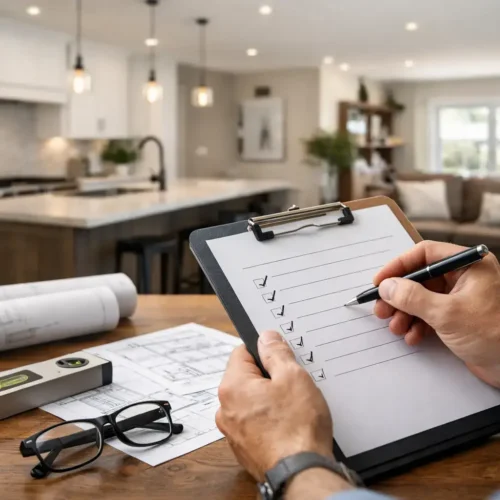
If you want to know how to prepare for a home addition the right way, start with documentation. Not rough ideas. Not verbal assumptions. Documentation.
The biggest mistakes happen when homeowners approve a concept without locking down the full scope. They know they want the extra square footage, but they have not defined enough of the details that shape cost, scheduling, and execution. What type of windows are being installed? How will the addition connect to the existing home? Are flooring transitions included? Is millwork part of the project? What happens to the adjacent rooms affected by the new opening? Where are the material allowances vague?
A controlled project begins with a complete scope of work and material specifications before trades are scheduled. At Spartan Builders, that is the purpose behind ClearScope™ – creating real clarity before the first day on site. It protects the design. It protects the schedule. It protects the client from assumptions disguised as planning.
Choose the team before you chase permits
Many homeowners assume the first step is finding a designer or submitting permit drawings. In practice, the better move is building the right project team early enough to shape the project properly.
A home addition needs coordinated thinking. Design affects structure. Structure affects layout. Layout affects mechanical planning, finish transitions, and the lived experience inside the home. If those pieces are handled in isolation, you get a project that looks resolved on paper but becomes chaotic in execution.
The right builder does not just price drawings. They pressure-test them. They identify where scope gaps exist, where sequencing could break down, and where your choices now will influence schedule and performance later. That level of involvement is not extra. It is the difference between a managed build and a reactive one.
Prepare your decisions early
One of the fastest ways to lose momentum on an addition is delayed client decisions. Construction moves in sequence. If your tile, flooring, windows, plumbing fixtures, or cabinetry selections are not made when they need to be, the schedule absorbs the cost.
That does not mean you need every finish selected on day one. It means you need a structured decision calendar tied to the build sequence. Some choices carry more schedule weight than others. Windows, doors, cabinetry, and specialty materials often need to be locked in earlier because lead times can shape the critical path.
This is where disciplined project management changes the experience. The Spartan System™ is built around sequencing, milestone tracking, and communication so decisions happen when they should, not when they become urgent. Homeowners should not have to guess what is needed next.
Understand how the project will affect daily life
A home addition is about the future, but you still have to live through the present. That means preparing for disruption in realistic terms.
Will you remain in the house during construction, or will certain phases make that impractical? How will workers access the site? Which parts of the home will be opened up, and for how long? If the addition connects to a kitchen or main living area, what does that mean for daily routines? If children or pets are in the home, what boundaries need to be established from day one?
There is no single right answer here. Some families stay in place comfortably through major work. Others prefer to relocate during the most invasive phases. The right choice depends on the project scope, your tolerance for disruption, and how tightly the site can be controlled. What matters is deciding early, not improvising midway through framing.
Expect permit and zoning realities
An addition is not only a design exercise. It is a code and zoning exercise too. Setbacks, lot coverage, height restrictions, and structural requirements can all influence what is possible.
This part tends to frustrate homeowners because it can feel like the process is slowing down before anything visible happens. But permits are not administrative clutter. They are part of building something legal, insurable, and lasting. If the project requires revisions to meet municipal requirements, that is better discovered before the build starts than after excavation or framing has begun.
For homeowners across the Greater Toronto Area, this matters even more because neighborhood conditions, lot constraints, and municipal review expectations can vary. A team used to navigating these realities can move with more confidence because they know where projects typically stall and how to prepare for it.
Vet the execution model, not just the promise
Every builder says they can do additions. That is not the question. The real question is how they control them.
Ask how scopes are documented. Ask who is responsible for trade coordination. Ask how site communication works. Ask what happens when existing conditions differ from assumptions. Ask whether the people coming into your home are licensed, insured, and consistently vetted.
This is where many projects separate into two categories: those led by a real system and those held together by personality. Personality can sell the job. It cannot sequence trades, prevent omissions, or maintain accountability when the project gets complex.
The Builders Plug™ exists for a reason. A strong project depends on the quality and reliability of every trade partner involved, not just the person leading the estimate. Homeowners should know exactly how that network is selected and managed.
Plan for transitions, not just the new square footage
The addition itself gets the attention, but the transition points often define whether the project feels integrated or forced. Ceiling heights, flooring transitions, lighting continuity, trim profiles, window proportions, and circulation paths all matter.
That is why a home addition should never be treated like a box attached to a house. The old and new need to speak the same language, even if the updated design is more refined than the original structure. Sometimes that means selective improvements to adjacent spaces so the addition feels intentional. Sometimes it means preserving contrasts because they tell the story of the home honestly. It depends on the architecture, the goals, and the level of finish you want across the whole experience.
How to prepare for home addition success
The best preparation is not panic-driven research. It is disciplined alignment. Clear goals. Complete scope. Early decisions. The right builder. A realistic plan for permits, sequencing, and life during construction.
A home addition is one of the few projects that can change both the value of your property and the quality of your daily life in a lasting way. It deserves more than rough estimates and crossed fingers. It deserves structure.
When the planning is done properly, the build feels different. Cleaner. Calmer. More controlled. And when the new space opens up and the house finally fits the life you are living, that preparation stops feeling like work. It feels like the smartest part of the entire project.