







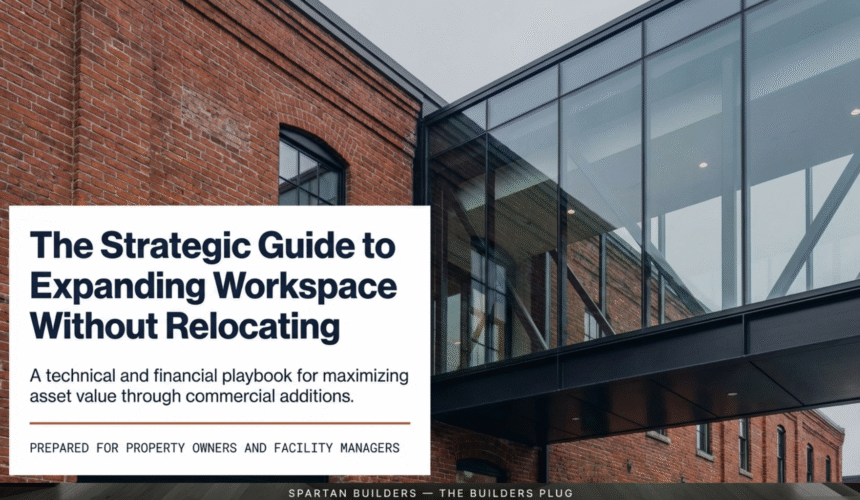
This Commercial & Office Additions Guide For Workspace Expansion explores the strategic and technical advantages of increasing a company’s footprint through structural additions rather than relocating. It highlights how horizontal or vertical expansions can significantly boost a property’s market value and net operating income while maintaining operational continuity. The text outlines essential considerations for success, including integrating complex utility systems and navigating strict regulatory frameworks like building codes and zoning laws. By investing in existing assets, businesses can achieve cost savings of up to 40% compared to purchasing new premises. Ultimately, the source serves as a roadmap for property owners to enhance their workspace functionality and long-term equity through professional construction management.
Table of contents
Key Takeaways
- Commercial & Office Additions Guide For Workspace Expansion discusses expanding existing spaces instead of relocating.
- Expanding your workspace can reduce costs and maintain client relationships while enhancing employee satisfaction.
- Successful additions integrate with existing MEP systems and can increase property value by boosting Net Operating Income.
- Key types include horizontal expansions which extend outward and vertical expansions ideal for urban areas.
- Planning, regulatory approvals, and meticulous construction management are essential for successful project completion.
Estimated reading time: 11 minutes
Expanding your business footprint is a major milestone, but it often brings a difficult choice: endure the disruption of relocating or invest in commercial and office additions to maximize your current asset. This Commercial and Office Additions Guide For Workspace Expansion provides a technical overview of expanding your existing workspace, covering the strategic financial benefits, structural considerations, and regulatory requirements necessary for a successful project.
Understanding Commercial and Office Additions/Extensions
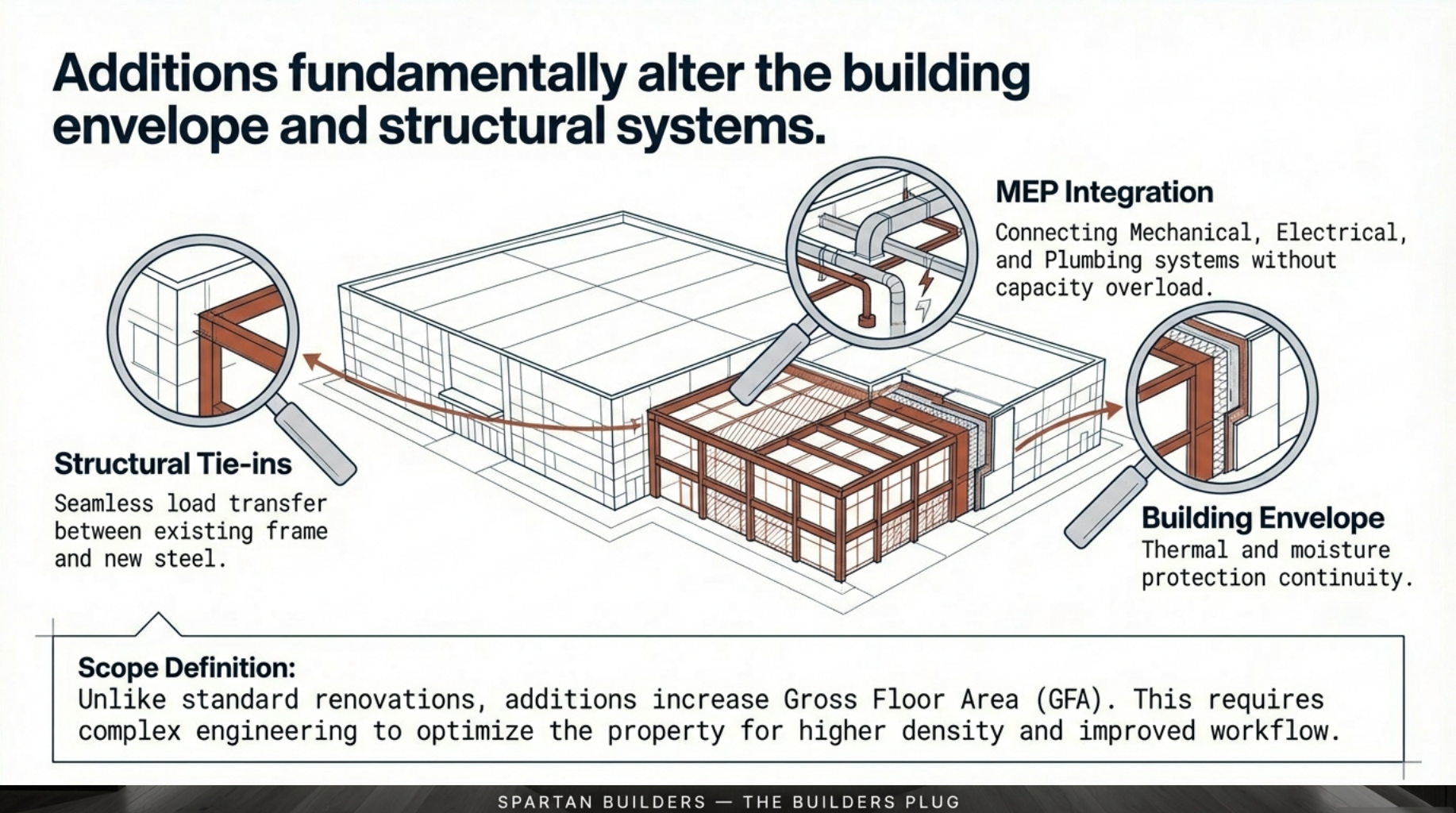
Commercial and office additions involve increasing the gross floor area (GFA) of an existing structure to accommodate growing operational demands. Unlike standard renovations, additions fundamentally alter the building envelope and structural systems. These projects range from expanding a warehouse loading dock to adding a second story to a corporate office.
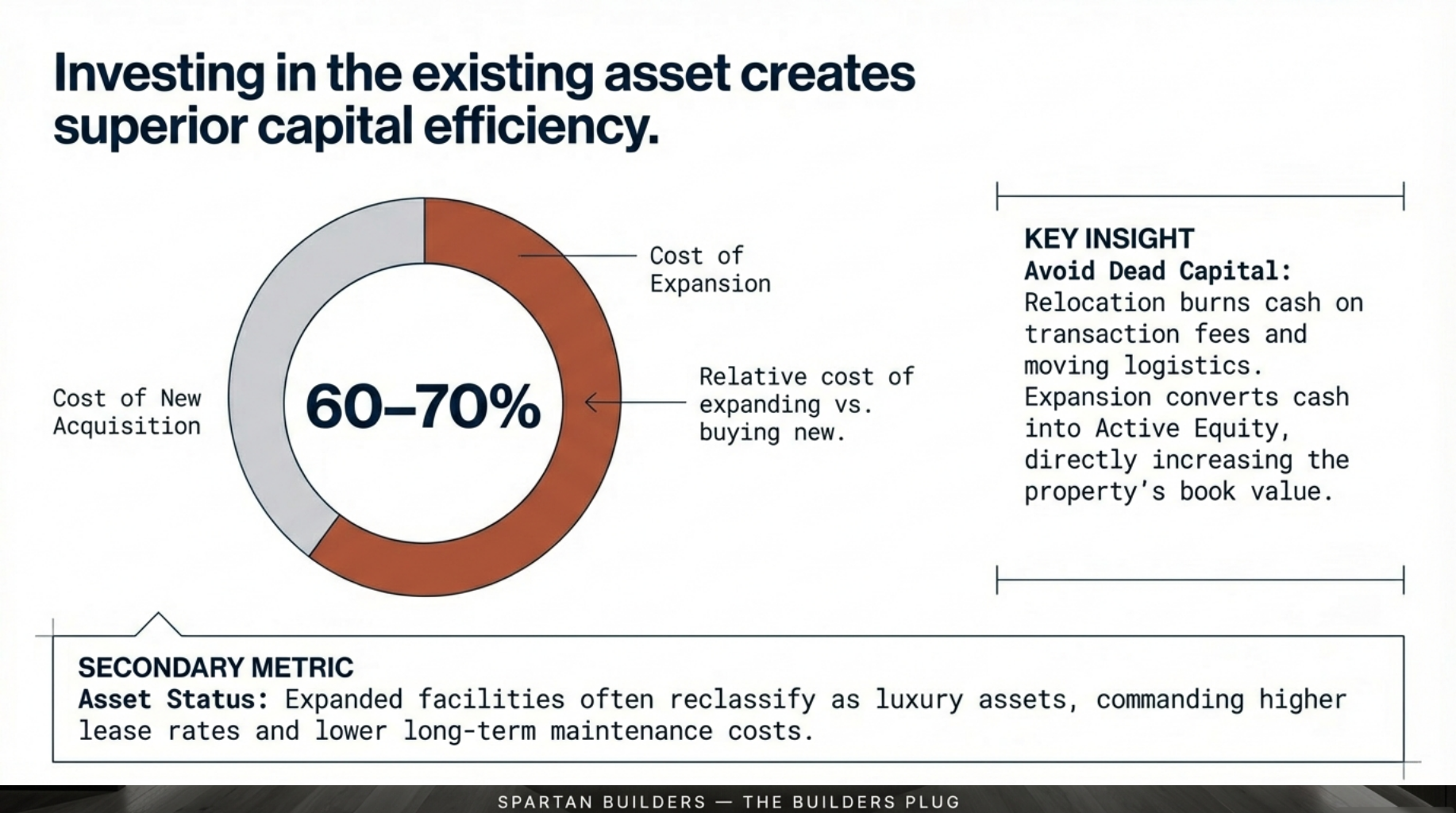
From a technical perspective, success requires integration with existing mechanical, electrical, and plumbing (MEP) systems. It is about optimizing the commercial property to support higher density and improved workflow. Data indicates that expanding an existing facility can often be achieved at 60-70% of the cost of acquiring and fitting out a new comparable property. By focusing on commercial additions, property owners build on existing equity while customizing the new space to exact operational specifications using This Commercial and Office Additions Guide For Workspace Expansion.
Why expand your existing workspace?
Deciding to expand rather than relocate is a strategic move that impacts your bottom line, operational continuity, and asset value.
Strategic advantages over relocation
Relocating involves substantial sunk costs that do not contribute to long-term value, including real estate commissions (typically 4-6%), land transfer taxes, and downtime. In contrast, commercial and office additions allow you to invest capital directly into your own asset.
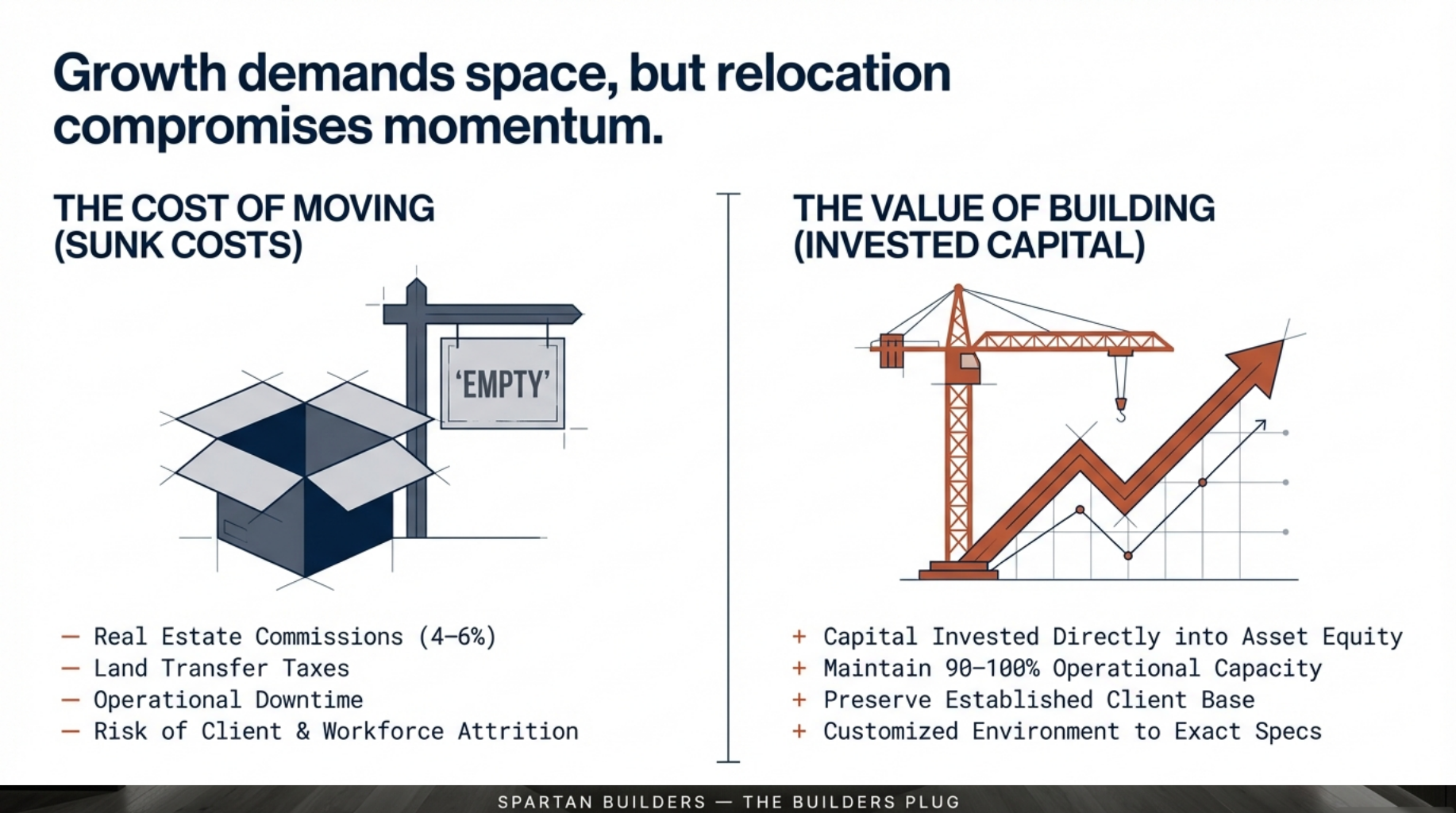
Staying in your current location preserves your established client base and minimizes workforce attrition. Construction on an active site, when managed correctly, allows operations to continue with minimal disruption. A phased approach can keep revenue-generating activities at 90-100% capacity throughout the build.
Boosting functionality and employee satisfaction after a renovation
An expanded space directly correlates with improved productivity. Increasing available space allows for layouts that adhere to modern standards, typically allocating 150 to 200 square feet per employee.
Strategic expansions allow for the integration of specialized facilities, such as dedicated server rooms, R&D labs, or employee wellness centers. A well-planned addition can reduce absenteeism and improve retention rates by creating a modern environment that employees value.
Enhancing property value and long-term investment of a office space
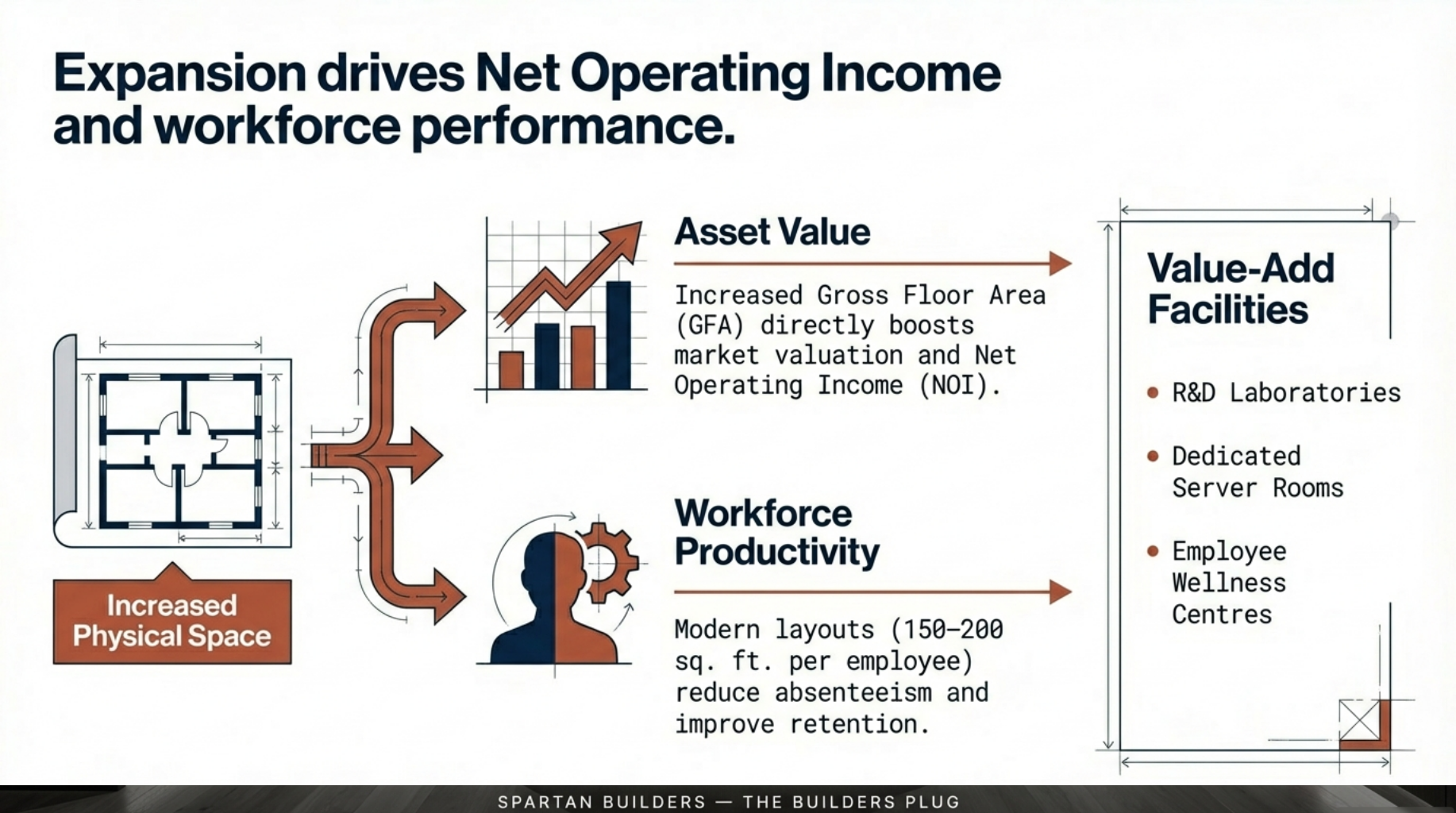
A well-executed addition increases the Net Operating Income (NOI) potential by increasing leasable square footage space, directly boosting market valuation. Spartan Builders focuses on creating luxury assets that build long-term property value, treating every addition as a financial investment rather than a simple construction project. By utilizing premium materials and advanced building systems, the expanded structure commands higher lease rates and lower maintenance costs, transforming a standard commercial building into a premium asset.
Key types of commercial and office additions
Selecting the right type of expansion depends on your property’s zoning constraints, lot size, and structural capacity.
Horizontal and vertical expansions
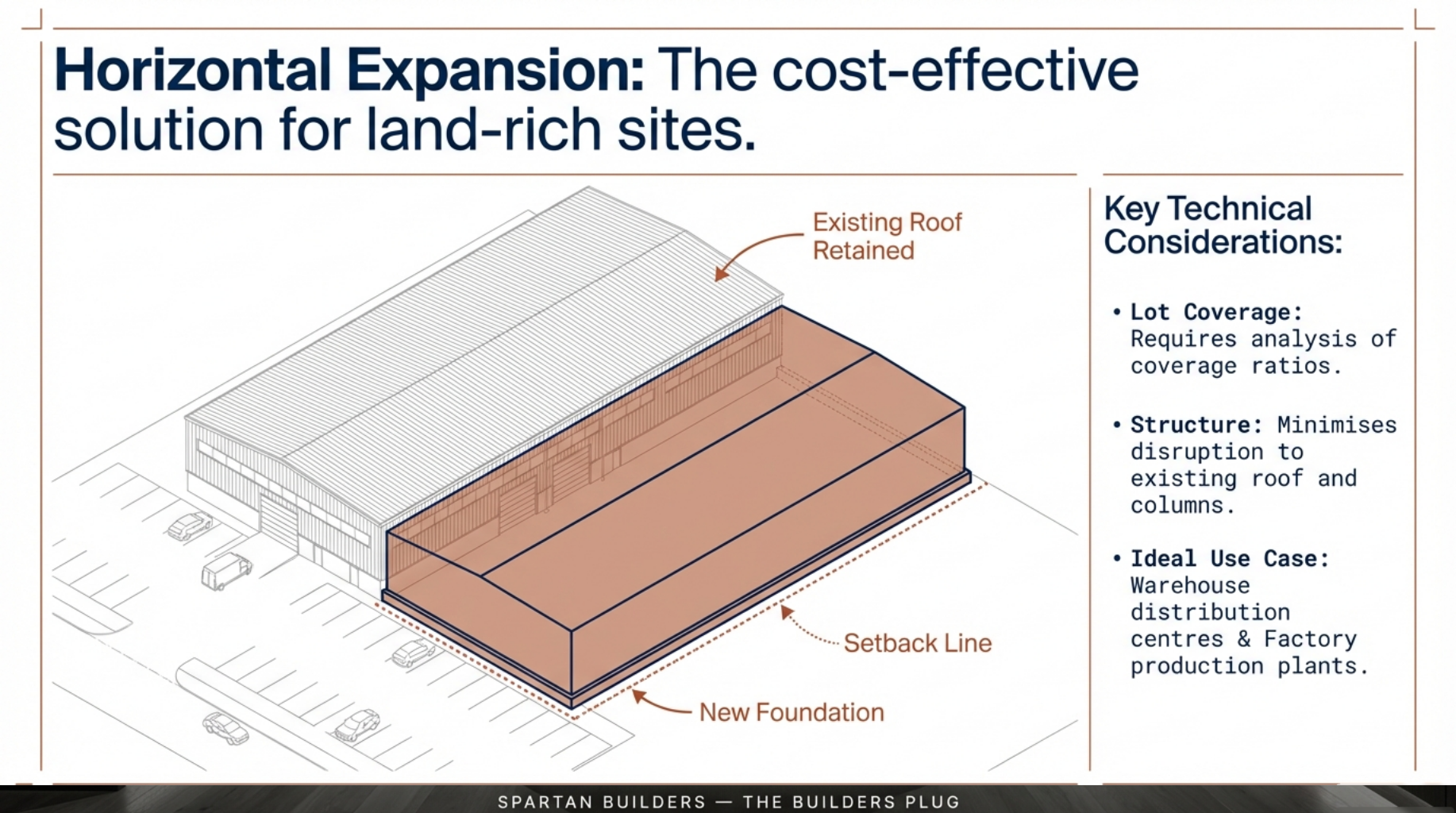
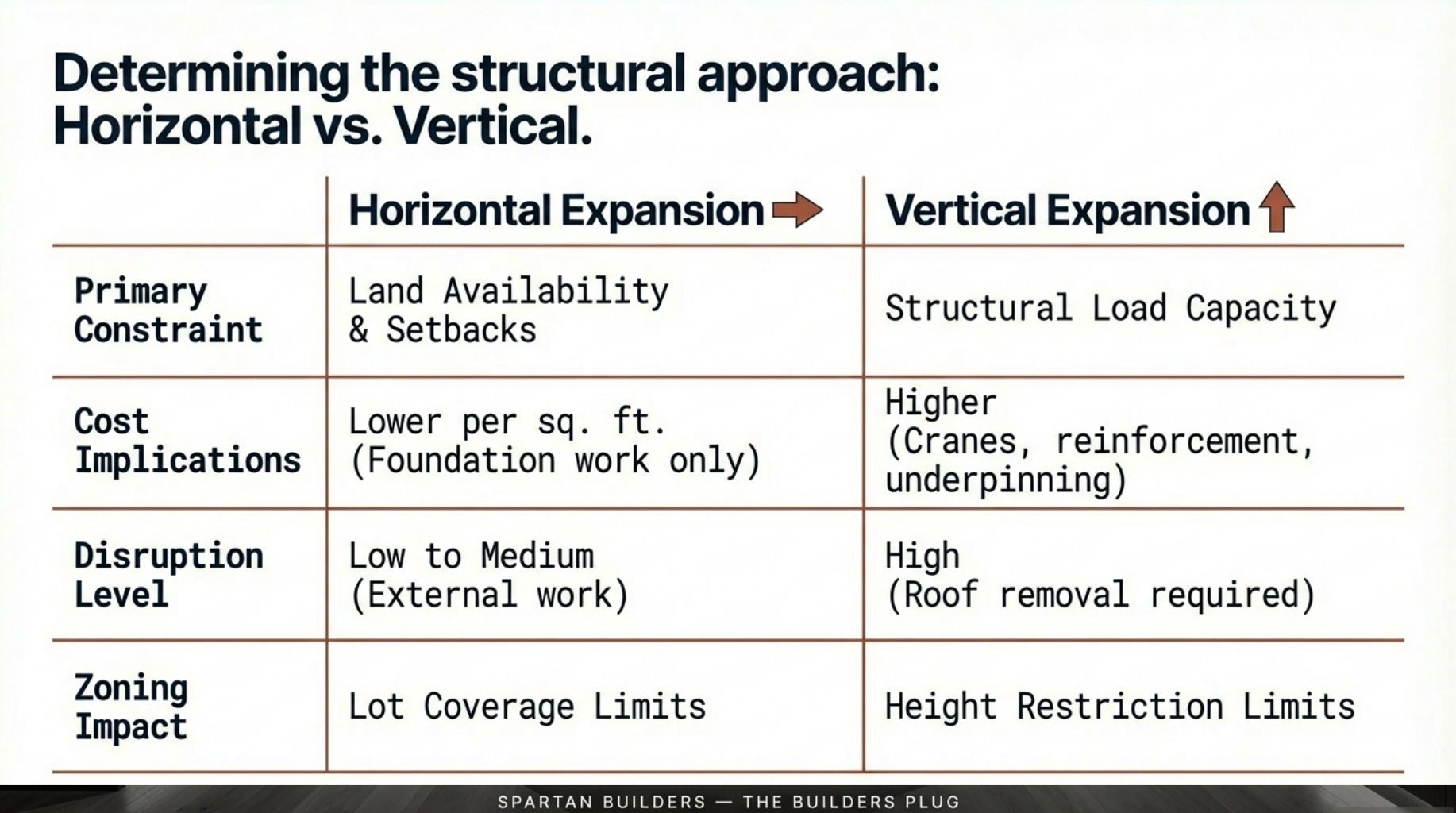
Horizontal expansions extend the building footprint outward. This is often the most cost-effective method if land is available, minimizing disruption to the existing roof and structural columns. However, it requires careful analysis of lot coverage ratios and setbacks.
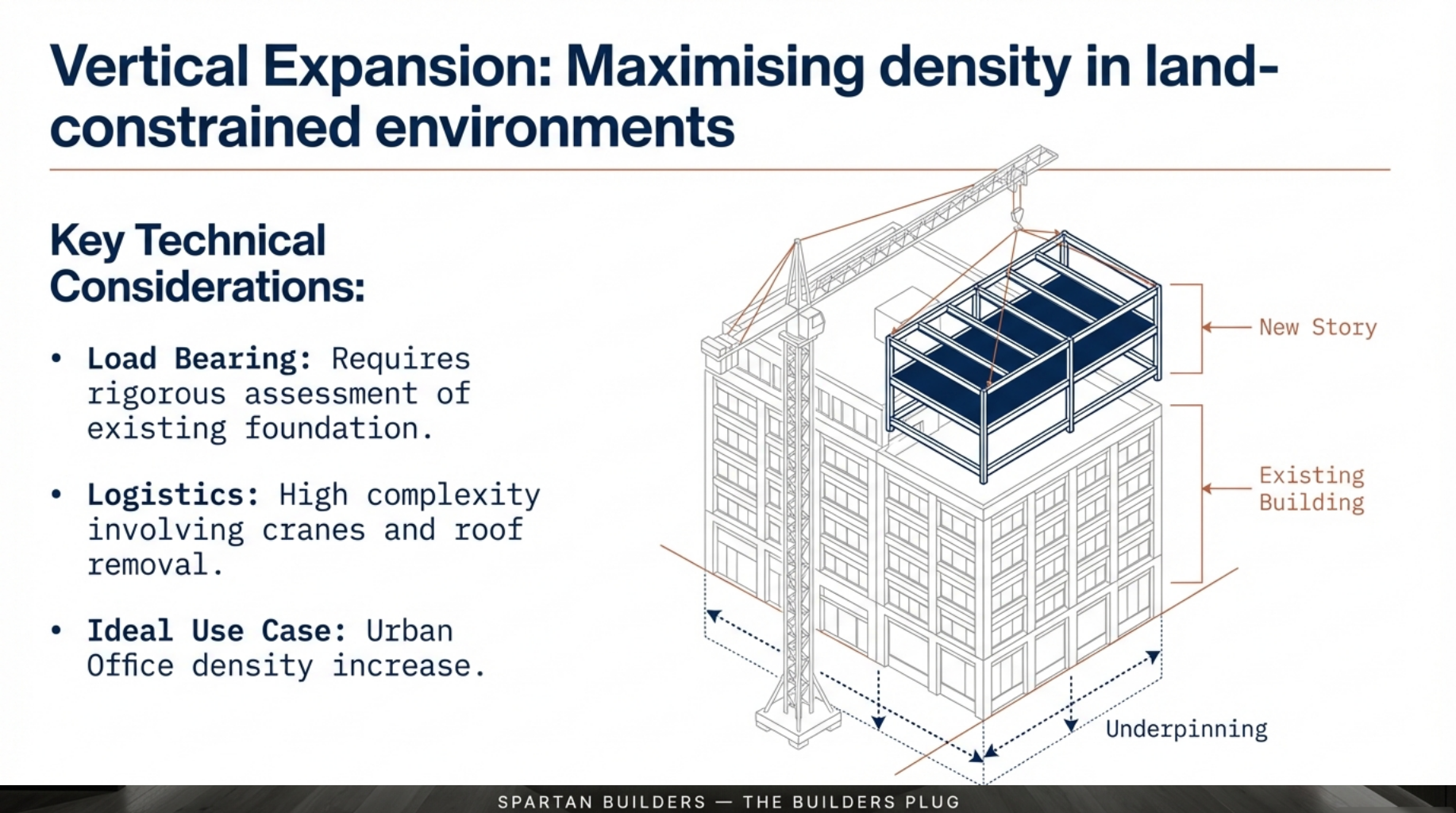
Vertical expansions involve building upward, ideal for urban environments where land is scarce. It requires a rigorous structural assessment to confirm the existing foundation can support the additional load. Engineering reinforcement, such as underpinning, is often required.
| Feature | Horizontal Expansion | Vertical Expansion |
|---|---|---|
| Primary Constraint | Land availability & setbacks | Structural load capacity |
| Cost Implications | Generally lower per sq. ft. | Higher (cranes, reinforcement) |
| Disruption Level | Low to Medium | High (roof removal required) |
| Zoning Impact | Lot coverage limits | Height restriction limits |
| Ideal Use Case | Warehouse/Factory extension | Urban office density increase |
Specialized suite modifications and interior reconfigurations
Sometimes the addition is a complex internal expansion, such as amalgamating adjacent units, requiring the removal of demising walls and integration of fire safety systems.
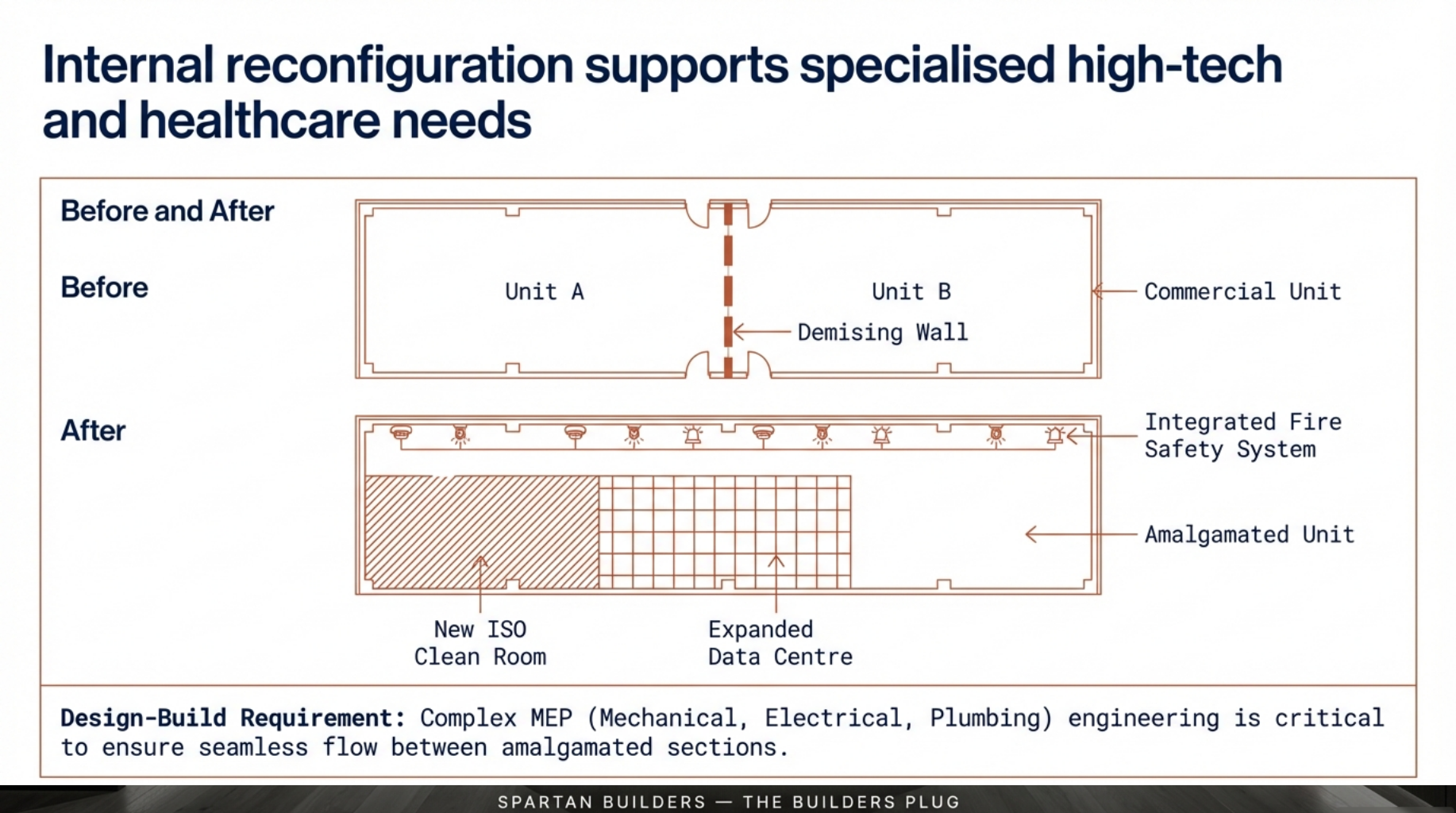
For sectors like healthcare or technology, this might involve creating specialized environments, such as ISO-certified clean rooms or data centers, within the expanded footprint. These projects demand high-level design build expertise to manage complex MEP requirements. Interior reconfigurations often accompany external additions to create a consistent flow between old and new sections, maximizing utility.
Navigating the commercial addition process
Executing a commercial addition requires precision. Spartan Builders eliminates construction chaos through systematic project management, delivering complex expansions with predictability and control.
Planning, design, and regulatory approvals
The pre-construction phase defines the scope and secures permissions, involving architectural design and zoning analysis. In Canada, you must comply with the National Building Code and local regulations, addressing fire separation, accessibility (AODA), and energy efficiency.
Spartan Builders’ ClearScopes™ system prevents mid-project delays through detailed upfront planning, identifying potential clashes before shovels hit the ground. This rigorous preparation means permits are secured faster and budgets remain accurate.
Construction management and project completion
Managing a construction site within an operational business environment requires strict safety protocols, including dust control and secure site access.
Effective construction project management relies on real-time reporting and strict adherence to the critical path. Spartan Builders provides transparent communication and accountability throughout every construction phase, giving you visibility into progress and immediate resolution of challenges. This professional oversight confirms the project meets all technical requirements and is delivered ready for occupancy.
Conclusion: your guide to strategic workspace growth
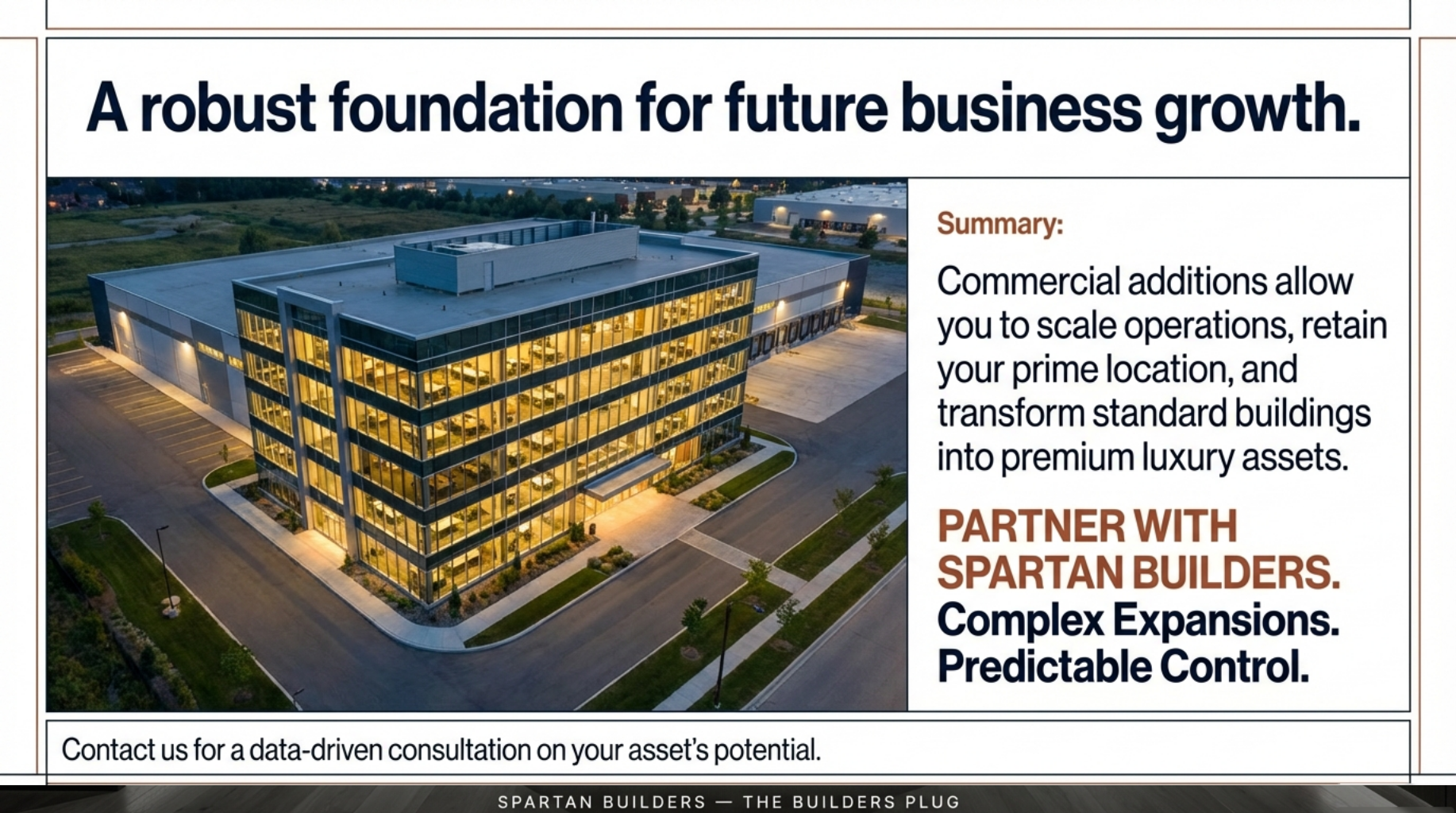
Investing in commercial and office additions is a powerful strategy to scale operations without the logistical nightmares of relocation. By expanding your current facility, you retain your prime location and increase the value of your real estate asset.
Success lies in partnering with builders who understand the technical complexities of structural integration. Whether you require a vertical office extension or a horizontal warehouse expansion, a data-driven approach delivers measurable ROI. With the right expertise, your expanded facility will serve as a robust foundation for future growth.
Frequently asked questions about commercial and office additions
What is the difference between an extension and an addition?
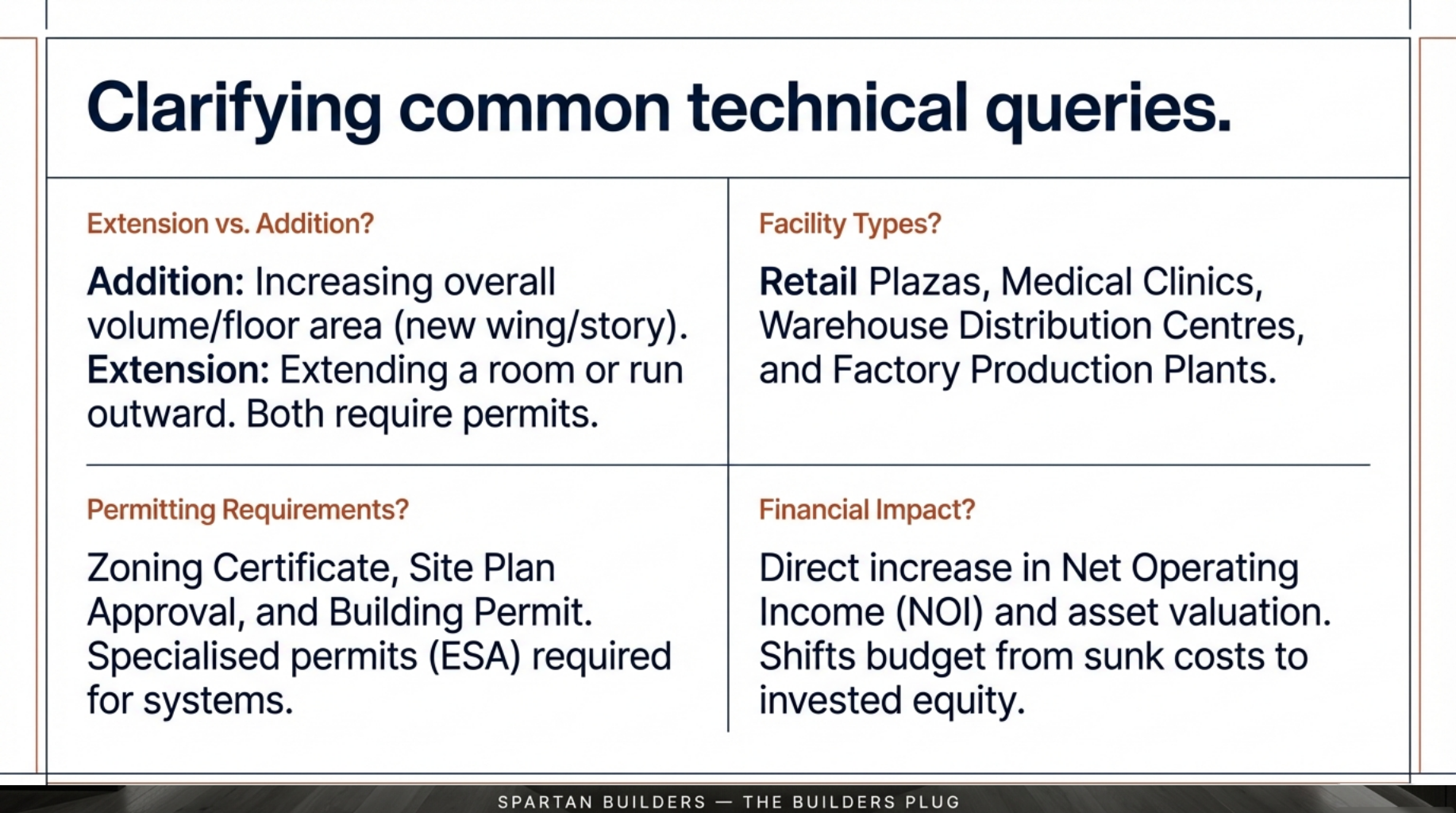
An addition typically refers to increasing the overall floor area or volume of a building, such as adding a new wing or story. An extension implies extending a particular room or run of the building outward. Both require building permits and compliance with zoning codes.
What are examples of commercial facilities?
Common examples include office buildings, retail plazas, restaurant venues, warehouse distribution centers, factory production plants, and medical clinics. Each facility type has unique design and safety requirements governed by its occupancy classification.
How long does a commercial addition project typically take?
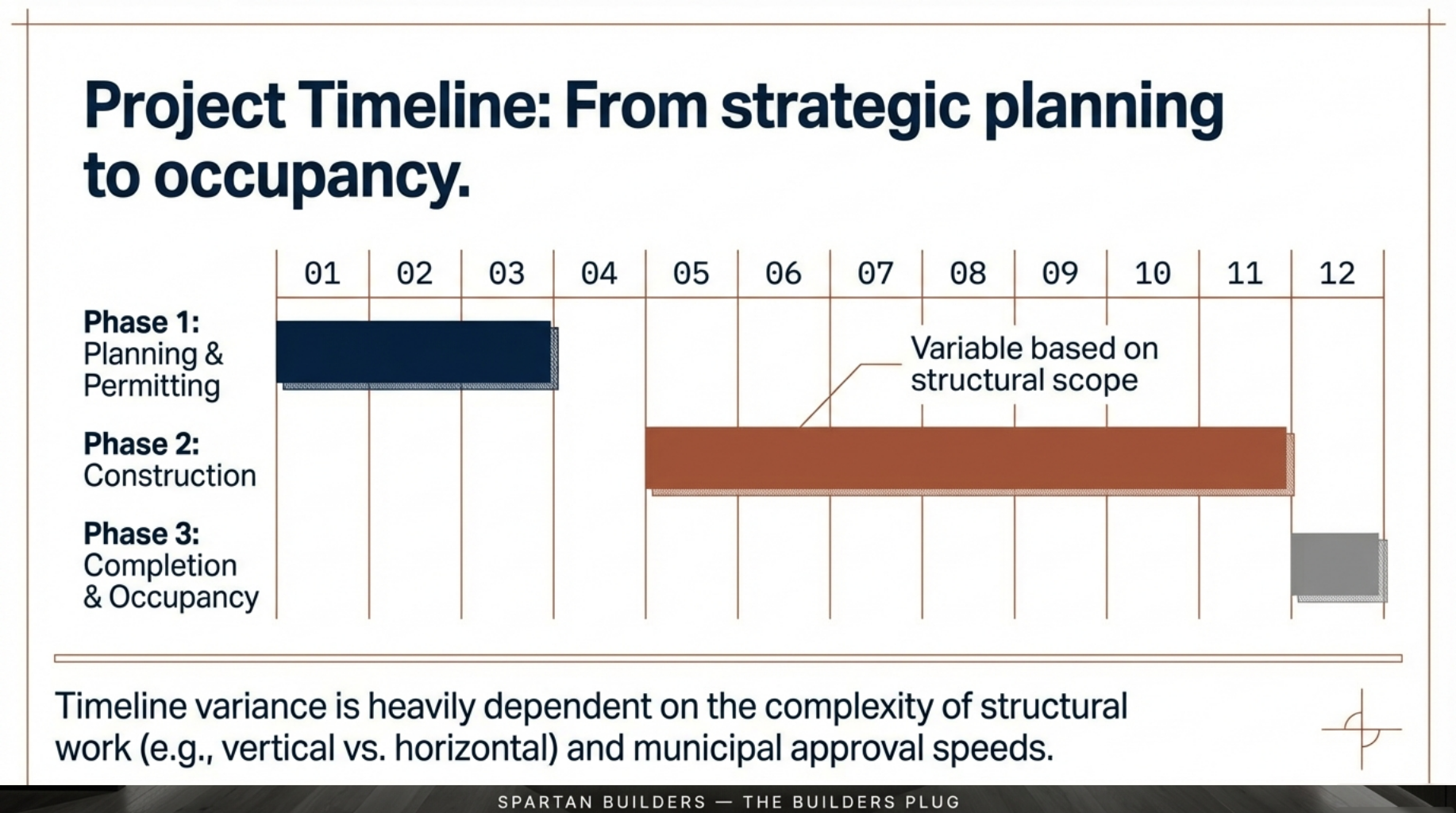
A standard commercial addition can take between 4 to 12 months. The planning and permitting phase alone can take 2 to 4 months, while the physical construction phase varies based on the scope of structural work and interior finishing.
What permits are required for a commercial and office addition in Canada?
You will typically require a zoning certificate, a building permit, and potentially site plan approval. Specialized permits for electrical (ESA), plumbing, and fire safety systems are also mandatory to meet regulatory standards.
Strategic & Financial FAQs
Why should I expand my current building instead of relocating?
Expanding is often more cost-effective and strategic. Data indicates that expanding an existing facility can be achieved at 60-70% of the cost of acquiring and fitting out a comparable new property. Relocating involves “sunk costs” that do not add long-term value, such as real estate commissions (typically 4-6%), land transfer taxes, and operational downtime. In contrast, an addition allows you to invest capital directly into your own asset, increasing its equity.
How does an addition impact the value of my property?
A well-executed addition increases the Net Operating Income (NOI) by creating more leasable square footage, which directly boosts market valuation. By using premium materials and advanced building systems, you can transform a standard building into a premium asset that commands higher lease rates.
Can my business remain operational during construction?
Yes. When managed correctly with strict safety protocols, dust control, and secure site access, operations can continue with minimal disruption. A phased approach to construction can keep revenue-generating activities operating at 90-100% capacity throughout the build.
What is the difference between a “Horizontal” and “Vertical” expansion?
Horizontal Expansion: Extends the building footprint outward. It is generally the most cost-effective method but is constrained by land availability, setbacks, and lot coverage ratios.
Vertical Expansion: Involves building upward (e.g., adding a second story). This is ideal for urban environments where land is scarce but is more costly due to the need for cranes and structural reinforcement (such as underpinning) to ensure the foundation can support the added load.
What is the difference between an extension and an addition?
An addition typically refers to increasing the overall volume or floor area of a building, such as adding a new story or wing. An extension usually implies extending a specific room or run of the building outward. Both require permits and zoning compliance.
Can an addition accommodate specialized facilities like data centers?
Yes. Expansions allow for the integration of specialized environments that require complex Mechanical, Electrical, and Plumbing (MEP) systems. Examples include ISO-certified clean rooms, data centers, R&D labs, or employee wellness centers.
How long does a commercial addition project take?
A standard project typically takes between 4 to 12 months.
Planning & Permitting: 2 to 4 months.
Construction: Varies based on the scope of structural work and finishing.
What permits are required for a commercial addition in Canada? You will typically require a zoning certificate, a building permit, and potentially site plan approval. Additionally, you must comply with the National Building Code and local regulations regarding fire separation, energy efficiency, and accessibility (AODA). Specialized permits for electrical (ESA), plumbing, and fire safety systems are also mandatory.
How can I prevent project delays?
Delays are often prevented during the pre-construction phase. Detailed upfront planning, architectural design, and zoning analysis help identify potential clashes before construction begins. Systems like Spartan Builders’ ClearScopes™ are designed to provide rigorous preparation to keep budgets accurate and secure permits faster.