







Table of contents
Key takeaways
- Start with a one-page brief that names exact areas, square footage, occupancy, operating hours and finish levels so every bidder, including GTA Commercial Renovation Contractors, prices the same scope.
- Set realistic budgets using per-square-foot ranges and contingency based on project complexity.
- Shortlist locally by asking building managers and property owners for contractors familiar with the site and permitting.
- Verify licences, insurance and applicable certifications, and confirm financial capacity before awarding work.
- Compare itemized takeoffs, require clear milestones and convert the brief into a ClearScopes™ estimate to lock scope and schedule.
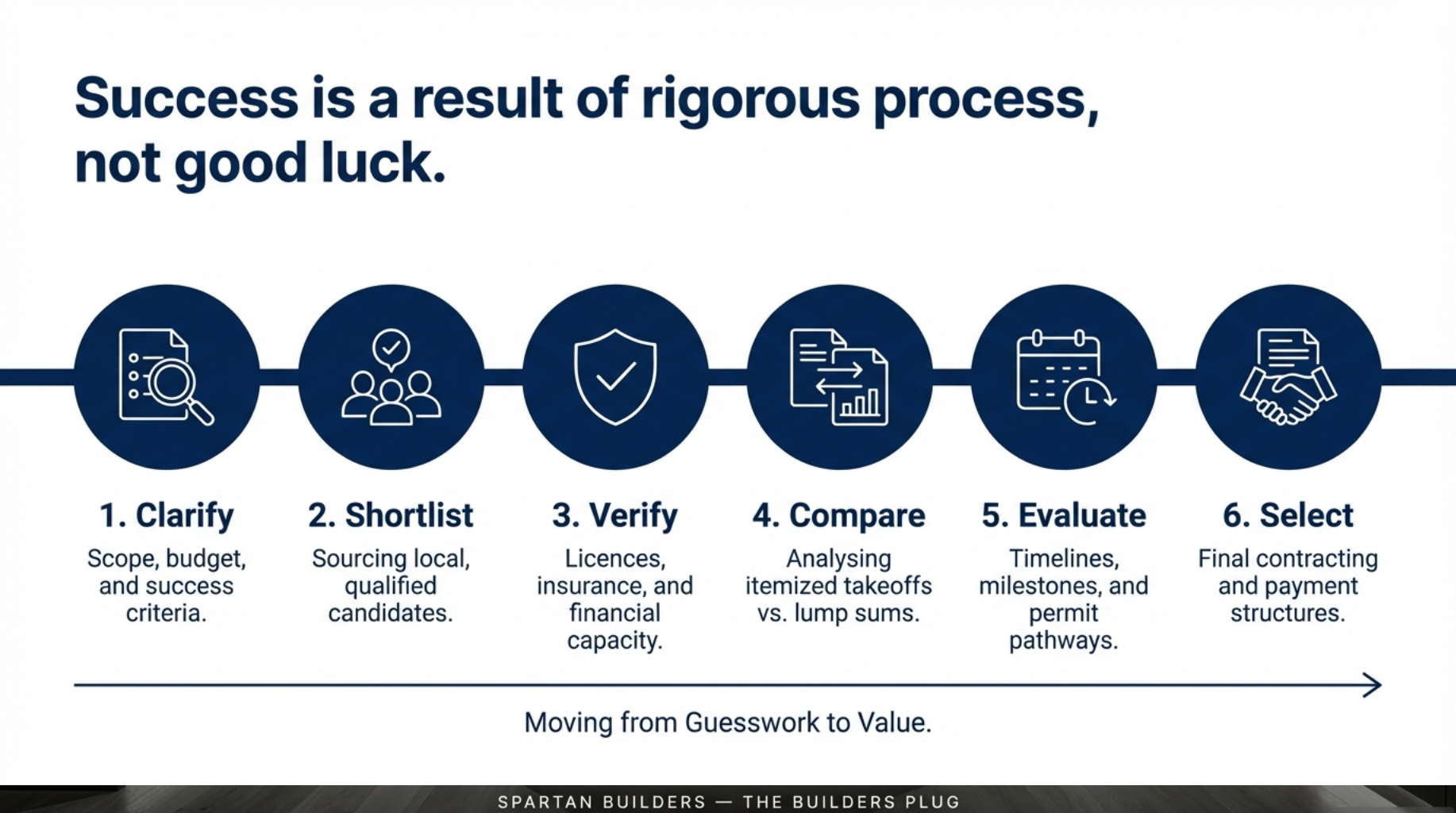
1. Start here: clarify scope, budget and success criteria
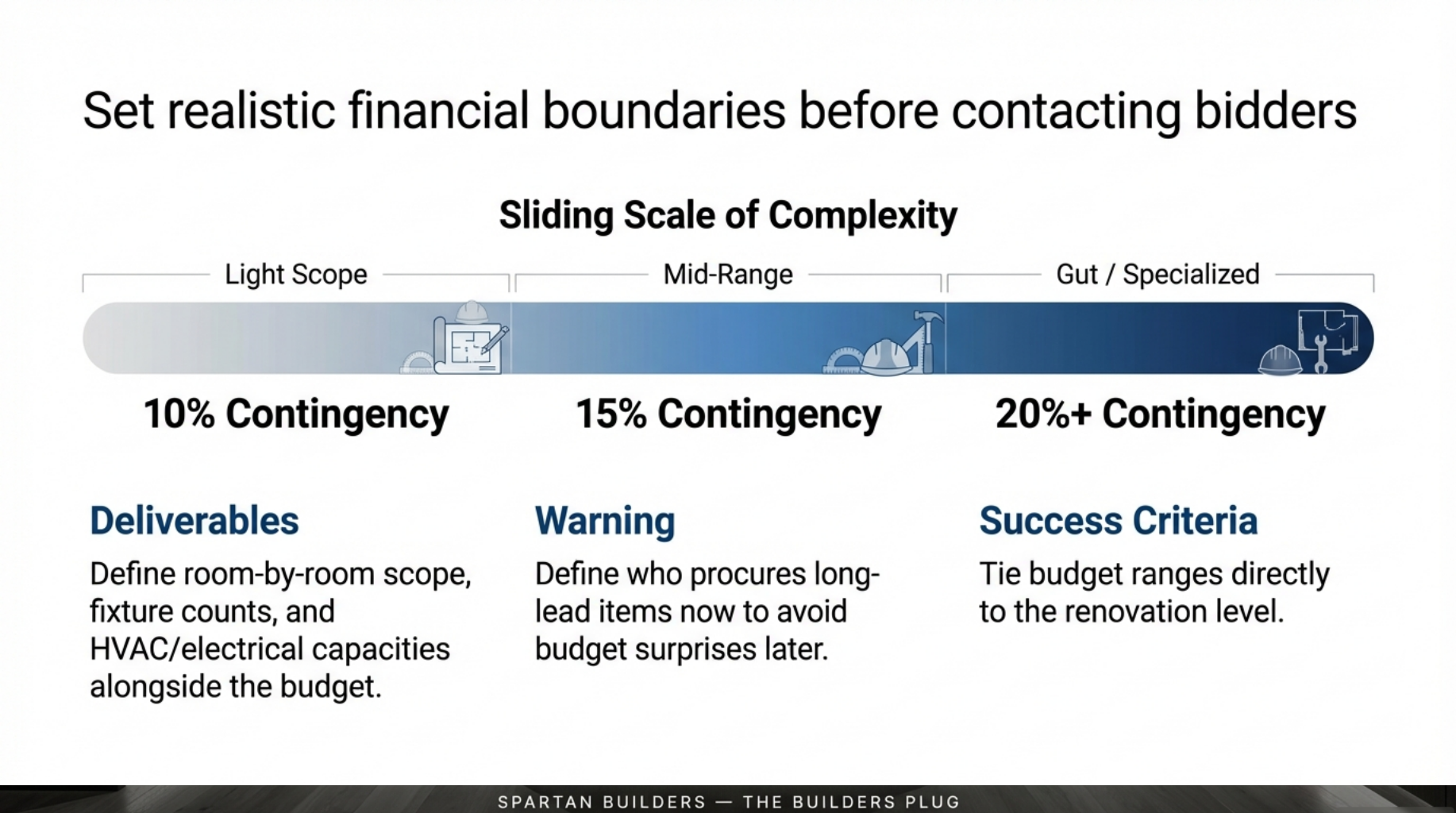
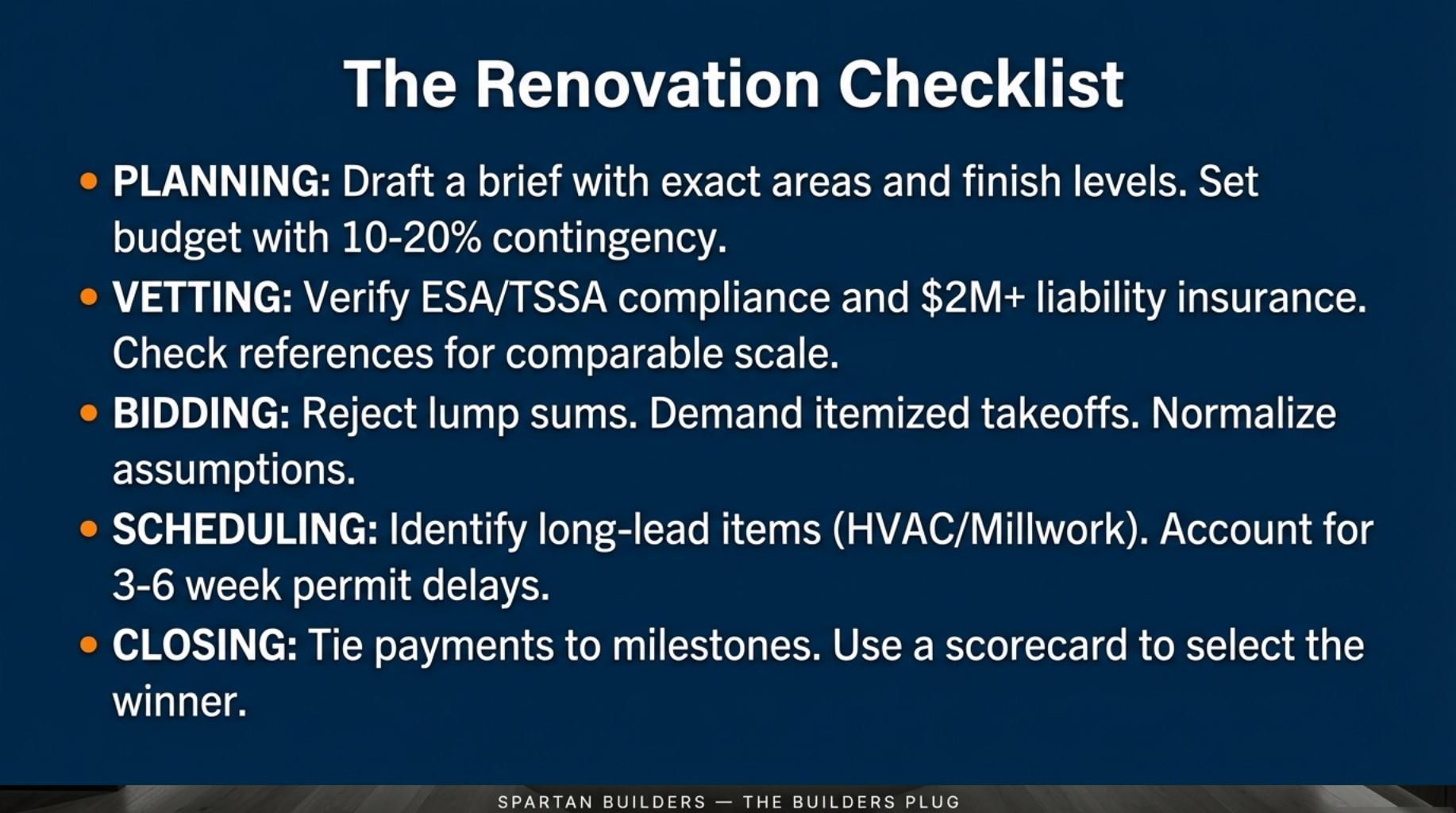
Translate project goals into measurable outcomes by drafting a concise brief that lists exact rooms, square footage, occupancy, operating hours, accessibility requirements and finish standards so all bidders price the same scope. Add explicit success criteria such as sign-off conditions, warranty expectations and a target move-in date to reduce subjective decisions later. Tie budget ranges to the renovation level and include contingency: 10 percent for light scopes, 15 percent for mid-range and 20 percent or more for gut or specialized tenant improvements.
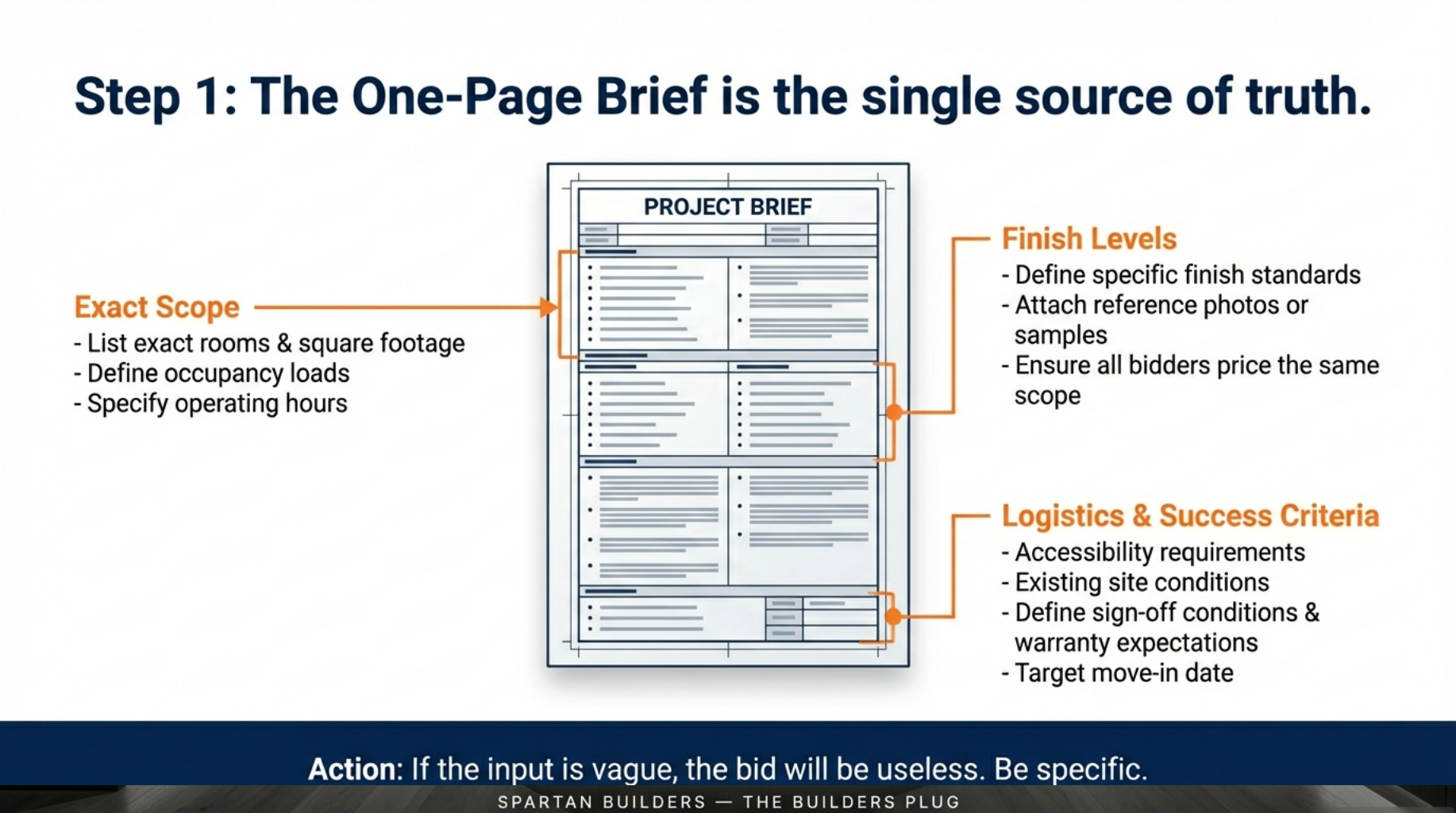
Make the brief actionable by listing deliverables and responsibilities: room-by-room scope, fixture counts, HVAC and electrical capacities, required code standards and who will procure long-lead items. Attach reference photos or finish samples and include a decision schedule with deadlines to avoid approval delays. Add acceptance tests and punch-list criteria so contractors know when the project is complete and how work will be approved.
When bidders receive a precise brief, proposals become comparable and selection shifts from guesswork to value. With scope, budget and success criteria defined, you can move into vetting contractors confidently. The next section explains how to build a vetted shortlist of commercial renovation contractors.
2. Build a shortlist of qualified commercial renovation contractors
Start locally and be selective about referral sources. Ask building managers, property owners and BOMA chapter contacts for recommendations, and review recent lease signings or tenant improvements in your building to find firms familiar with the site and local trades. Prioritize contractors with stable crews and a track record in your specific space type so you avoid teams that lack relevant experience.
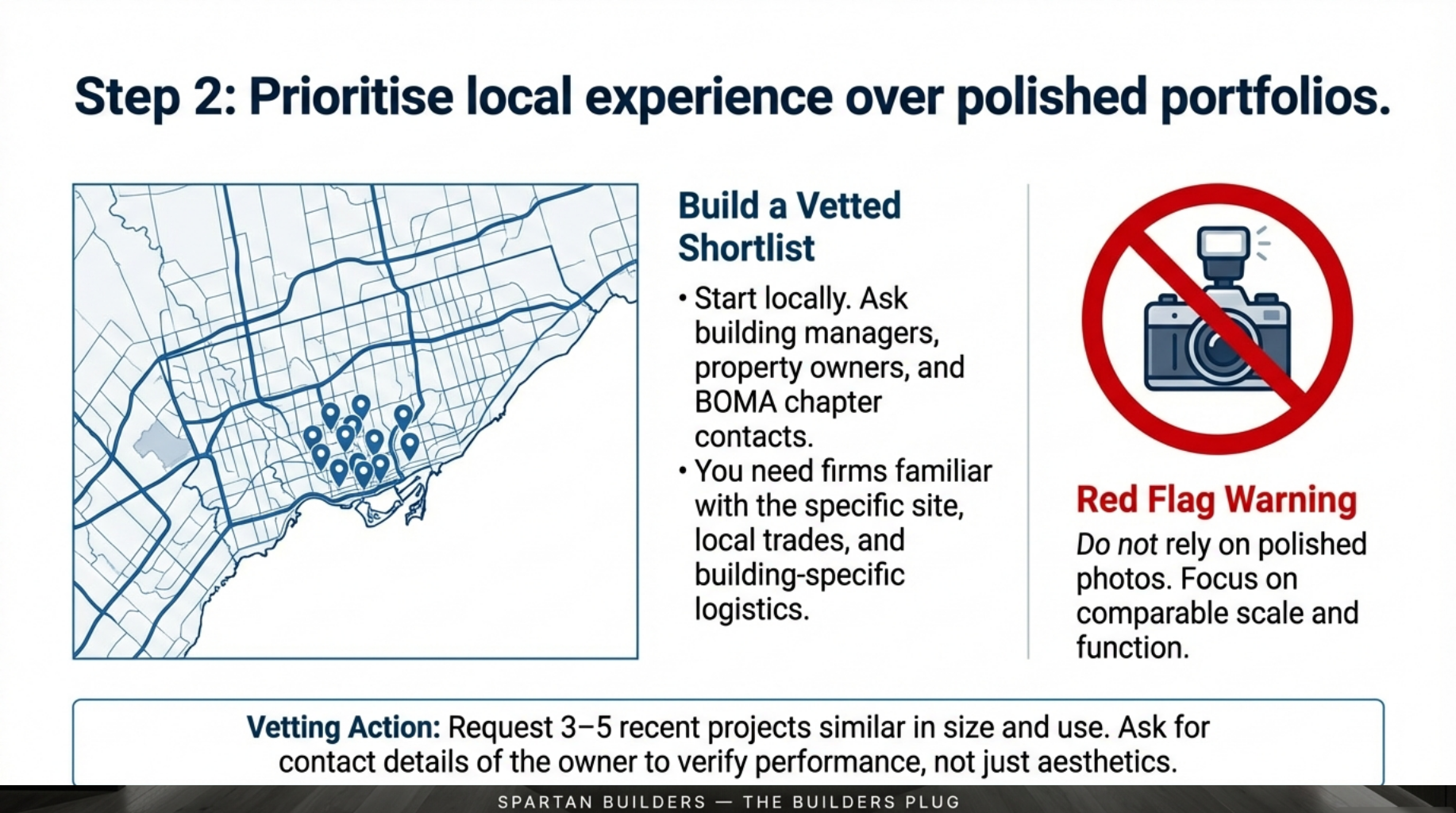
When reviewing portfolios, focus on comparable scale and function rather than polished photos. Request three to five recent projects similar in size and use and ask for contact details for the owner or property manager to verify performance. Visit an active job site when possible to observe workmanship, cleanliness and trade coordination as indicators of disciplined project management. Verify licences and insurance before advancing any firm and ask referees about schedule adherence, change-order handling and warranty follow-up.
3. Verify licenses, insurance and financial capacity for GTA Commercial Renovation Contractors
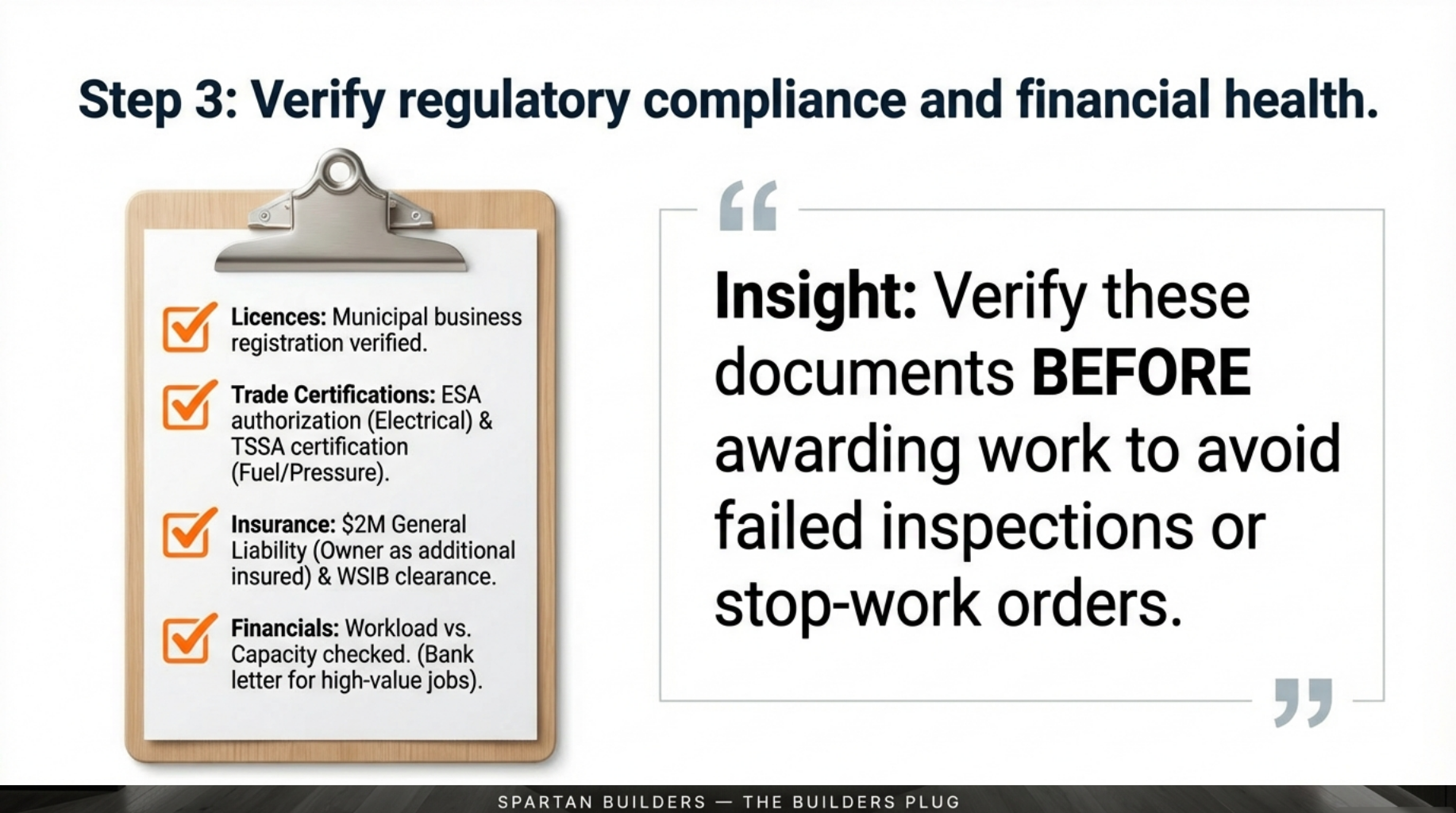
Require documentation showing work will meet Ontario Building Code standards and that critical trades hold appropriate certificates. Ask electricians for ESA authorization and anyone working on fuel or pressure systems for TSSA certification to avoid failed inspections or stop-work orders. Request business registration and municipal licences so you know the contractor can legally pull permits, and insist on written copies rather than verbal assurances.
Confirm insurance and workplace coverage before work begins by requesting a Certificate of Insurance naming the property owner as additional insured. Check general liability limits and expiry dates, and for projects involving design or engineering consider professional liability. For most commercial jobs, a minimum of $2 million in general liability is recommended, along with WSIB coverage or a clearance certificate for all subcontractors.
Assess financial capacity with simple, non-intrusive indicators so the contractor can start and finish on schedule. Ask about current workload, the share of billings tied up in ongoing projects and one year of trade references; for high-value jobs consider a recent financial reference or a bank letter. Cross-check documents with issuing bodies and save copies in your project file so you have a record of what was verified.
4. Request, compare and analyze bids from commercial renovation contractors for GTA Commercial Renovation Contractors
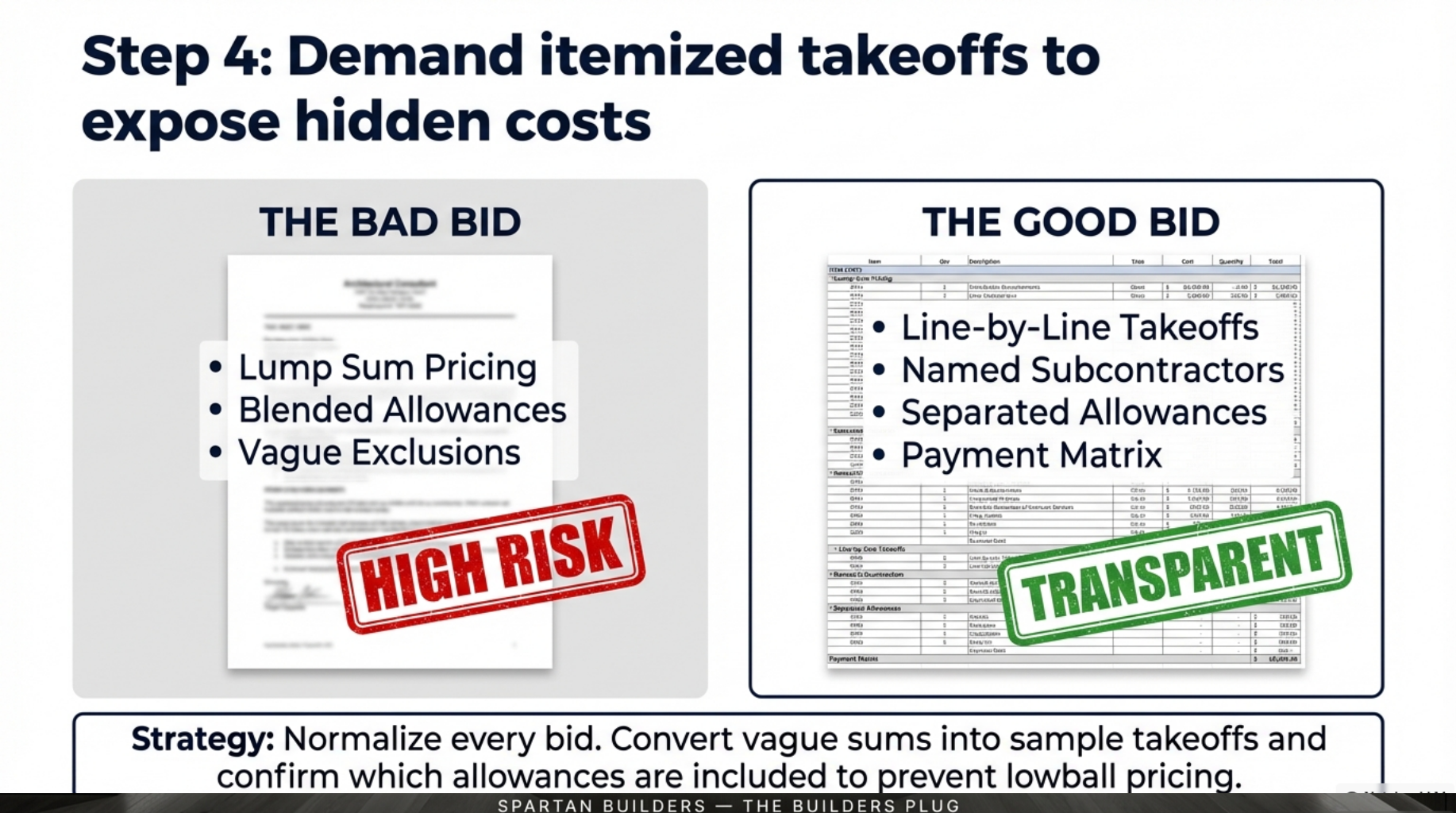
Ask for a transparent proposal format that makes side-by-side comparisons straightforward. A useful proposal lists the scope of work, itemized takeoffs, allowances, excluded items, schedule, named subcontractors and a payment matrix so you can spot hidden costs and differing assumptions.
- Scope of work with line-by-line takeoffs.
- Named subcontractors and trade breakdowns.
- Allowances separated from fixed prices and explicit exclusions.
- Project schedule and milestone payments.
- Change order procedure and warranty terms.
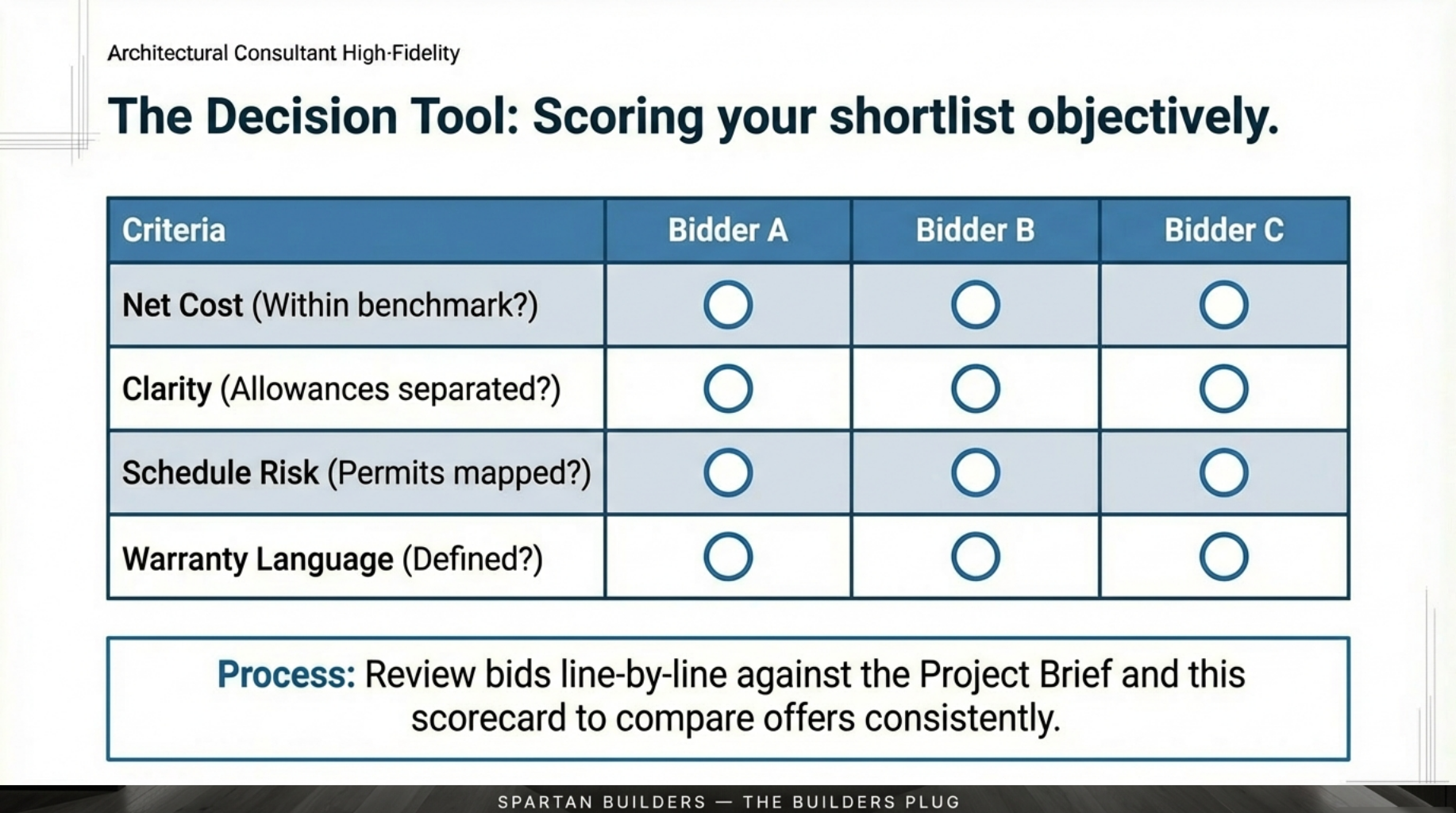
If a proposal omits takeoffs or blends allowances into lump sums, request written clarification and unit prices so you can normalize quantities. Convert vague sums into sample takeoffs when possible to prevent lowball pricing that surfaces as costly change orders later. Normalize every bid before you score it by confirming which allowances are included, converting lump sums into unit prices and rating each offer on net cost, clarity, schedule risk and warranty language.
Key Takeaways for GTA Commercial Renovation Contractors
- Begin with a detailed one-page brief for bidders, outlining scope, budget, and success criteria to ensure accurate pricing.
- Shortlist GTA Commercial Renovation Contractors by seeking local referrals and verifying their licenses and insurance.
- Request transparent bids with itemized takeoffs and clear milestones for easy comparison between contractors.
- Include realistic timelines and permit paths in proposals to mitigate scheduling risks.
- Finalize contracts with essential elements like payment structure, milestone requirements, and a checklist for objective evaluation.
Estimated reading time: 11 minutes
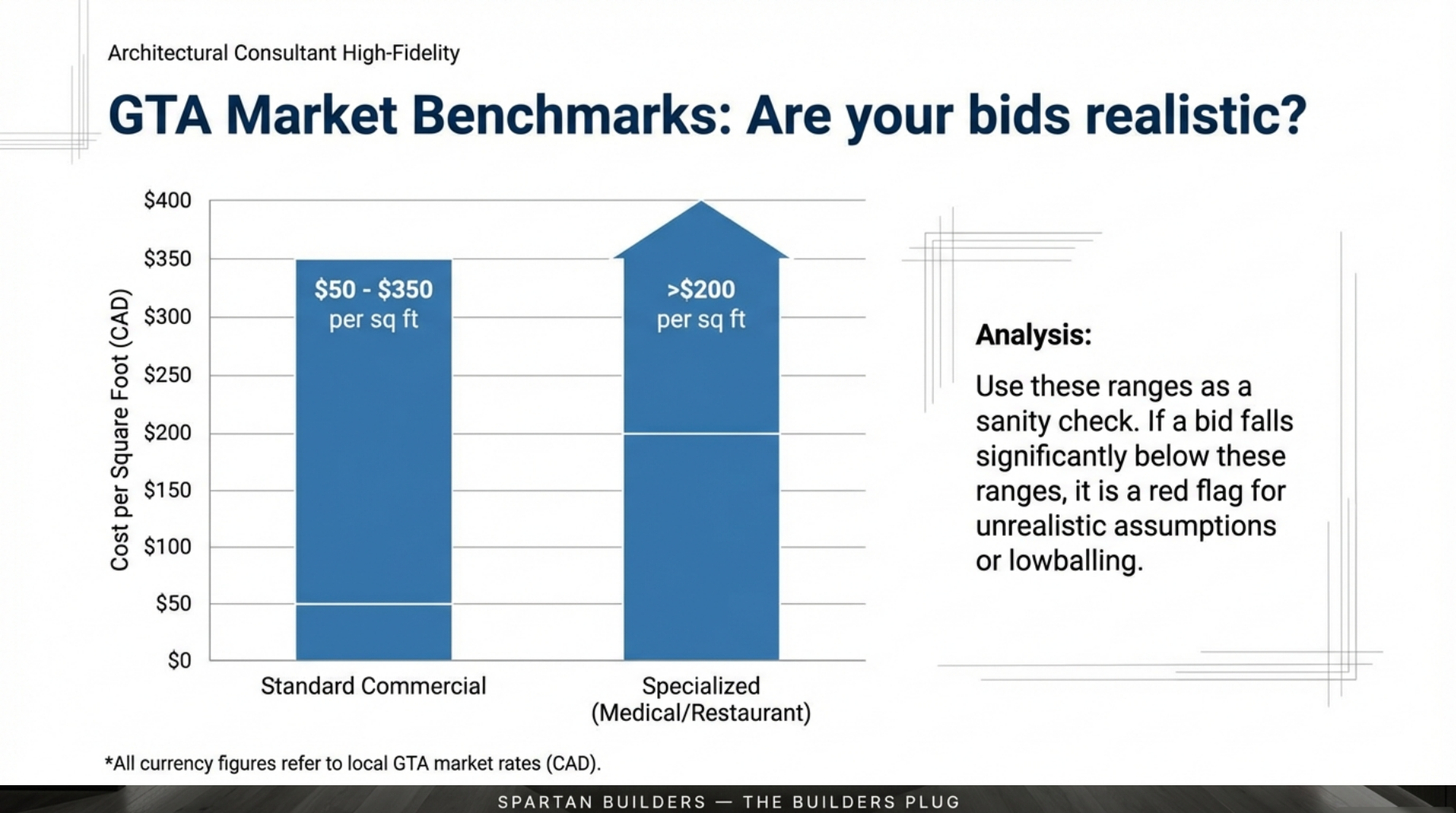
Use current cost benchmarks as a sanity check: commercial renovations commonly range from about $50 to $350 or more per square foot, with specialized medical or restaurant buildouts often exceeding $200 per square foot. Comparing bids to these ranges and verifying assumptions will reveal which commercial remodeling contractors are realistic. After that, verify references and validate bid claims through site visits and referee checks.
5. Evaluate timelines, milestones and permit pathways for GTA Commercial Renovation Contractors
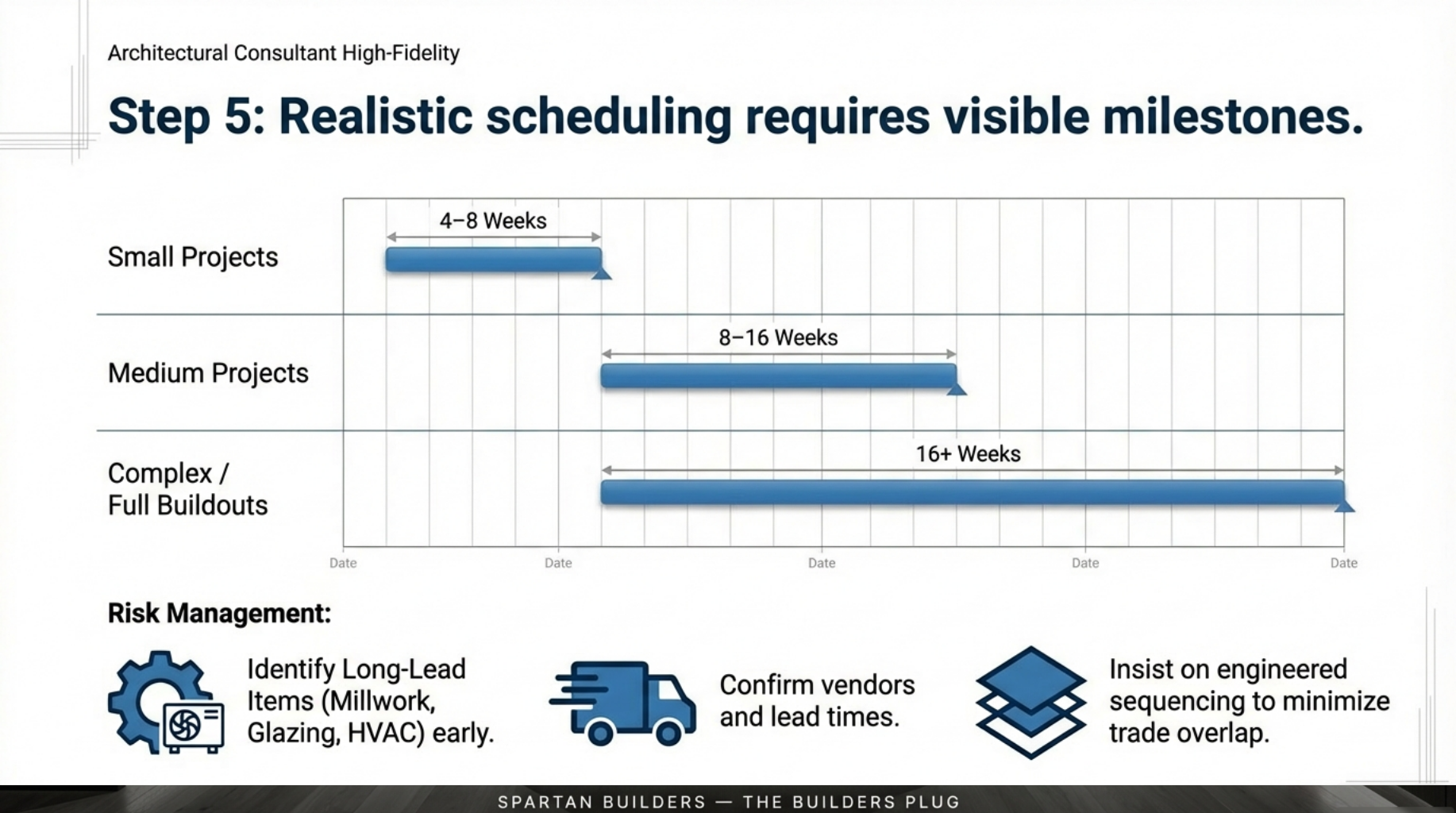
Match expectations to realistic schedules based on project size: small renovations commonly finish in four to eight weeks, medium projects in eight to sixteen weeks, and full buildouts or complex tenant improvements run sixteen weeks and up. Break the schedule into preconstruction, permitting, construction and closeout milestones so payments can be tied to deliverables. Ask each bidder for a milestone calendar and float allowances before you sign so you know where schedule risk sits.
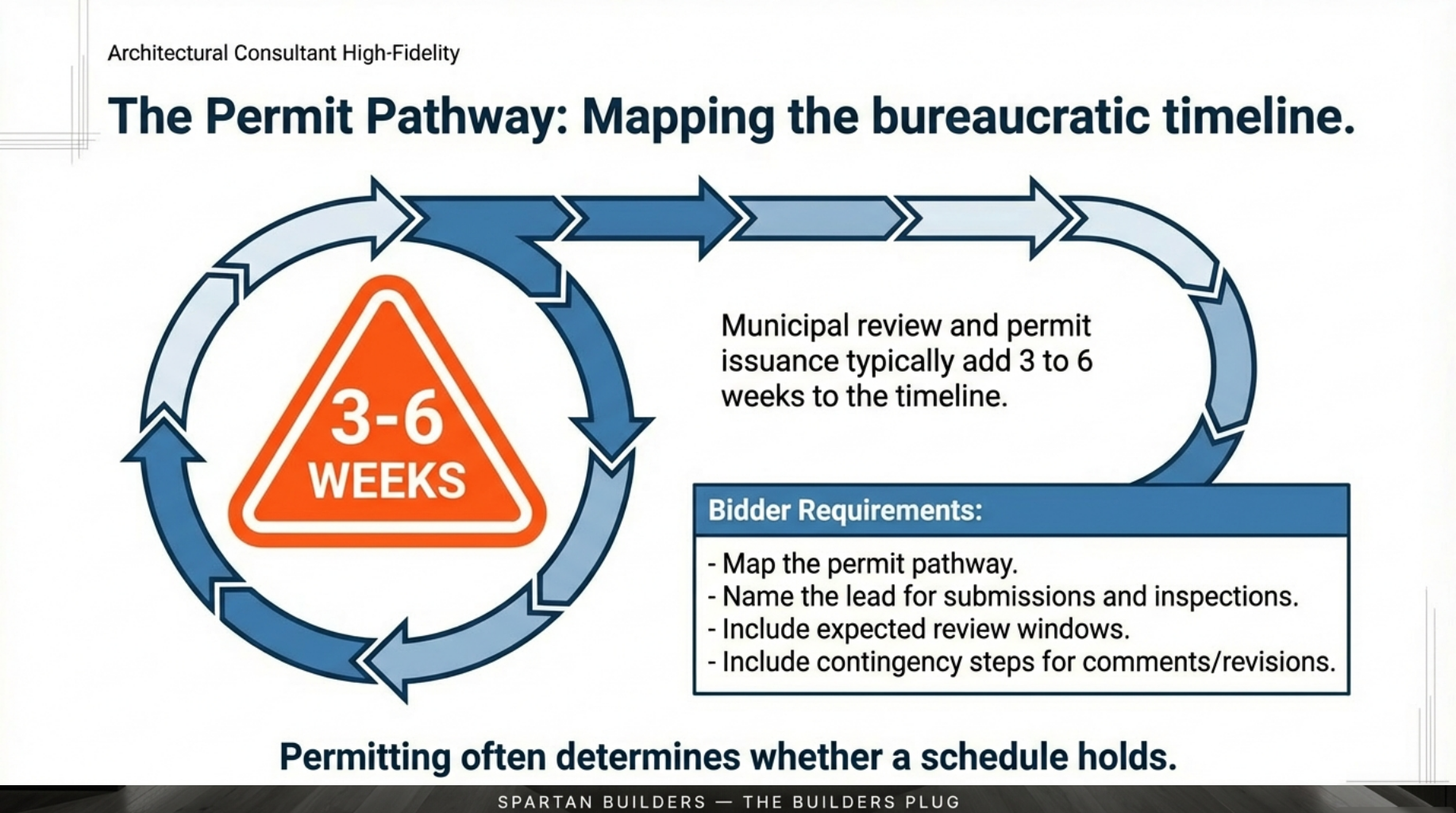
Permitting often determines whether a schedule holds, so require bidders to map the permit pathway and name who will lead submissions and inspections. Expect municipal review and permit issuance to add about three to six weeks depending on scope and jurisdiction, and ask contractors to include expected review windows and contingency steps in case a submission returns comments. That level of detail keeps accountability clear and reduces surprises during construction.
How much does a commercial renovation cost per square foot in the GTA?
Standard commercial renovations in the GTA typically range from $50 to $200 per square foot, while specialized projects like medical offices or restaurants can exceed $350 per square foot
How much contingency should I add to my commercial budget?
Your contingency fund should scale with project complexity. We recommend 10% for light cosmetic scopes, 15% for mid-range renovations, and 20% or more for full-gut or highly specialized tenant improvements
How long does it take to get a commercial building permit in Toronto?
In the GTA, municipal review and permit issuance typically add 3 to 6 weeks to your project timeline. We map this pathway early and include contingency steps for revisions to ensure your move-in date holds.
What insurance and licenses should my contractor have in Ontario?
A qualified commercial contractor must have at least $5 million in general liability insurance, up-to-date WSIB clearance, and trade-specific certifications like ESA authorization for electrical work and TSSA for fuel or pressure systems.
What is the best way to compare bids from different contractors?
Reject “lump sum” or “vague” bids. Instead, demand itemized takeoffs that break down costs by trade (demolition, plumbing, millwork) and unit pricing. This ensures every bidder is pricing the exact same scope.
How can I avoid budget creep and project delays?
The most effective tool is a precise one-page project brief created before you solicit bids. By defining exact rooms, square footage, and finish levels early, you convert the selection process from “guesswork” into a value-based decision.
Long-lead items create most procurement risk, so identify and control them early. Common examples include custom millwork, glazing, HVAC packaged systems and specialized equipment. Require bidders to show lead times and confirm vendors so you can fast-track procurement or phase installation to protect the critical path. Insist on engineered sequencing so trade overlap is minimized, float is visible and the critical path is protected.
6. Final selection, contract essentials and a practical checklist for GTA Commercial Renovation Contractors
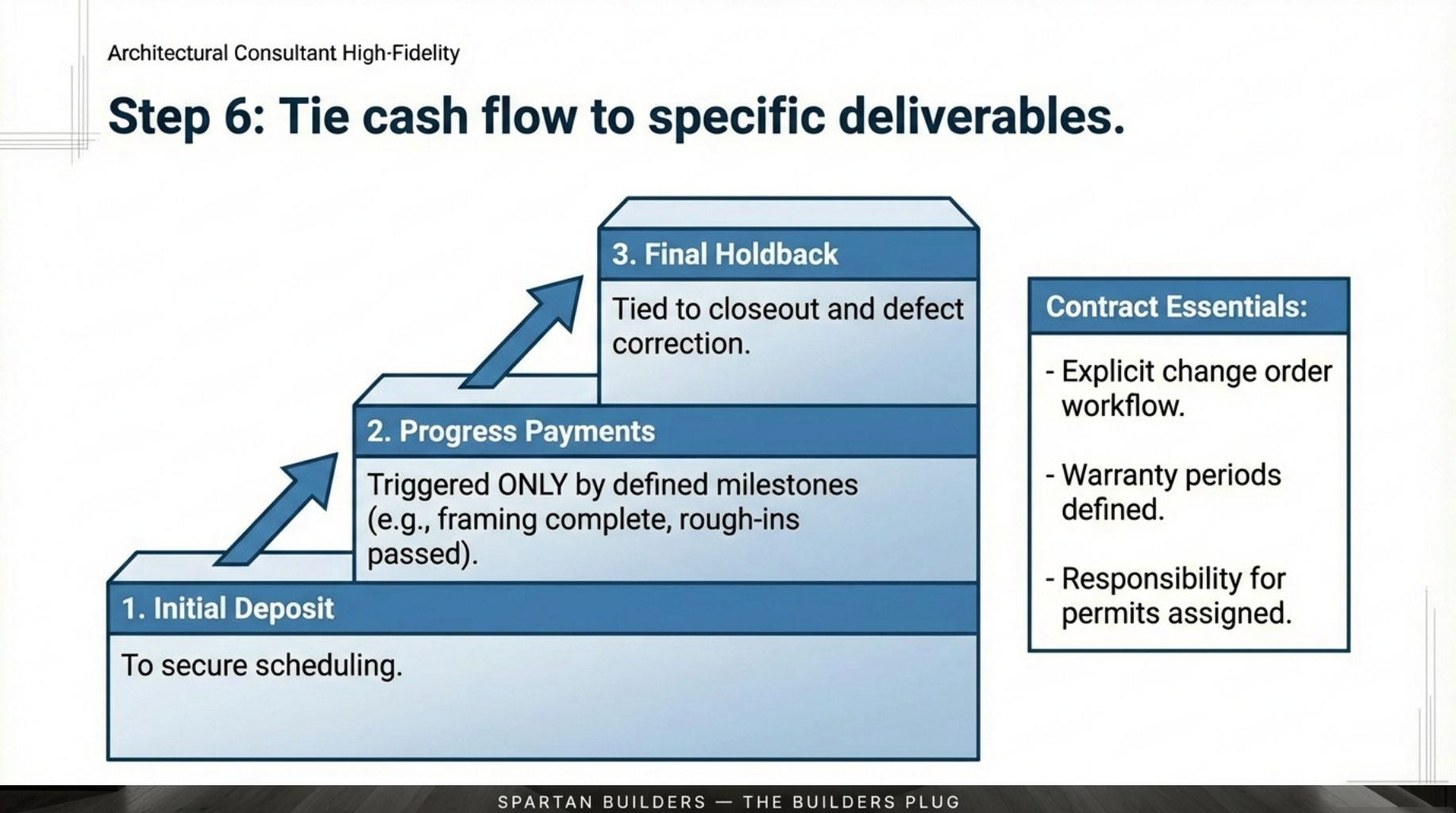
Agree on a payment structure that ties cash flow to deliverables: an initial deposit, progress payments at defined milestones and a final holdback tied to closeout. Make milestone-based payments a contract requirement and include warranty periods, defect correction language and an explicit change order workflow. Specify who pulls permits and require the contractor to take responsibility unless you expressly agree to split that task.
Use a single-page decision tool to keep interviews and bid reviews objective. The checklist should include the project brief, licences and insurance, bonding where applicable, three references, an itemized bid and a milestone schedule with contingencies and sign-offs. Review bids line by line with that sheet so you compare offers consistently when shortlisting commercial renovation services.
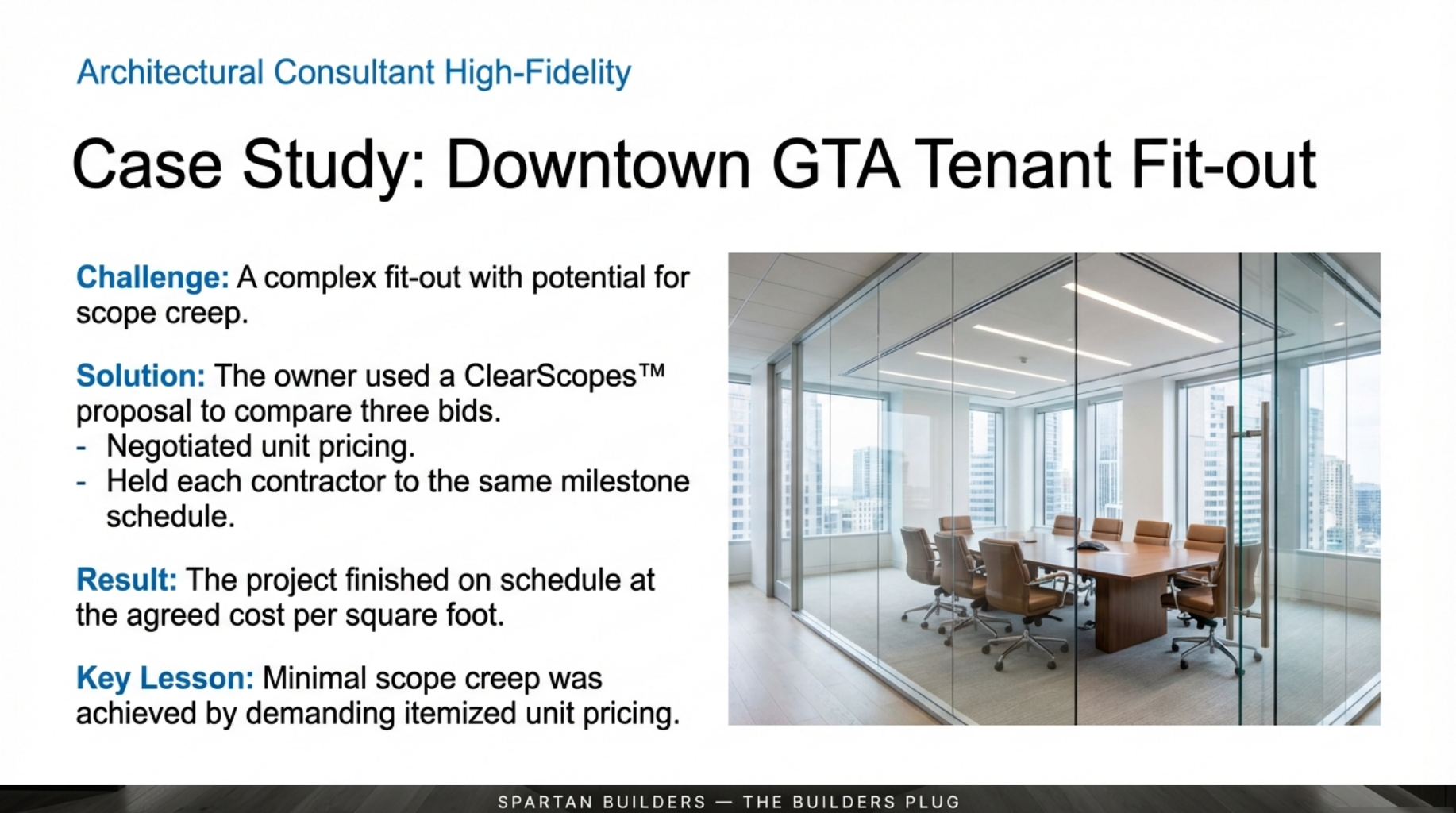
On a downtown GTA tenant fit-out, the owner used a ClearScopes™ proposal to compare three bids, negotiated unit pricing and held each contractor to the same milestone schedule. The project finished on schedule at an agreed cost per square foot with minimal scope creep. The practical rules were repeatable: demand itemized unit pricing, enforce milestone payments and use a consistent checklist when evaluating commercial remodelers.
Next steps for hiring commercial renovation contractors
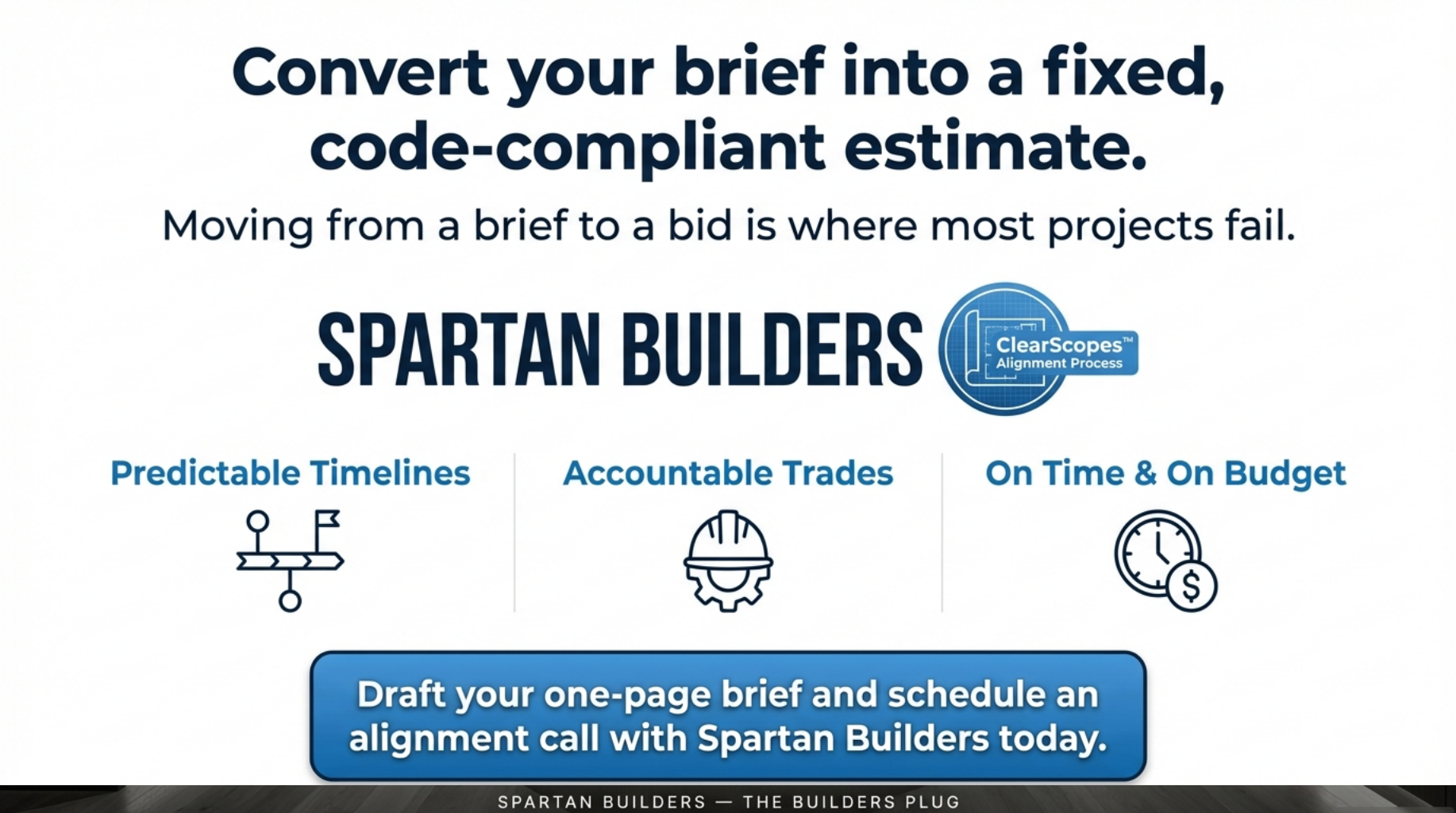
Draft the one-page project brief listing scope, budget and success criteria, then schedule a ClearScopes™ alignment call with Spartan Builders to convert the brief into a fixed, code-compliant estimate. That two-step approach produces predictable timelines, accountable trades and a renovation that stays on time and on budget. Contact Spartan Builders to start the alignment call and get a ClearScopes™ estimate for your GTA project.
Further reading and tools: consult a recent commercial renovation costs guide when setting per-square-foot budgets, review a checklist for selecting a reputable commercial contractor when vetting bidders, and compare your schedule against a typical commercial renovation timeline so milestone expectations align with reality.